Česky
Česky


What services does your sleep clinic provide and who is it for?
Our sleep clinic focuses on sleep-disordered breathing - snoring and breathing stoppages, so-called sleep apnoea. Patients come to us who wake up sleep deprived, suffer from daytime fatigue and drowsiness, have microsleeps while driving or during monotonous situations such as reading a book, watching TV or sitting in a waiting room. Often, patients whose loved ones notice that they stop breathing, gasp and snore loudly for a few seconds or even minutes while asleep.
Who is most commonly affected by sleep apnoea?
It is reported that sleep apnoea affects around 5-9% of the population worldwide, and this number is increasing due to better education. It can occur at all ages, but is most common in people between the ages of 40 and 50. It is significantly more common in men. In recent years, there has been a shift towards younger ages, which is mainly related to lifestyle, workload, dietary habits and associated diseases.
What exactly is sleep apnoea?
Sleep apnoea is the cessation of breathing during sleep, which occurs as a result of narrowing or complete closure of the upper airway. This causes a decrease in the oxygen saturation of haemoglobin, i.e. a decrease in the proportion of oxygen in the bloodstream. The human body reacts to this as a stressful situation and triggers a cascade of processes - a rise in heart rate, respiratory rate and blood pressure. The goal of these reactions is to wake up, restore airway patency and replenish optimal blood oxygen levels.
What management do you recommend for patients who have the above problems? And how is the examination itself carried out in the sleep clinic?
As a first step, I recommend making an appointment for overnight sleep monitoring to determine whether or not the patient is experiencing apneic pauses. The results will then determine the entire diagnostic and treatment process. The examination is carried out in the home environment using a special MiniScreen device, which monitors several parameters during one night of sleep monitoring: blood oxygen saturation, heart rate, airflow through the upper airways, snoring, chest and abdominal movements.
Why is it necessary to treat sleep apnoea?
Treating sleep apnoea early and adequately is important for many reasons. But among the main ones are the risk of developing or worsening cardiovascular and metabolic diseases - especially hypertension, coronary heart disease, stroke, obesity, diabetes, hyperlipidemia, and others. Patients are hampered in their daily lives by reduced mental or physical performance, and struggle with impaired concentration and memory. Last but not least, they may experience microsleeps behind the wheel, which can have serious consequences.
What treatment do you provide in your sleep clinic?
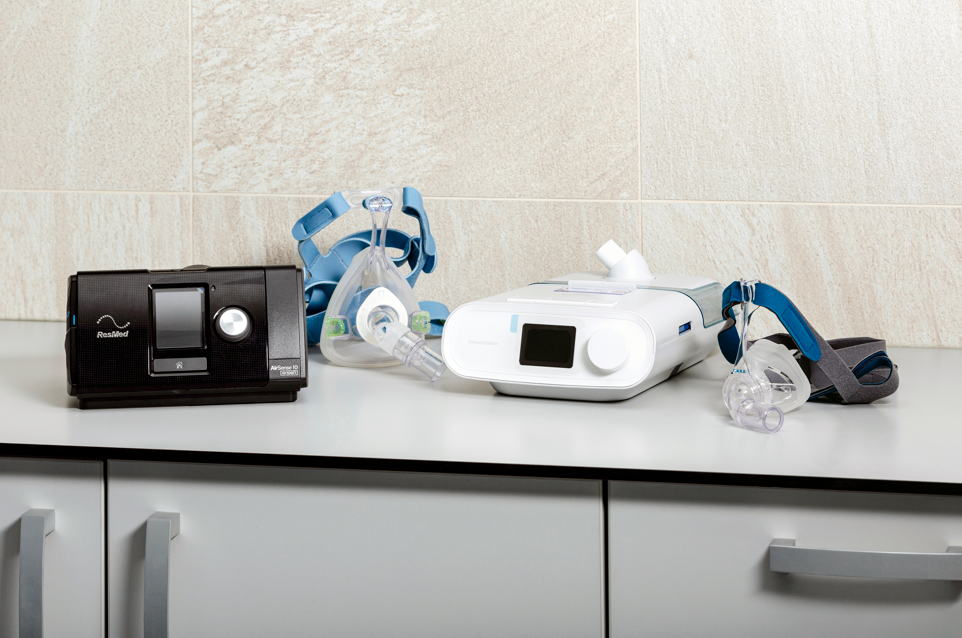
We follow the recommendations of the Czech Sleep Society. For patients with confirmed moderate and severe sleep apnoea, we use pressurisation devices, namely CPAP (continuous positive airway pressure) or BiPAP (bilevel positive airway pressure). This is a conservative treatment that works on the principle of dilating the upper airway with positive air pressure. This treatment prevents further narrowing or closure of the airways, and thus the development of breathlessness during sleep.
When is it appropriate to consider surgical treatment?
Surgical treatment can be considered for all types of sleep-disordered breathing, what is important is what is expected from the surgery. In the case of normal snoring or mild sleep apnoea, surgery can be considered as a causal therapy - with the right surgical procedure we can eliminate or alleviate the patient's problem. In the case of moderate and severe sleep apnoea, surgery is performed to ensure optimal upper airway patency and thus achieve the best possible compliance (tolerance) to pressurisation therapy.
What types of surgery are most commonly performed in patients with snoring or sleep apnoea?
At this point, I would like to emphasise the necessity of completing a comprehensive ENT examination in every patient who develops snoring or sleep apnoea. Since ENT findings and the results of the overnight sleep monitoring form the basis of our decision-making regarding further treatment. We evaluate the results for each patient individually to ensure the best possible treatment and outcome.
We perform surgical procedures under both local and general anaesthesia, depending on the ENT findings. In an effort to provide a comprehensive solution, we most often perform so-called multi-stage operations, combining surgical procedures on the soft palate (radiofrequency uvuloplasty) and in the nasal area (radiofrequency turbinoplasty, deviated septum surgery, sinus surgery) under one general anaesthetic.