Česky
Česky


Although we hear more and more about palliative care, many people have no idea about it. Could you explain what the term means?
Palliative means alleviating a problem but not removing the cause. There are different definitions of palliative care, generally according to the WHO and the EAPC (European Association for Palliative Care), it is the active overall care of a patient whose disease is not responding to curative treatment. Of fundamental importance is the alleviation of pain and other symptoms and social, psychological and spiritual problems. In a sense, palliative care offers the most basic concept of care - care aimed at meeting the patient's needs, regardless of where the patient resides, whether at home or in hospital. It seeks to maintain the highest possible quality of life until death. In the field of paediatric palliative care, we rely on the 1998 WHO definition, which in short states that it is the active care of the somatic, psychological and spiritual dimensions of the sick child, including the provision of support to the family. This care begins at the time of diagnosis of the illness and continues regardless of whether the child is treated curatively with a focus on the diagnosed illness.
So much for the current definitions of palliative care. Whichever one you choose, the emphasis on its comprehensiveness and accessibility for the patient and his or her family is a red thread. Palliative care should be an integral part of modern medicine because, despite all its advances, there are many diseases that we cannot cure, whose progress we cannot stop. It does not matter whether the patient is an adult or a child. And at this moment, as meaningful as curing, should be all our efforts to alleviate the difficulties associated with an incurable disease and thus enable a dignified dying in the circle of loved ones, whether in the home environment or outside it.
Ars moriendi (the art of dying), an art with a strong social dimension, has been an integral part of various advanced societies and cultures. What is the state of Czech society?
The Ars moriendi (in English "The Art of Dying") are two Latin texts written between 1415 and 1450 that provide a kind of guide to dying and death well in relation to the Christian principles of the late Middle Ages. They were very popular texts that were translated into most of the languages of Western Europe and were the first texts describing dying and death in the tradition of Western literature. So much history. I think that each stage of it conceives of dying and death a little differently, but what is common until the 20th century is that both were seen as integral parts of life. This has changed a lot in recent history in developed countries, where our country belongs. Dying and death have moved outside the home into the environment of hospitals, long-term care facilities, homes for the elderly, and social care institutions. Unfortunately, this is no different in Czech society. Despite a certain shift in the perception of the end of life in our society in recent years, only 1% of people in the Czech Republic die at home among their loved ones.
According to various studies, about half of the deceased in the Czech Republic, mostly in Prague and large cities, do not have any last farewell. How do you perceive this fact?
I perceive this fact very negatively. The ritual of the last goodbye, in whatever form, should be an integral part of our lives. The death of anyone close to us is certainly one of the most important events in our lives, probably next to birth. Rituals in general help us immensely to cope with the stress that accompanies any change. A funeral ritual helps us to say goodbye and understand that death is final and also transports us back to normal life. It is a significant bridge between the early intense phase of grieving and the next phase, which may eventually lead to acceptance of the unacceptable reality that the loss of a loved one, whether child or adult, undoubtedly is for us. The funeral ritual can even fill us with a deep peace and gratitude for the presence of the deceased person in our lives, and can also connect us closely with all who participate. The funeral, the last ritual on our life's journey, is first and foremost a ceremony for the bereaved. It is a farewell, perhaps sad but necessary. Otherwise, there is a danger that we will never truly say goodbye, and the passing of a loved one from our lives will remain a kind of unfinished business. And everything that is unfinished and unfinished prevents us from moving on.
Is palliative medicine part of the training of Czech medics?
The short answer is no. According to the information from my young doctors, among whom are also recent graduates of various medical faculties, palliative medicine is not taught separately. I have looked at the syllabus of the compulsory and optional courses at my alma mater, the 2nd Faculty of Medicine of the Charles University, and I am sorry to say that palliative medicine as a separate subject is absent. I believe that this is a sad fact and I very much hope that this will change in the near future.
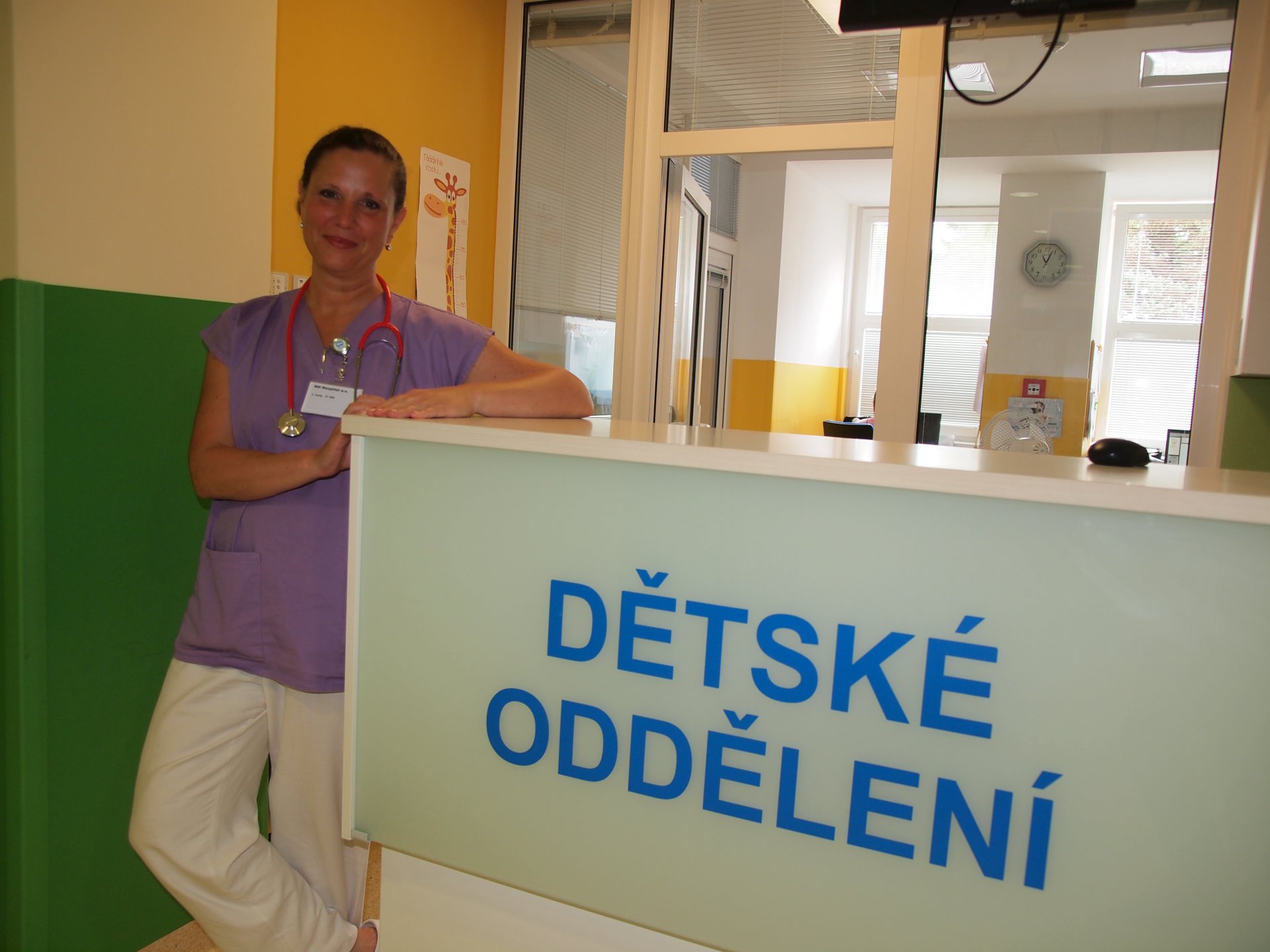
You are the head of the children's ward at the hospital in Horovice. What led you personally to get involved in such a "cheerless" area of medicine?
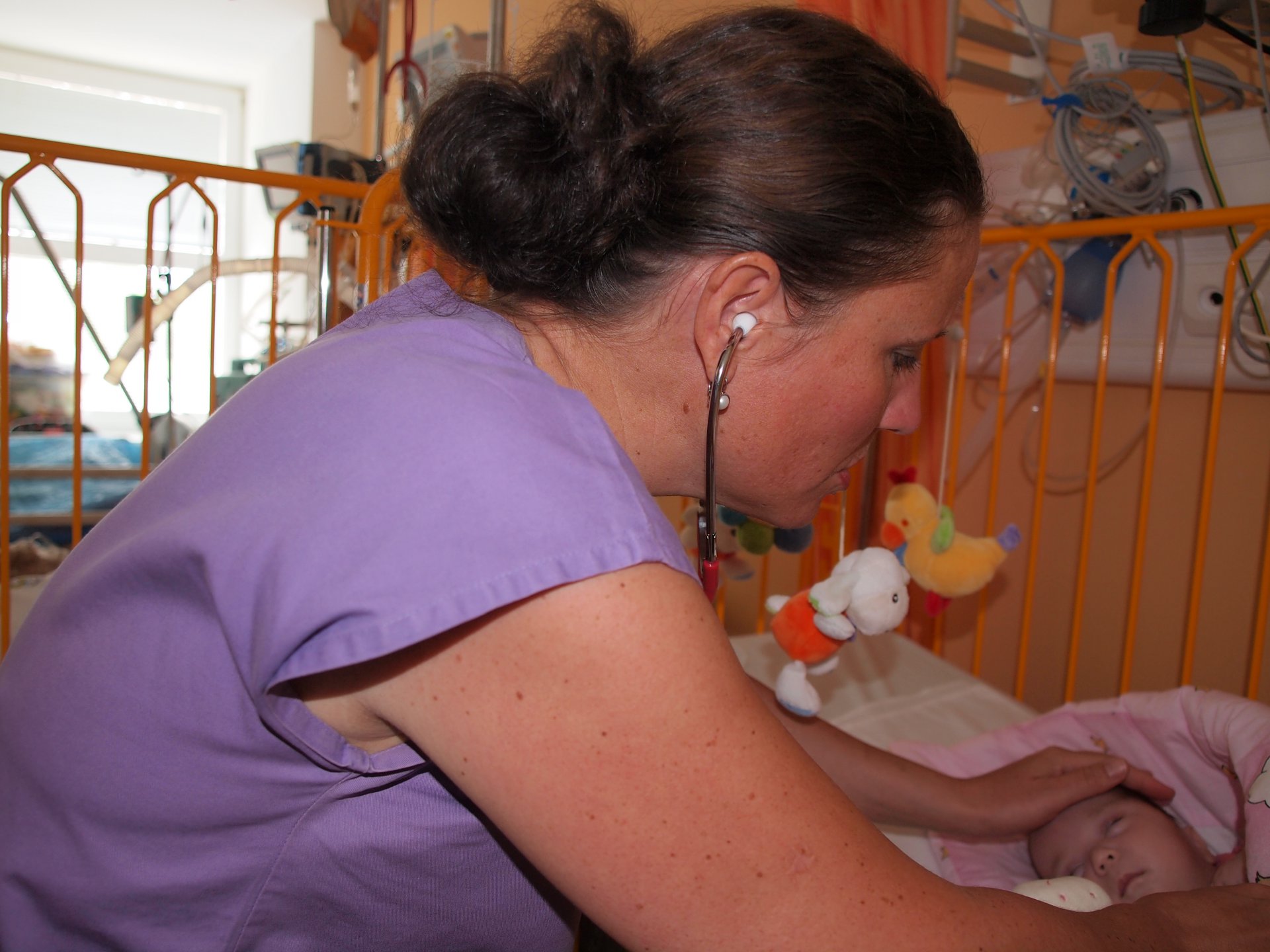
I must admit that I hear this question quite often. Sometimes asked curiously, but more often with a certain amount of uncertainty and embarrassment. Maybe if I worked in the field of adult medicine it wouldn't be so surprising, but with children? They don't die.... Sadly, this is not the case, and I dare say that despite all the advances in science and medicine, it never will be. The answer to your question is not so simple, and I ask myself the same question from time to time. However, the word cheerless was used in your question. I wouldn't use that word myself. In my almost 20 years of practice, most of which has been spent in intensive care and resuscitation medicine, I have had various moments. Moments of almost giddy joy of recovery, but also moments when we had to accept the fact that medicine is short here. And it was these moments that taught me to accept with humility the existence of the limits of our possibilities, the limits of the possibilities of today's medicine. But even in these moments, our work is deeply meaningful. We cannot cure, but we can alleviate the symptoms. We cannot stop the disease, but we can allow it to die with dignity in the circle of the family, we can help all loved ones to cope better with such an enormous loss as the departure of a child from life.
What is the Journey Home organisation you work for?
Very briefly, Cesta domů is a mobile home hospice that provides comprehensive palliative care to both paediatric and adult patients in the capital city of Prague. The essence of mobile hospice care is the provision of specialised palliative care in the home environment 24 hours a day, 7 days a week. I personally became acquainted with Journey Home in 2013 when I started my volunteer training. I successfully completed this in 2014 when Journey Home began to think very seriously about expanding care towards paediatric patients. From there, it was just a step towards establishing a close collaboration. And only a few months passed and we received and accompanied our first paediatric patient. Since then, I have been working as their external paediatrician, which in practice means that when Journey Home admits a paediatric patient into their care, I am fully available to the team of doctors and nurses. At a minimum, I am on call at all times and, depending on my time availability, I am also available for regular family visits. Since the end of 2014 we have had the opportunity to care for 6 paediatric patients in this way together and I am very grateful for this collaboration. Indeed, the journey home is a role model for me and an inspiration for my work, because as strange as it may sound, comprehensive care set up in this way should be the gold standard not only in palliative medicine.