Česky
Česky


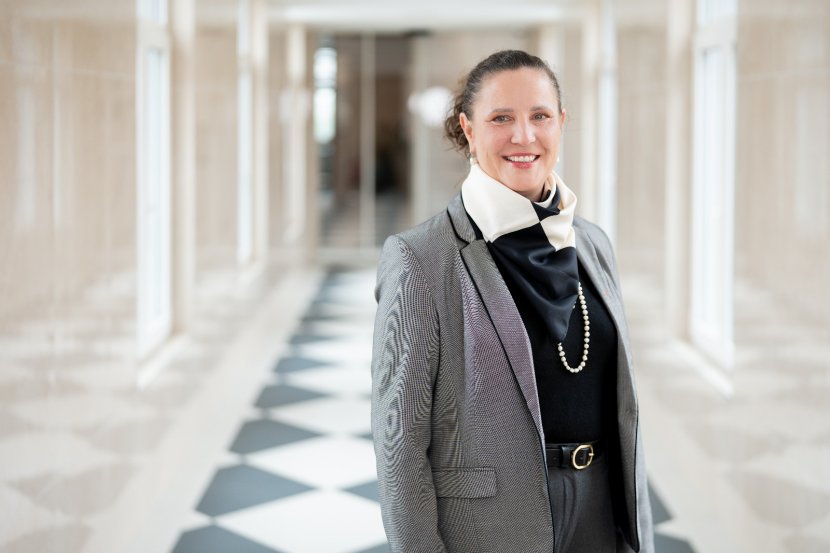
What plans do you have in your new position as head of the Department of Supportive and Palliative Care at Hospital Hořovice?
For almost 10 years I have been trying to build a consilient hospital palliative care team together with my colleagues for both paediatric and especially adult patients. The establishment of the department under which the team falls is the next logical step in the development of care for seriously ill paediatric and adult patients. It is a comprehensive care that is provided to patients admitted within the hospital in different departments. Starting with our children's long-term intensive care unit (DIOP), through the internal medicine, surgery or neurology wards to the A&E department.
The aim of palliative care is to bring comprehensive support to patients who are seriously ill and also to their families. We are therefore not just talking about patients at the end of life, although of course this also includes palliative care. But we are talking about patients with a serious, incurable disease that tends to worsen over varying lengths of time. And we bring a holistic view to care. We not only want to help treat the symptoms of the disease, whether it's pain or shortness of breath, for example, but also help find solutions to provide well for the needs of the patient and their family on a psychological, spiritual and social level. When a patient has a prolonged illness, it can take him or her or a family member who cares for him or her out of work and normal life. And from this point of view, it really doesn't matter whether it is a child or an adult patient. In short, palliative care brings quality to life with a serious illness.
Won't you miss the paediatric ward that you left for this?
My primary profession is paediatrician, intensivist. But I have specialised training in palliative medicine, which does not distinguish between paediatric and adult patients. That means I'm qualified to care for both paediatric and adult patients. Of course, it still remains that my heart's business is caring for seriously ill paediatric patients. And at the same time, I am not leaving the paediatric ward completely; I remain in the position of guarantor of the development of comprehensive paediatric care.
What has blossomed under your hands during your ten years as a paediatric primary care physician?
I am happy with the whole department. When I started, it was certainly working. I'm not saying good or bad, it just worked. It was a great challenge for me and I think we managed to build a nice and friendly team of doctors. They're really very nice. They are talented and they know how to communicate well with children, families and do good medicine. We have managed to build a department that has a good name and sound not only in the region, but also works well with other health and social service providers, including working closely with teaching hospitals. We have also managed to build a network of quality outpatient care. When I joined in 2015, there was only one paediatrician's surgery, which had several hundred children registered. Now we have not only two surgeries in the hospital, but also others in Žebrák, in Králov Dvůr and AKESO polyclinic in Prague. This means around five thousand registered paediatric patients. We also have a network of specialised outpatient clinics. Within the hospital, we are able to provide comprehensive care from primary care through outpatient specialists in the fields of paediatric pneumonia, allergy, nutrition, nephrology, gastroenterology, neurology, cardiology or paediatric surgery.
How large a team of people do you now lead within the new department?
The team at the moment is 12 people. According to the Bulletin of the Ministry of Health and the Decree on Minimum Staffing, this team must compulsorily include four professions, which are a doctor, a nurse, a health and social worker and a psychologist. We have to comply with this in order to receive registration and reimbursement for our activities at all. However, we have other professions in the team that are very important superstructures for us and our patients, but they are no longer a compulsory part of the team. However, we think they are important to patients and quality of care. So we have two hospital chaplains and a physiotherapist. We care not only for adult patients, but also for children who are long-term inpatients or returning to us. That is why we are also staffed by the children's long-term intensive care unit (DIOP).
You established this department in 2018 and it is the only one in the country...
It is a pilot operation, as well as we have a unique Post Intensive Care Unit (NIP) for children in the hospital who need replacement of vital functions, most often breathing. We have been working for a long time to include this type of care in the paediatric care system. So we'll see how it all plays out. Children come to the Children's Long Term Intensive Care Unit from acute intensive care beds, most often from teaching hospitals, or return to us when their condition deteriorates. We try to stabilise the condition further, educate the family and provide care so that they can get home. And that can sometimes take many weeks or months. We also help in situations where the family needs help, advice or relief afterwards. These are families that we have in long-term and outpatient care, which is an integral part of the new department. We are a kind of friend on call for the families to make them feel as safe as possible at home. We help significantly with care coordination. When a family comes to us with a child for an outpatient appointment, we try to schedule all the necessary appointments within a half-day or a day so that they don't have to make several trips to different specialists in a row. During the check-up, we talk to them about how they are coping not only medically, but also psychologically, whether they need help, for example, with securing allowances, aids and so on.
How much capacity do you have for patients?
The long-term intensive care unit for children has a capacity of 5 beds, this refers to hospitalisation. During concierge activities, our team is called to different wards where mainly adult patients are lying. This means that most often a doctor will call us to a patient who is hospitalised with various serious illnesses. We then discuss with the patient and their family the different scenarios of the disease and what we can do for them. How to help them during the hospitalisation, but also at home, so that they manage the care well. In the future, I would love to see us have a small, perhaps six-bed unit in the hospital with hospice-type beds for patients at the end of life. Some patients do not want to burden the family and may not wish to die at home. At this point, there are two rooms in the hospital that are single rooms, family-style, it looks more like home, and the family can be there to be present for their loved one at the end of life. By being part of the internal ward, these rooms may not always be available. In the future, we would like to build a separate small inpatient palliative ward, like the hospital in Pribram, for example, which is a great inspiration for us. That is, a hospice in a hospital. For the time being, patients at the end of their lives are mostly referred there or to the St. Lazarus Hospice in Pilsen.
Does the patient or the family pay for this care at Hospital Hořovice?
No. The child's stay is fully covered by public health insurance. As far as the presence of a close person is concerned, whether it is a parent or anyone else, it is covered by the insurance company until the child is six years old. They pay 400 crowns per day including meals and their own bed. But if it is a patient on DIOP, the parent gets free food and bed and the hospital charges nothing. I see this as a very helpful step by the hospital management and the whole Akeso holding, for which I am really grateful.
We also try to provide children who are in hospital for a long time with care modalities that are not covered by public health insurance, such as canister therapy or hippotherapy. For this, we are seeking funds from donors. Hippotherapy is usually once or twice a month, and we try to do canister therapy every week. The hospital also pays for a special educator from its own funds, because even seriously ill children have the right to education or to play. She comes twice a week for a morning session.
How do you cope with working with people who have limited time in front of them?
I've been in palliative care for over ten years. Since 2014, I have been working with the mobile hospice Cesta domů in caring for paediatric patients within Prague and the Central Bohemia region. I think of it as my job, it is an integral part of medicine from my point of view. Of course, it is often a challenging situation, but I see great meaning in it. And it is a great source of energy when you do something that gives you meaning. When you see that you can help families and patients to be able to cope with life with a serious illness and to live better. I'm not a soloist. We work as a team, talk about difficult situations and share everything together. I'm glad for the opportunity of supervision, which is a professional support where we have the space to talk about difficult things, to discuss difficult situations, difficult patients, something that has affected us a lot. And of course it's also my own individual resources, that's probably where sport helps me the most. I do a lot of cycling, skating, scooter riding. We go out with the dog. I switch off at physical activity. I like to cook and take care of my family. I love music, theatre, detective stories, hanging out with friends.
You have a grown daughter. Will she follow in your footsteps?
She applied for medical school last year but didn't get in, so she's reconsidered and will be studying criminology and criminology in September. I have no ambition for my child to be a doctor. I'll be happy if she does something she really enjoys. When young people ask me if they should study medicine, I say: 'I love the job, but it's not for everyone. Studying is not easy either. You have to learn all your life, but that certainly doesn't just apply to this job. I don't come from a doctor's family myself, but a teacher's family. My mom taught biology and chemistry at high school, my dad taught math and descriptive geometry at college. That didn't happen for me. However, I actually came to teaching in a roundabout way, as I teach both medics and junior doctors at the faculty and, as of 2018, I run courses in paediatric palliative care.
And why did you choose this particular field?
I've always been somehow drawn to children with disabilities. In high school, I volunteered at the Jedlička Institute and planned to study special education. When I was a senior in high school, my partner at the time was in medical school, which also appealed to me. I told myself that I could always return to working with children with disabilities. And you see, years later, I actually did get back to working with children who have some kind of severe disability. I feel like everything came true for me in the end.
Mahulena Exner's business card
She was born on September 9, 1973 in Prague.
She attended the language elementary school Pod Marjánkou in Prague 6. She graduated from the grammar school Na Vítězné Pláni in Prague 4 and graduated from the second medical faculty of Charles University.
After school, she joined the Department of Paediatric Surgery at the University Hospital in Motol, where she worked in the intensive care and resuscitation unit until 2015. Then she joined Hospital Hořovice as the head of the children's ward and continued to work at her original workplace for four years.
Her original profession is not only paediatrics, but mainly intensive care medicine for seriously ill newborns and young children.
Since 2014, she has been an associate paediatrician at Journey Home Hospice. She is the vice-chair of the committee of the Czech Society of Palliative Medicine and since 2015 she has been leading the section of paediatric palliative care of the Czech Society of Palliative Medicine.