Česky
Česky


Incontinence is manifested by leakage of urine or stool or, conversely, the inability to defecate. It is associated with both an almost constant urge to go to the toilet and frequent abdominal pain. Up to 40% of the Czech population suffers from urinary incontinence. It is mainly overactive bladder or urinary retention (retention, inability to urinate), which requires catheterisation. Faecal incontinence affects about 3.5% of people under 60 years of age, with problems increasing at older ages, and up to 15% of people over 70 years of age. Although less common, faecal incontinence is associated with an even greater stigma. It is manifested by spontaneous leakage of stool or, conversely, by difficulties with defecation, such as constipation or inability to defecate. The disease is far from affecting only the elderly; on the contrary, younger people have problems with it.
How do the problems arise?
There are several causes, many of which are not fully understood, but are often related to operations that disrupt the nerves in the pelvic floor. Problems also occur as a result of postnatal injuries, post-traumatic conditions associated with spinal cord or brain injuries, or stress is also to blame. However, they can also accompany other serious diseases, such as multiple sclerosis, stroke or diabetes.
Instead of getting treatment, people shut themselves in their homes
Whatever the cause, incontinence limits a patient's life in every way. Problems affect his or her work, sport, relationships, intimate life or normal social gatherings. Because the disease worsens gradually, patients often get used to the problem and ignore the symptoms, as they are not "life-threatening" for them. In addition, because shame prevents them from solving their problems, they increasingly shut themselves up at home. At an advanced stage, social isolation can set in, with patients losing jobs, partners and, in some cases, even shopping. The high social stigma that accompanies the disease can contribute significantly to this behaviour: the disease is not talked about, patients feel judged and misunderstood, society does not seem to want to 'get its hands dirty' with them. However, in the treatment of incontinence, it is generally true what is true for many other diseases - it is good to solve your problems early, later doctors have relatively limited options. Prof. MUDr. Jan Krhut, Ph.D. from the Ostrava University Hospital describes the situation: "Incontinence as such does not kill a person, but it kills his life, i.e. what makes life nice."
The solution may be a neurostimulator
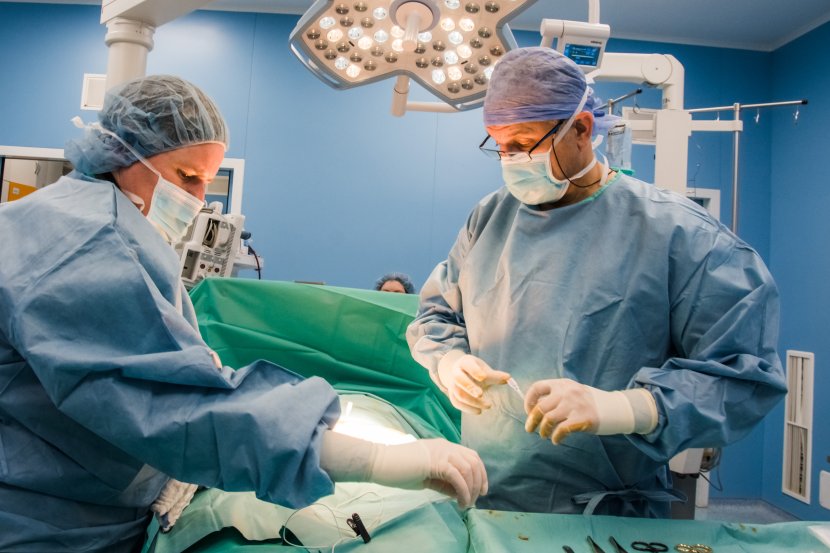
Yet any alleviation of the difficulty counts and helps the patient return to life. A method called sacral neuromodulation is a minimally invasive (i.e., very gentle) procedure that can relieve a patient of their difficulties. A stimulator connected to an electrode placed in the sacrum is inserted under the skin of the buttocks. This sends out weak impulses and helps restore the brain-pelvic floor connection, giving the correct information about bladder fullness, the need to empty, etc. The presence of the neurostimulator in the patient's body does not restrict the patient in any way, he can engage in activities as before. Once set up, the device works fully automatically, the nerve endings are continuously stimulated and the battery life is up to 7 years without recharging. The procedure is fully reimbursed by health insurance companies.
Implantation in two steps
"The sacral neuromodulation method is a highly effective, at the same time maximally gentle method, which can relieve the patient of difficulties by up to 95%. It is carried out in two steps, first the electrode is implanted in a so-called "trial", for fourteen days the effectiveness of the therapy and the stimulation settings are tested, at this stage it is controlled by an external stimulator. In the second phase, a long-term stimulator is implanted into the area above the coccyx "permanently". However, the procedure is reversible; if, for example, the causes of incontinence disappear over time, the device can be easily removed," explains Julius Örhalmi, MD, Ph.D., FASCRS, MBA, of the Hořovice Hospital.
Eighteen years of searching for a solution
Mrs. Beránková also has personal experience with the disease. I started to solve everything, but there was not enough information on the Internet. Colleagues at work and friends wondered why I had to go to the toilet all the time, and I even lost my job twice because of it. I work as a primary school teacher and my bosses perceived repeatedly going to the toilet as a gross disruption of lessons. As I was plagued by both types of incontinence, urinary and faecal, doctors repeatedly recommended a drain - but I was very resistant to the 'bag' and tried to find another solution. After about 18 years of difficulties, I learned about the sacral neuromodulation method. Although my problems have not yet been 100% resolved, the procedure has relieved me considerably. And because I know what it is like to struggle with the disease and to be in an information vacuum, I decided to start a patient organisation to help other patients find solutions and support each other," says Ms Beránková.
Where to go for help
Sacral neuromodulation can be performed in specialised centres in five locations in the Czech Republic. The urinary incontinence procedure is performed at the centres at Motol University Hospital and Ostrava University Hospital. Stool incontinence is treated at the Bulovka Hospital, Hořovice Hospital and St. Anne's University Hospital in Brno. In the Czech Republic, patients have been able to use this method since 2018, since when almost two hundred patients have undergone the procedure.
Substantial information about incontinence, options for its treatment, as well as a questionnaire that can be filled out by those interested in treatment with the sacral neuromodulation method are available on the website www.bezomezeni.cz.
Source: Web Life4you.cz, 21.6.2023