Česky
Česky


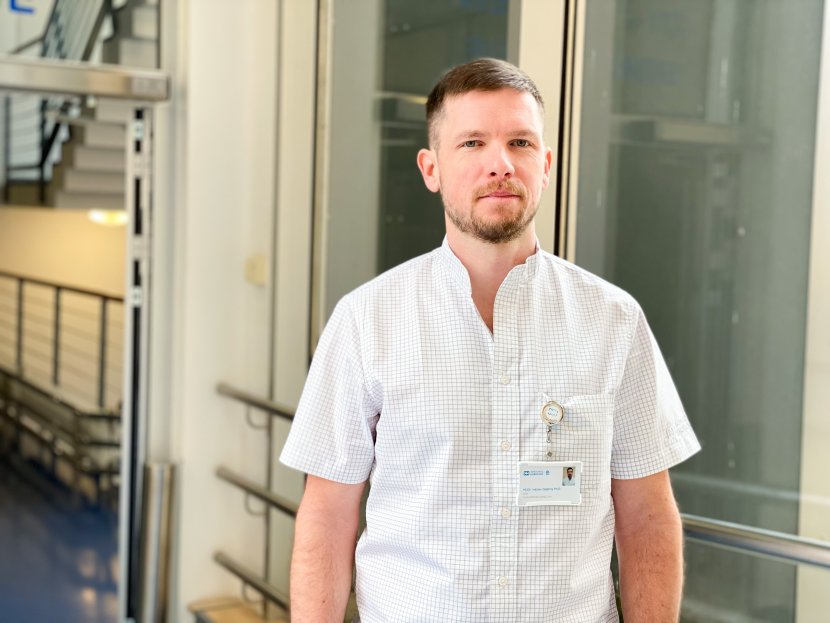
Since January this year you have been working at the Hořovice Hospital in the surgical department. Where did you work before that?
After finishing my studies at the Faculty of Medicine in Pilsen, I joined the surgical department of Rokycany Hospital, where I worked for 3 years as a secondary student. Then I got the opportunity to work at the Surgical Clinic of the University Hospital in Pilsen, where I passed the certificate in surgery and then I started to work in vascular and transplant surgery and got the second certificate in this field. I spent 10 years at the University Hospital Pilsen and gained most of my surgical experience there, learning from the most experienced colleagues in the field.
You have had several foreign internships. Can you compare treatment in the field of vascular surgery here and abroad?
Nowadays, the field of vascular surgery is closely linked to endovascular treatment, which in the Czech Republic is mainly provided by interventional radiologists. Abroad, these methods are also the responsibility of vascular surgeons. However, it is not uncommon that the vascular surgeon then profiles more into an endovascular specialist and loses experience in open surgery on the vasculature. Otherwise, treatment methods in the Czech Republic and Europe do not differ. Vascular surgery, like medicine in the Czech Republic in general, is at a very high level.
What issues will you be dealing with in Hořovice?
The main focus of our vascular outpatient clinic will be the diagnosis and subsequent treatment of the entire spectrum of vascular diseases, most of which are ischemic diseases of the lower limbs, as well as carotid artery diseases, aneurysmal arterial diseases and care for patients with the need to establish an arteriovenous shunt for dialysis. Last but not least, the diagnosis and treatment of varicosities of the superficial veins of the lower limbs.
What options will you offer for the management of vascular problems?
The facilities of Hořovice Hospital allow surgical treatment of the above mentioned spectrum of vascular diseases. For endovascular procedures we will send patients to the cooperating interventional radiology department. We are therefore able to provide patients with comprehensive up-to-date care.
As your field evolves, are you seeing progress in vascular surgery?
The main development in recent years has been the introduction of the aforementioned endovascular methods, which paradoxically have "taken away" a certain proportion of patients from vascular surgeons. However, there are still situations where a non-surgical solution is not possible. There have been no dramatic developments in open vascular surgery, apart from laparoscopic and robotic surgery, which are reserved for large centres. Vascular prostheses and suture materials have been in use for a long time and therefore have proven properties and results.
When should one see a vascular surgeon?
A patient should be referred to a vascular surgeon on the advice of a general practitioner or other specialist. The main symptom of coronary artery disease of the lower limbs is 'claudication' - pain in the limb when walking, which sometimes causes the patient to stop. More advanced symptoms are resting pains or trophic changes on the skin, especially the fingers, of the affected limb. However, many vascular diseases are asymptomatic and may be an incidental finding on other examination. For example, an abdominal aortic aneurysm is often detected on abdominal ultrasonography for another indication. Similarly, involvement of the carotid artery may not manifest itself until a stroke.
Will you collaborate with other specialties?
Absolutely, interdisciplinary collaboration is essential in the care of the vascular patient. Whether it is the correct indication for vascular examination, the subsequent preparation for surgery or further post-operative care. It is always a team effort between an internist, an anaesthetist, a surgeon and a physiotherapist or physiotherapist. The concept of one omniscient doctor is now a thing of the past.
What are your hobbies? How do you relax?
I relax mainly by being active, playing sports. Recreationally, I do triathlons over longer distances. My family and I like to spend our free time in the mountains in any season. The biggest escape is diving, especially technical, wreck, cave diving... but it takes more time and the day has only 24 hours unfortunately :-)