Česky
Česky


What is Rare Disease Day
Rare diseases are serious, usually congenital and often incurable. While individual diagnoses are rare in the population, collectively they represent a significant health and societal challenge.
- They affect approximately 500 000 people in the Czech Republic .
- In Europe, around 30 million patients are living with a rare disease .
- Worldwide, up to 300 million people are affected .
There are more than 6 000 different rare diagnoses, which have very different courses. However, the common denominator is often the complex and lengthy path to a correct diagnosis, limited treatment options, the need for long-term support and the significant impact on the whole family system.
Rare Disease Day aims to raise awareness of the specific needs of these patients and their families among the public and health and social care professionals. At international level, the day is organised by EURORDIS, an organisation of patient organisations across Europe. In the Czech Republic, activities are coordinated by the Czech Association for Rare Diseases (CAVO).
"Although rare diseases affect small groups of patients individually, together they affect hundreds of thousands of people. It is therefore essential that the state and health care institutions systematically respond to their specific needs," says Bc. Anna Arellanesová, Chairwoman of the Czech Association for Rare Diseases.
Care for patients with rare diagnoses at Hospital Hořovice
Hospital Hořovice, which is part of the AKESO healthcare holding, provides care for patients with rare diseases across several highly specialised departments. In particular, the complex care of paediatric patients plays an important role.
Supportive and palliative care
The Supportive and Palliative Care Department focuses on children and adults with serious life-limiting or life-threatening illnesses. The aim is not only to treat the disease itself, but above all to ensure the highest possible quality of life.
"We focus not only on the physical difficulties, but also on the psychological, social, spiritual and legal aspects of the illness. Our aim is to support the patient and their family with full respect for their wishes and values. We provide care on an outpatient basis as well as during hospitalisation," explains Mahulena Exnerová, M.D., head of the Department of Supportive and Palliative Care and guarantor of the development of comprehensive paediatric care at Hospital Hořovice.
Long-term intensive care for children (DIOP)
The Department of Long-term and Intensive Care for Children (DIOP) plays a crucial role in the complex care of seriously ill paediatric patients. This unit, operating within the paediatric ward, is quite exceptional in its focus and scope of care in the Czech environment.
"At the DIOP we provide long-term intensive care to children with serious, life-threatening or life-limiting diagnoses. These are often patients with inborn metabolic disorders or genetic syndromes," says Tereza Tomanová, MD, head of the DIOP department. "Of course, we also provide follow-up comprehensive outpatient care and help the family get a good understanding of the services available in their region," she adds.
Follow-up intensive care for children (NIP)
Seriously and terminally ill children of all ages are also cared for by the Post Intensive Care Unit for Children (NIP). "We provide multidisciplinary chronic intensive and resuscitation care to children of all ages who are very seriously to terminally ill. In the context of Rare Disease Day, we also care for patients with various rare genetic defects and syndromes," adds Daniel Blažek, MD, Chief of the Department of Post-acute Intensive Care for Children .
Interdisciplinary care also for adult patients
Adult patients with rare diseases are also treated at Hospital Hořovice - for example, those with rheumatological, pulmonary, neurological, oncological or cardiovascular diagnoses.
Care for these patients requires close interdisciplinary cooperation, an individual approach and long-term coordination of health and social services. It is the complexity and continuity of care that are the key factors that significantly affect the quality of life of patients.
A symbol of solidarity and support
Rare Disease Day has been commemorated for 19 years in more than 100 countries around the world, every year on the last day of February. Its aim is to raise awareness of rare diseases and their impact on the daily lives of patients and their loved ones.
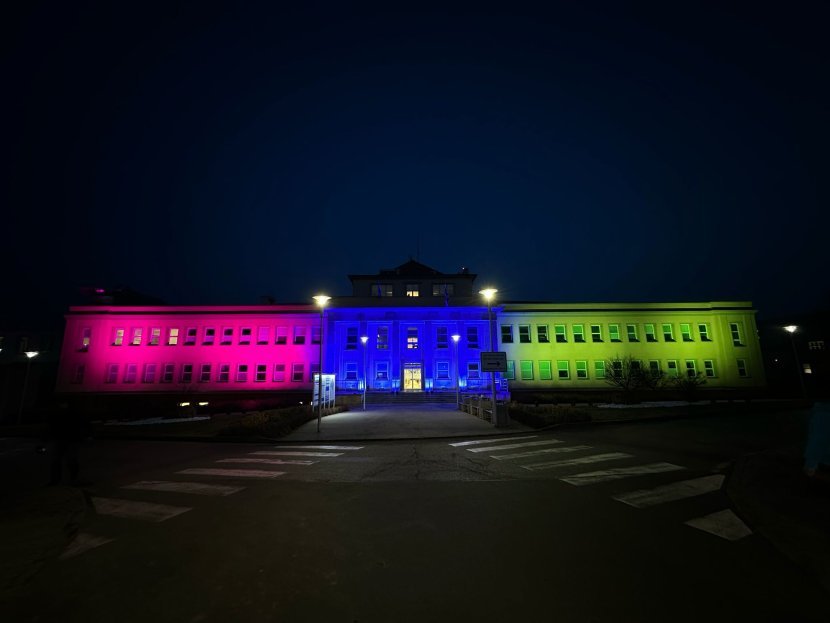
Hospital Hořovice will support it symbolically this year - by lighting up the building in pink, green and blue on Saturday, 28 February 2026 at 5 pm.
"As a major healthcare provider, we are pleased to support this day and help draw attention to the needs of patients with rare diseases and their caring families," adds Mahulena Exnerová, MD.
The symbolic gesture is an expression of respect, support and solidarity with those whose disease may be rare, but whose stories and needs deserve full attention.