Česky
Česky


"Between six and seven o'clock in the morning we receive material from the whole hospital - from the wards and outpatient clinics. From nine o'clock onwards, instruments start arriving from the operating theatres, and then we are on the move until the evening," says nurse Pavla Hříbalová, who started working at the hospital in Hořovice years ago as a temporary worker.
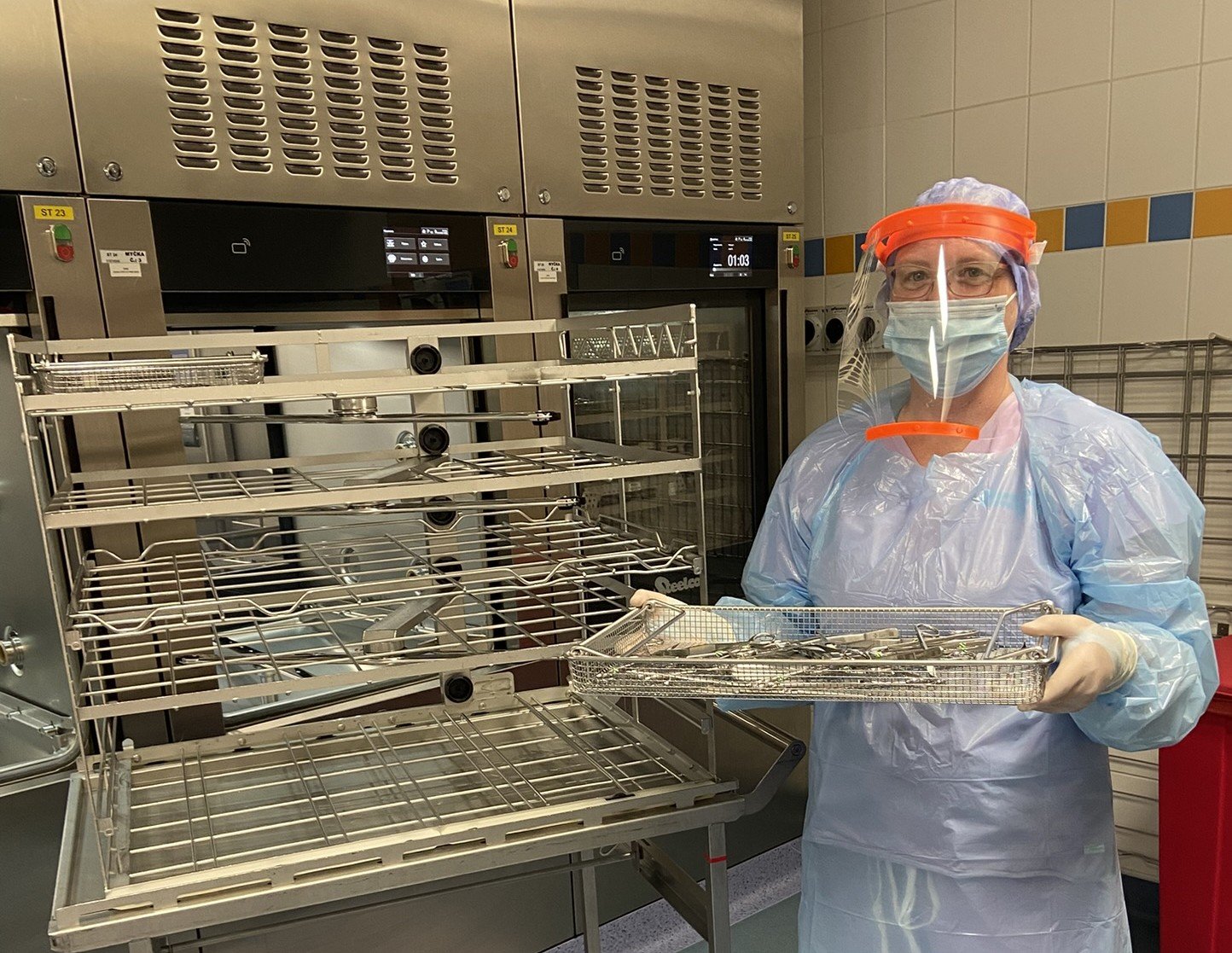
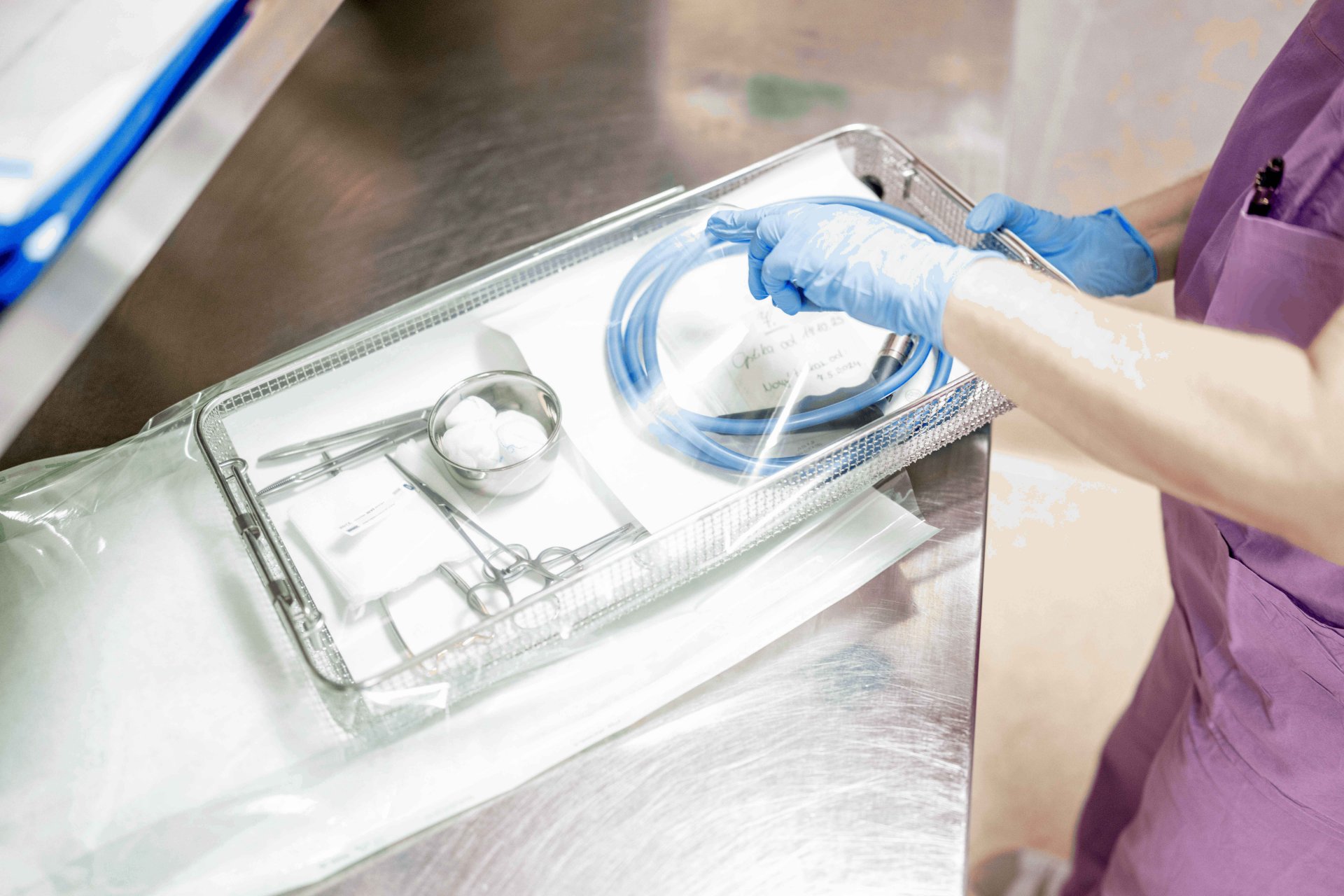
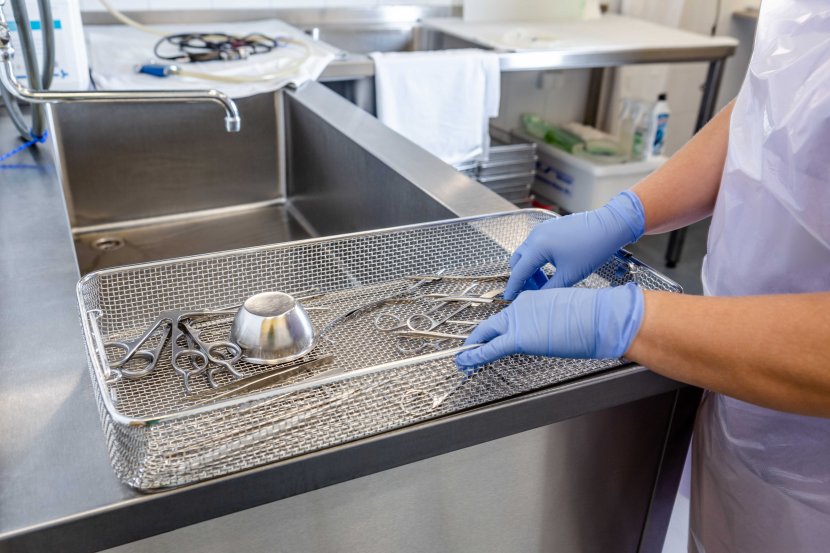
This daily cycle is followed by a carefully organised process, during which the used instruments pass through several zones. In the "dirty part", they are first received by the orderlies, who wash them by hand or prepare them for machine washing. They are also responsible for operating the disinfection machines. The instruments are then taken over by the nurses in the so-called set room. "Here we check every instrument. It is clean, undamaged and functional. Then we assemble the instruments into sets on operating screens, pack them and prepare them for sterilisation," explains Pavla Hříbalová.
Thousands of instruments, hundreds of sets and maximum precision
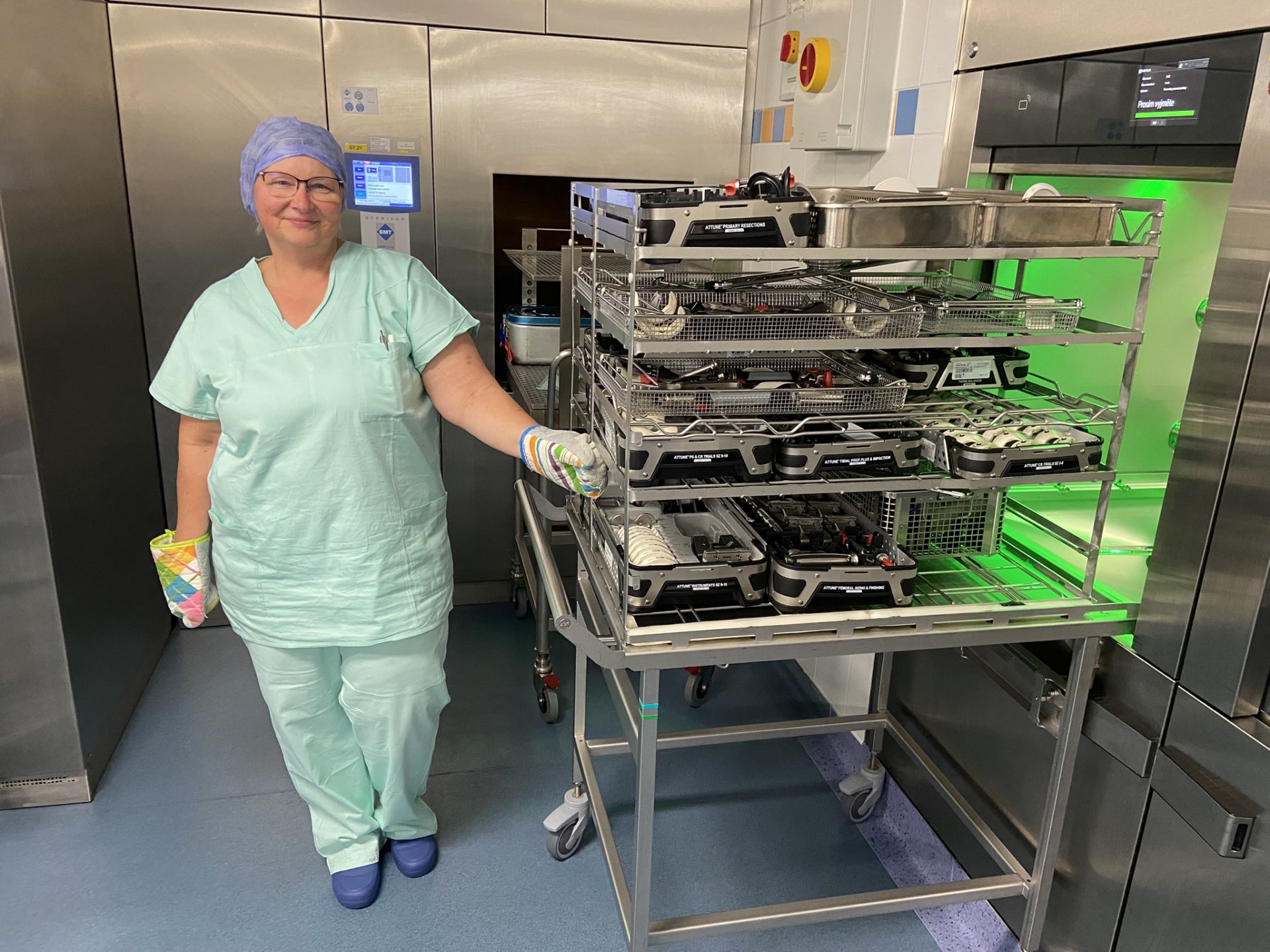
Hundreds of instruments pass through the central sterilisation of Hořovice Hospital every day. The plant is equipped with three large-capacity sterilizers, two of which are new and can hold a third more material than older types. Each sterilization cycle is accurately recorded and tested by nurses. "We have over 400 types of surgical mesh and another 40 or so specific sets just for the operating theatres. Each has a precise composition. Even one missing or malfunctioning tweezers can cause an unwanted complication during surgery," says head nurse Lenka Hříbalová.
In order to be able to safely reuse the instruments, it is necessary to verify that the process has been carried out correctly after the sterilisation cycle has been completed. Each set of sterilised items, or embedding, also has testing indicators prescribed by the decree. "The pre-sterilisation preparation and sterilisation process must be successfully carried out in order for the instruments to be usable. Everything must also be recorded in the documentation," shows nurse practitioner Eva Zíková.
Part of her job is to carry out tests at the beginning of each day or shift to verify the functionality of the instruments and the tightness of the sterilisation chambers.
However, effective cooperation with other departments, especially the operating theatres, also contributes to the smooth running of the whole process. "We are in touch all day long. For example, when the surgeon wants to quickly refill a specific instrument that is not normally in the operating suite. Or when there is a change in the operating plan and other sets of instruments need to be prepared," says Pavla Hříbalová.
New: plasma sterilization and robotic instruments
The central sterilisation unit at Hořovice Hospital is now preparing for expansion. Due to robotic operations, a plasma sterilizer will be newly installed, which will allow gentle sterilization of instruments sensitive to high temperatures. "This is another step forward. It requires adjustments to the space and the introduction of new procedures, but it moves us forward technologically and professionally," says Lenka Hříbalová.
The entire team had to be trained for the new type of sterilisation - not only in the plasma work itself, but also in the previous steps, such as receiving the material and disinfection. "I wanted the nurses to understand the whole process, not just their part. Even a seemingly small thing can affect the outcome," notes the head nurse.
Strengthening the team
But with new technology and an increasing number of surgeries comes the need to strengthen the staff. The central sterilisation department at Hořovice Hospital is therefore currently looking for two new nurse practitioners. "We have a lot of responsibility behind us, but we also have the confidence that what we do makes sense. We work in a great team and I was able to complete my education thanks to this job," says Eva Zíková, who started as an orderly five years ago and graduated from a secondary medical school while working.
Each new team member goes through an adaptation process that takes several months. The new nurse gradually becomes familiar with all parts of the operation and only then can she work independently. "The nurses are in charge of assembling sets, keeping documentation and checking. The orderlies take care of washing, disinfecting and transporting the material. Everything has to be lined up and absolutely precise. Without us, no operation could start," Lenka Hříbalová summarises.