Česky
Česky


Mr. Chief, you have recently started performing operations with the new Velys robotic system. Can you tell us more about it?
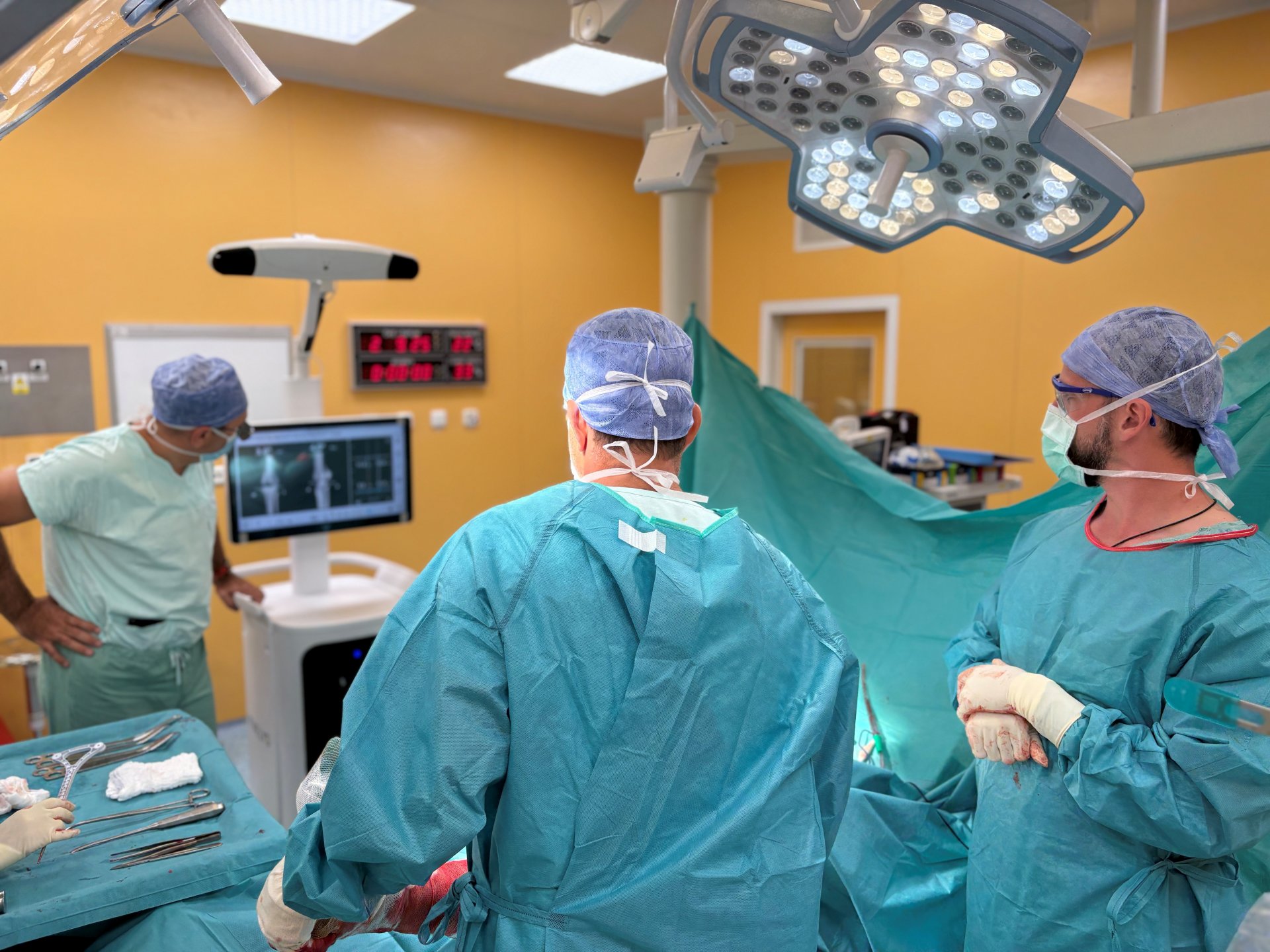
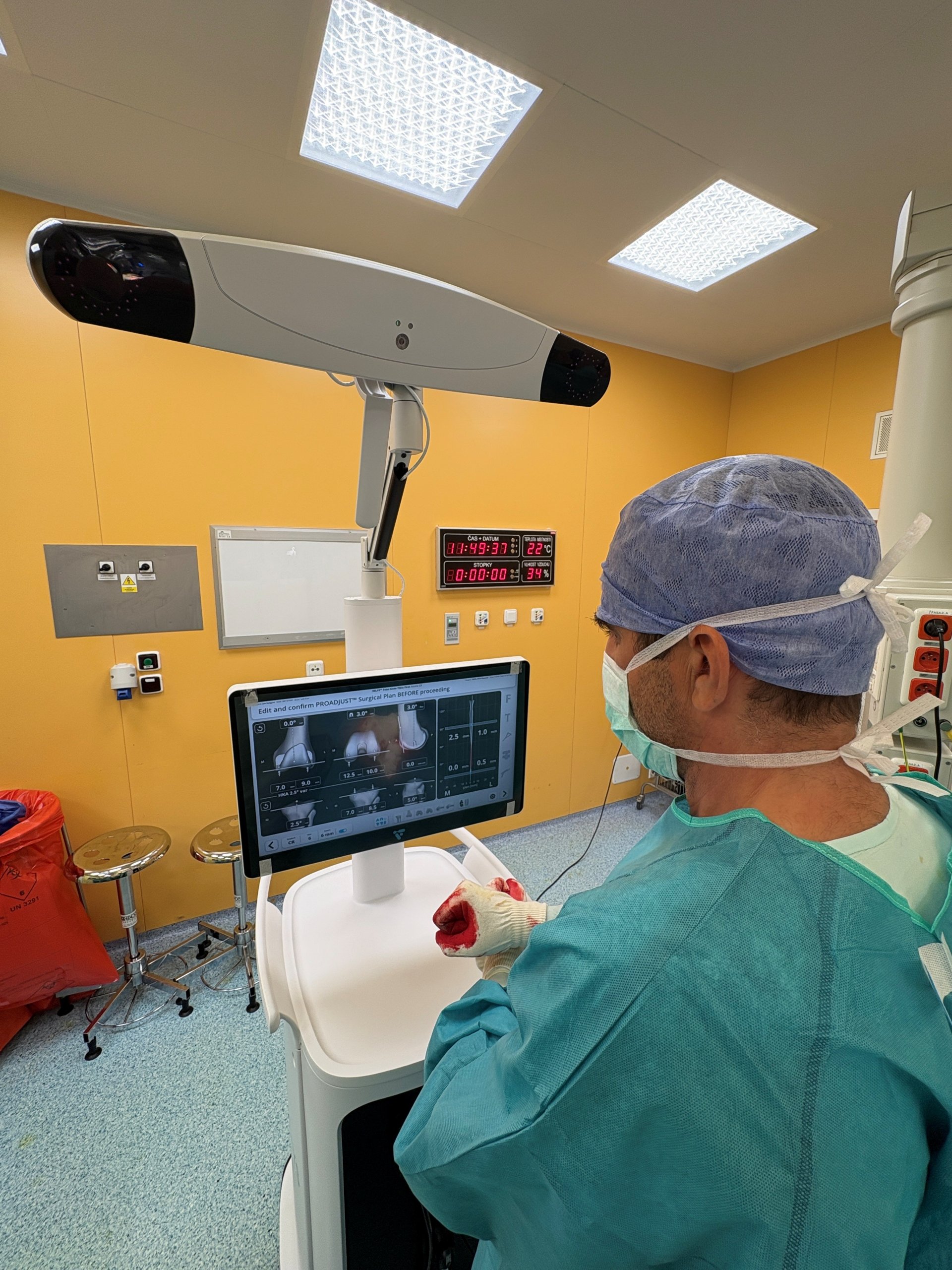
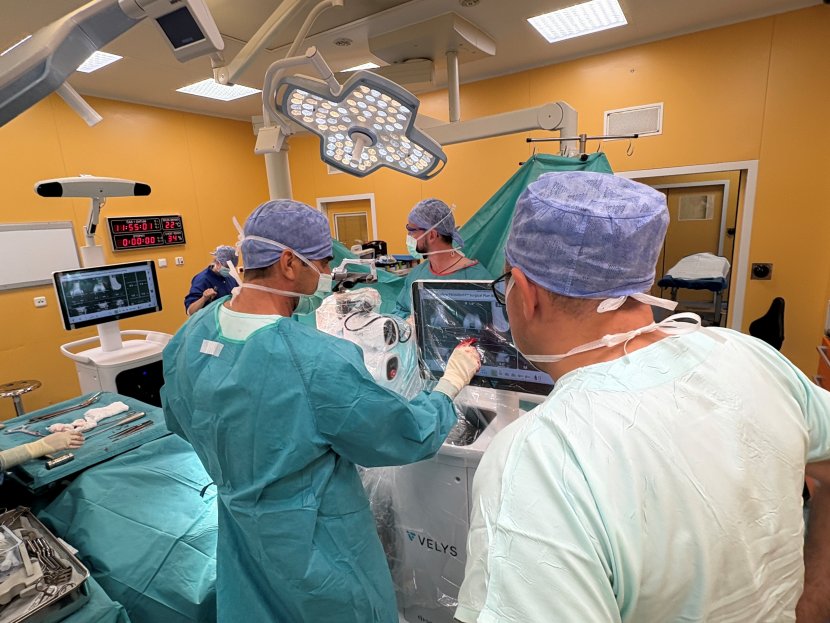
I am very happy to announce this wonderful news - the first twelve operations using the robotic system have been carried out without complications. I would like to thank the entire team involved in these operations. It was truly a team effort that takes us a big step forward. Moreover, this is the very first surgery with this technique in the Czech Republic, which fills me with even more joy and pride for our entire orthopaedic team.
So you have already had twelve surgeries?
Yes. I didn't want to inform you about it before, because one successful operation doesn't mean anything by itself. I wanted to get more familiar with the system, to try it out in practice and to gain confidence. This was preceded by thorough training, first on bone models and then on cadavers (donated bodies for teaching doctors - editor's note). After successful testing, we were able to start using the robotic system fully on patients.
What do you see as the main benefit of the robotic assistant?
I consider the biggest benefit to be the ability to change the philosophy of knee balancing. We know from the literature that approximately 80% of patients are completely satisfied after a knee replacement, but for the remaining 20% the outcome is not ideal. So we are constantly looking for ways to improve the results. In recent years, the so-called CPAK classification has become established, which divides the knees into nine groups and offers individually optimised solutions accordingly.
Can you explain this in layman's terms?
Of course. We used to target the so-called mechanical axis in all patients - that is, the joint cleft should be perfectly parallel to the mat on which the person walks. Today we try to respect the natural shape of the limb, i.e. the so-called X or O deformity, but of course within certain safe limits. For example, in the case of a severe varus deformity (legs in an "O") with an angle of 14°, we do not correct completely to zero, but only to a value of 4.5°. This method of so-called kinematic balancing appears very promising in the literature, although we have to wait for long-term results.
You have tried several robotic systems. Can you say which one is better?
There is no clear answer. They differ in details, they use different types of implants, but both systems allow us to follow the principles of kinematic balancing and achieve very good results.
So do you now have a robotic system permanently available?
Not at the moment. At the moment, insurance companies cover the same amount regardless of whether the operation is performed in the standard way or with the use of a robot. We are now preparing a multi-cost calculation and at the same time addressing the issue of time in the operating room, because robotic procedures are, after all, more time-consuming. Only after these results will we decide whether or not to become a permanent robotic workplace.