Česky
Česky


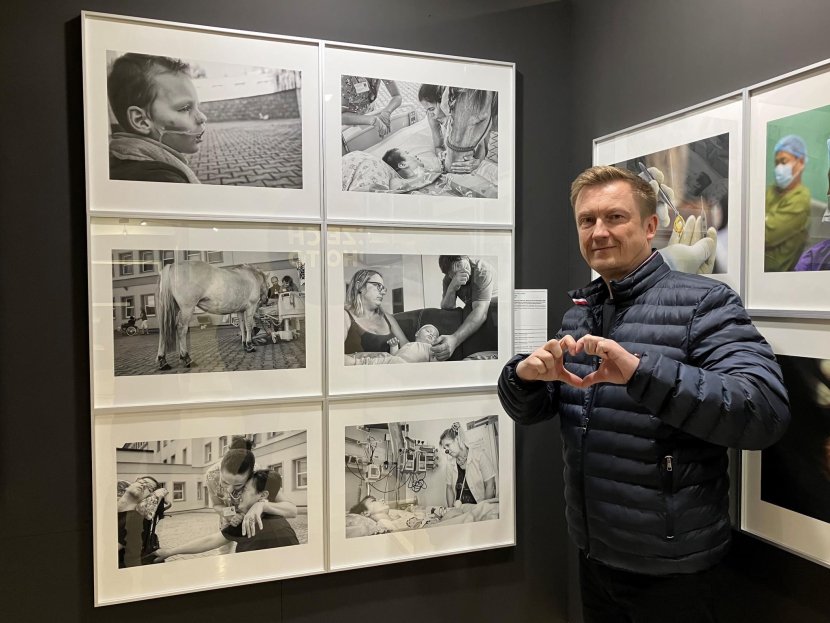
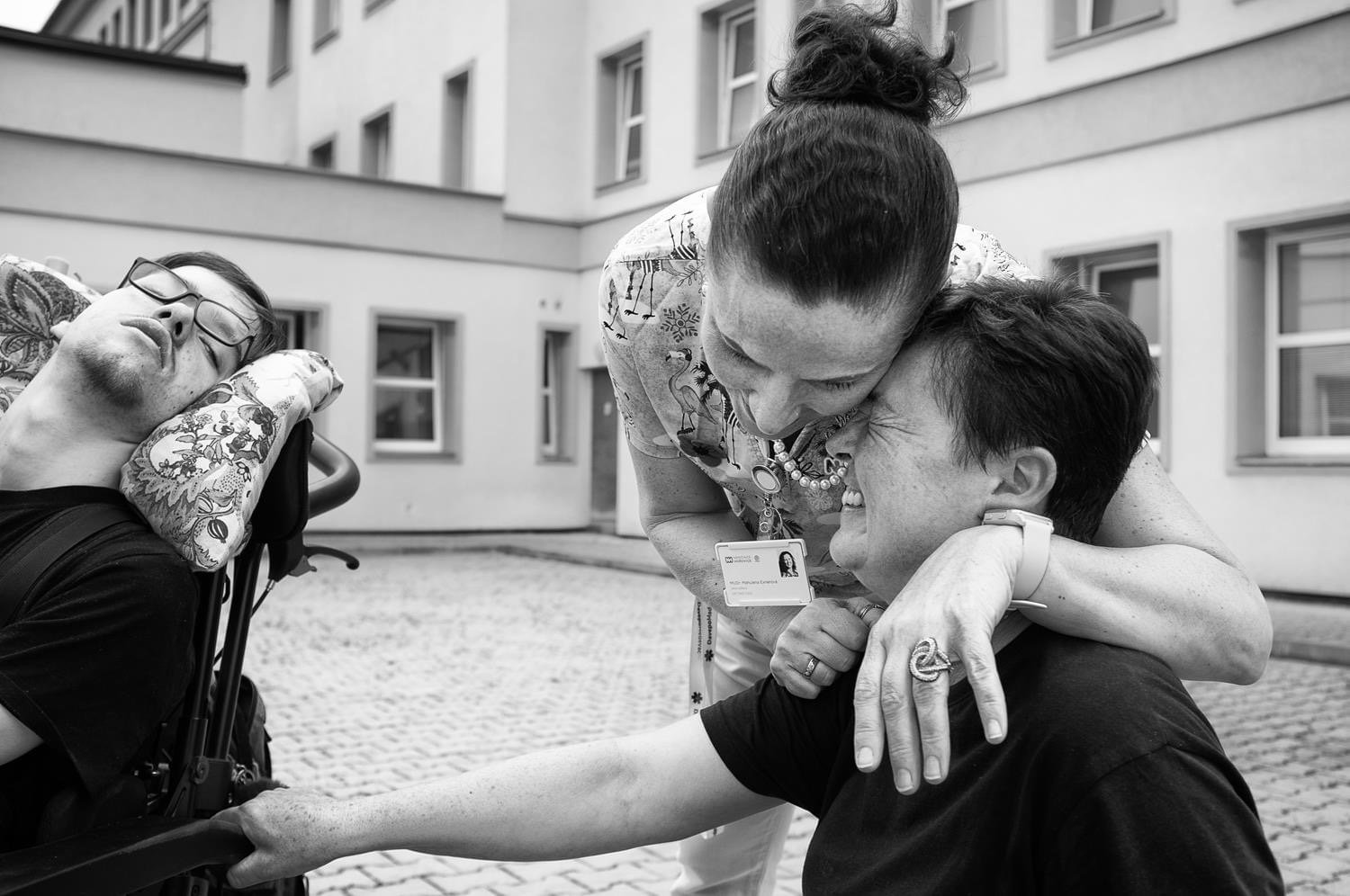
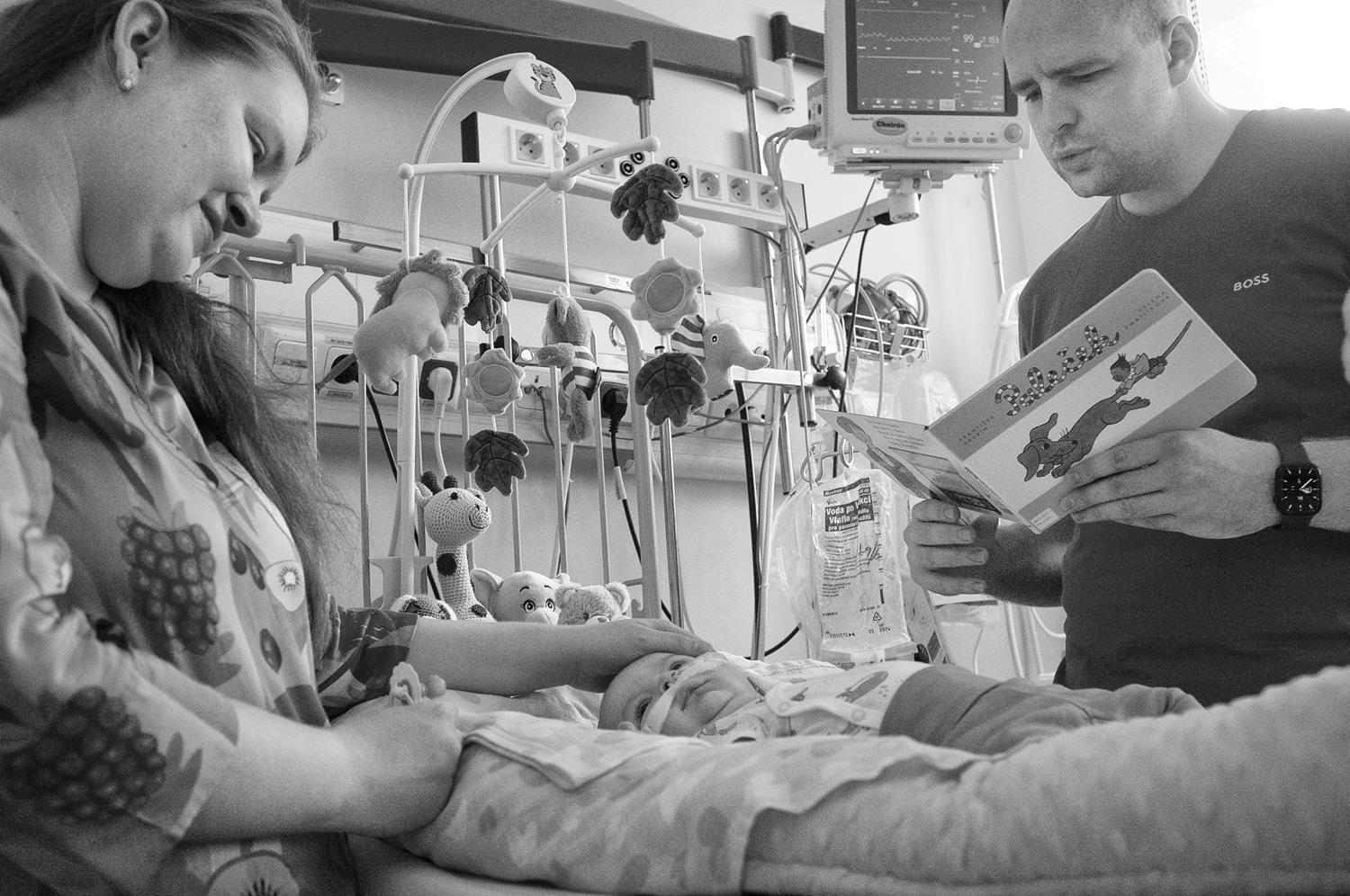
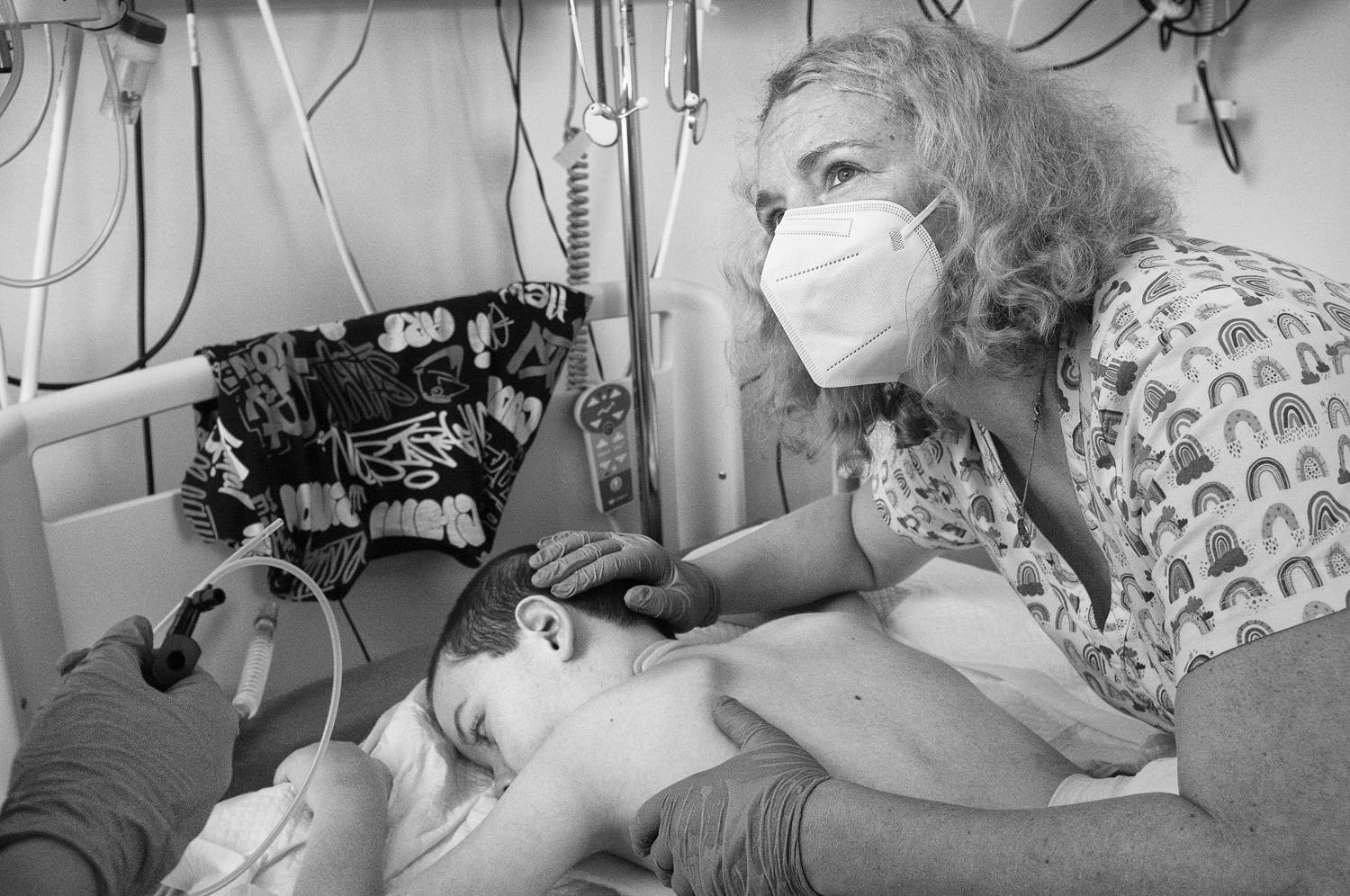
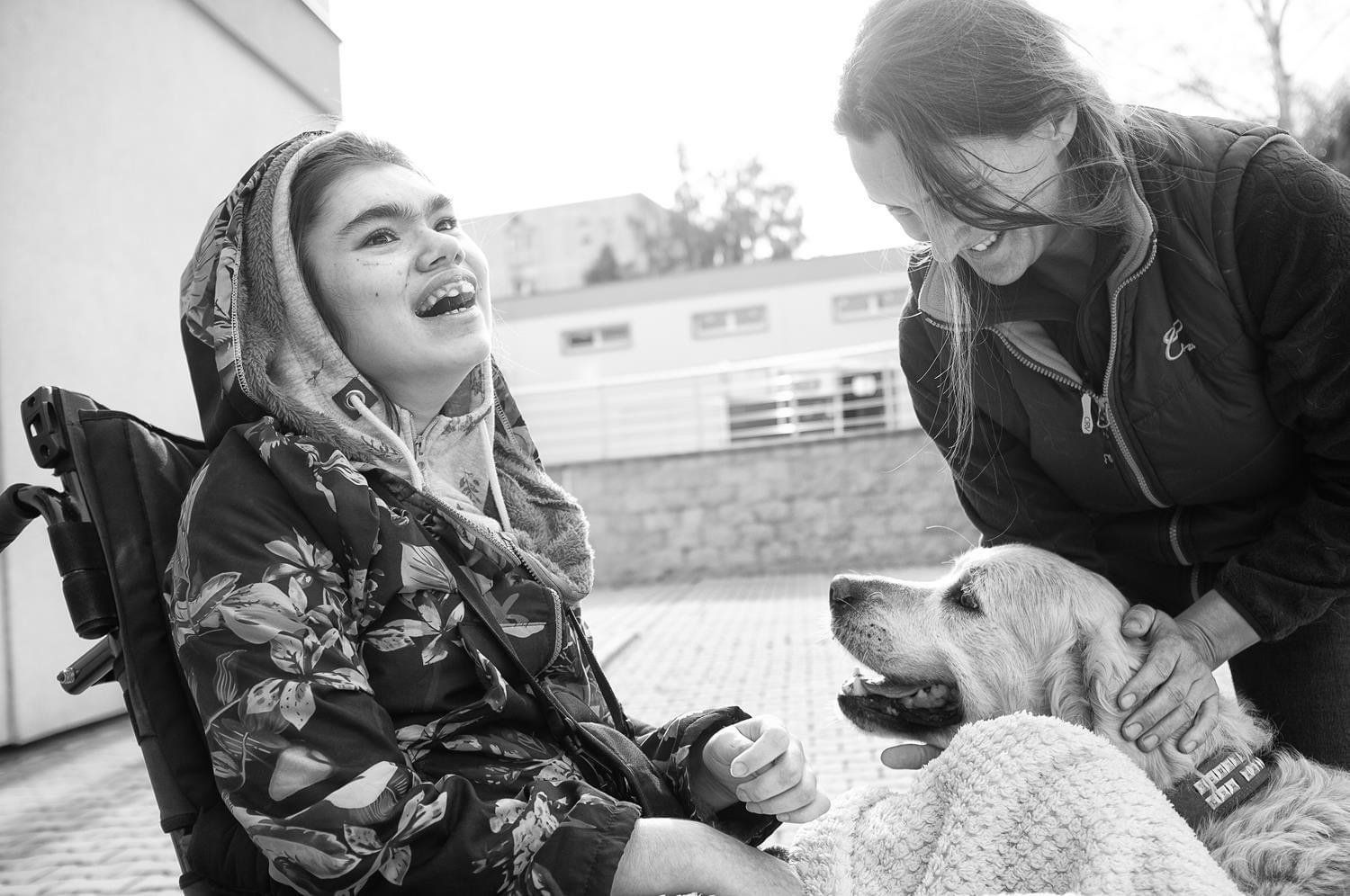
But the next amazing news didn't wait long. The photographs from the "Hope" series, which were part of the aforementioned collection, are currently on display as part of the Czech Press Photo 2023 exhibition in the New Building of the National Museum on Wenceslas Square in Prague. The exhibition of the 29th edition of the Czech Press Photo journalism competition, which last year attracted over 60,000 visitors, will run until the end of August.
"I am pleased that this is also a way to spread awareness about this topic, which is still relatively taboo in this country. And I am even more pleased that the amount of financial donations that the public has contributed to the functioning of the DIOP of Hospital Hořovice has just reached 300.000,-. For this, my undying admiration and enormous thanks go to all of them," thanks photographer Michael Hanke to all those who helped.
And who is Michael Hanke, how long has he been taking pictures and how did he get into photographing children in the DIOP children's ward?
How long have you been photographing?
I have only been taking photos since I was 40 years old, when I got my first camera for my birthday, which I still use today. This year I will be 52 years old. In this still relatively short time I have worked on 20 photographic cycles. Most of them I shoot long term as I need to get in depth, not just "skim" the surface. And even though the subjects are different - from dance parties of seniors, to children's chess tournaments, circus, first communion, family funeral service, to people living with disabilities or currently just a set documenting everyday life in the DIOP ward at the hospital in Horyovice - all these subjects have one thing in common. I am interested in ordinary people and their extraordinarily "ordinary" lives. The common motif of practically all my photographic collections so far is to remind people that the most beautiful moments of life are available to all of us. We can all indulge in them, yet we tend to overlook them more and more. I point out the places where the world is still right. And although it may seem that the series I am currently photographing at the DIOP Hospital in Hořovice is an outlier, it is not. Although the subject matter is certainly serious and the setting might seem sad, I find incredibly powerful and beautiful moments at DIOP - between staff and paediatric patients, between parents and their children, and between doctors, non-medical presonals and parents. I try to capture all this in my photographs as sensitively as I can. After a short discussion with the Chief Medical Officer, MUDr. Exner, we gave this series the title "Hope", as we agreed that it expresses the most important thing for all those who are in this ward. As Dr. Mahulena Exner very rightly said in one of her interviews, "The saying that hope dies last is true even when there is no hope of recovery. It can be, for example, the hope that the whole family will be able to be together at home, that they will spend the following weeks, months and sometimes even years together, according to their own wishes."
You are the son of the famous photographer Jiri Hanke, did he lead you to photography?
Virtually our entire family has been involved in photography, most since childhood. I was the only one who took my time and started at the age of forty. However, given the subjects I'm involved in, I dare say that if I had started taking pictures 20 years earlier, around the age of 20, my photographs would have lacked the necessary depth, they would have been flat. After all, what did I know about life twenty years ago? I'm of the opinion that I had to experience something in my life first in order to be able to feel the right moments to press the shutter on my camera. So when people ask me if I'm not sorry that I didn't start taking pictures earlier, I immediately tell them without thinking too long that I'm not, that everything is as it should be. But to get back to your question. Since my father not only photographed, but also curated his gallery in Česká spořitelna in Kladno for over 40 years, where he also worked, I could not, of course, remain untouched by photography. I participated in dozens of openings that my father organised during those many years at the savings bank and somehow subconsciously perceived it all, even though at that time I was more interested in computers and information technology than photography, which had been my great hobby practically since childhood. And thanks to the fact that even today, apart from photography, I continue to work in the IT industry, where I earn enough money to be able to financially support our family together with my wife, I can afford myself one great luxury in photography - to choose the topics I pursue. I don't have to shoot just for the money, and I can pursue stories that I personally find interesting, where I can meet new interesting people and their powerful life stories. I've often said that photography has probably made me figure out many of the important things in my life much sooner than if I hadn't taken photos. I'm grateful to photography for making me who I am, and through photographing people I've learned what's really important in life, at least to me.
You have been awarded several times in the Czech Press Photo competition and you have even succeeded in the most prestigious photojournalism competition in the world, World Press Photo, twice - in 2017 and 2019. Which photo do you consider to be your best?
I can't answer that. All the photographs I have chosen to publish are like my "children". I love them all and I can't favour one at the expense of another. At a time when the world is inundated with a billion new photographs every day, I am of the opinion that one should remain "frugal" in terms of the frequency of publishing new photographs. I am also of the opinion that a photographer is only as good as the weakest photo he or she has published. Therefore, in some cases, I allow an appropriate time gap before deciding to publish a photograph. I let it work on itself for a while first. As far as my awards in prestigious photography competitions are concerned, of course I appreciate them very much. Even more so when I see how many new photos are created every day in the world and when I realise how the evaluation of the quality of photographs is a subjective matter. However, rather than bragging about how many awards I've already won, what's more important to me is that success in these renowned competitions guarantees that your photos - and the stories you tell through them - reach people literally all over the world. So, for example, thanks to my success at the 2019 World Press Photo with the photo set "They Never Saw Him Cry" about the disabled athlete Zdeněk Šafránek, these photos literally went around the world and were able to positively motivate people around the world who have suffered a similar fate as Zdeněk. Thanks to my photos, they can see that a happy and fulfilled life can be lived even after an accident or some other unfortunate accident radically changes their lives. Even if I help just one person in the whole world in this way, I can go to sleep at home at night with a sense of fulfillment from doing things that are meaningful.
How did you go from photographing senior dances and children's chess tournaments to photographing sick children here at DIOP?
It was a gradual shift from more "light-hearted" subjects to more "serious" ones, if I can put it that way, which is by no means to say that I won't eventually go back to photographing, say, the circus, where I spent a lot of time with a camera around my neck back then. Already while shooting the series about Zdeněk, which I have already mentioned, I discovered that I feel very comfortable among people living with disabilities, that those people - at least those whom I had the opportunity to photograph because they did not give up on life after an accident or other event, but rather started to live it to the fullest - are extremely positive, that they radiate incredibly positive energy. And I knew immediately that I wanted to spread this positive energy through my photographs, among other things, to people who have not yet been able to cope with their disability. To show them a possible way, to motivate them with the stories of their colleagues who have suffered a similar fate. I found out that many people, whose lives were turned upside down from one day to the next, not only managed to resist feelings of hopelessness and depression, but on the contrary, they managed to "turn" this adversity into a positive and many of them today make no secret of the fact that their lives have now become even more fulfilling. And I try to make it visible in my photographs that this is indeed the case, which I think is an extremely encouraging feeling for many other people who have suffered some unpleasant fate. So I have successively photographed the family life of the disabled athlete Šafránek, the paraboxers, the para-hockey players, or the twelve successful, strong and beautiful women from Journey to the Dream, each of them living with a different kind of disability. And for almost half a year now, I am extremely grateful that not only Mrs. Exner, but her entire team, from the first person to the last, have given me the confidence to document this extremely sensitive topic here at DIOP. We would be hard pressed to find any other place in the world where such a diverse pelmet of emotions is mixed - a potent mix of sadness, but also joy, pain, sorrow, but also laughter, and at the same time so much loving affection and boundless longing for hope.
You are photographing children at DIOP in Hospital Hořovice. What was your motive? And did anything surprise you?
First of all, I want to pay tribute to the whole DIOP team, led by the wonderful headmistress, with this file. I haven't met so many wonderful people in one place for a long time. They are all both great professionals and also very empathetic people with their hearts in the right place. I sensed this immediately, practically during the first photo shoot. The dedication to their work at DIOP completely radiates from these people. You can see how this very demanding but extremely meaningful activity fulfills them. I think that all those who work in this department know very well what is really important in life, they don't deal with trivialities and they don't chase after false ideals like many other people around us. Although their work is undoubtedly extremely physically and mentally demanding, they can go to sleep with the beautiful feeling that they have dedicated their lives to something that is deeply meaningful. This is exactly what I stopped feeling at the age of 40, a time when I was not yet dedicated to photography, but only to information technology. IT work was becoming increasingly unfulfilling, and as I mentioned above, this moment was the impetus for me to start photography in my 40s. And if there is anything left of me, apart from our conscientiously raised children, I suspect it will be my photographs. Another reason why I take photos at DIOP is the much-needed awareness that this still significantly taboo topic in our country surely deserves. At the same time, I have discovered to my great delight how much these photographs mean to parents of seriously ill children. I would never have dreamed that not only do we get permission from practically everyone to take photos, but that most of them are still extremely supportive and cheerful of this "awareness" project. They are so grateful for my photographs of their brave children that it makes me embarrassed. I even made arrangements with some of them to photograph them in their home environment, which gave the whole series another powerful dimension. Last but not least, this time - and this is the first time in my short photography career so far - I would like to motivate as many people as possible to send a financial donation to DIOP through the Giraffe Foundation through this photo series. Thanks to the aforementioned successes in prestigious photography competitions, I have achieved that my social media walls (specifically Facebook and Instagram) are already followed by over 10 thousand people. So I thought I would try to reach out to them and invite them to consider sending a financial donation to DIOP. When I heard from the headmistress that a number of important activities for children, such as canister therapy and hippotherapy, as well as the purchase of some necessary equipment, are not covered by health insurance companies and how difficult it is to raise the necessary funds, I thought it was the least I could do. At least I want to try. I called this purely personal initiative (campaign) "GIVE HOPE" and I hope that among people who can afford it due to their financial situation, there will be as many as possible who, after seeing my photos from this environment, will not hesitate to send DIOP a financial donation - even if only in a symbolic amount. And for people who send a higher amount, I will be happy to donate any of my photographs of their choice across my entire portfolio - signed, of course, and in this case with a thank you note. Needless to say, I do not intend to make a single penny from this project - quite the contrary - thanks to the aforementioned campaign, I would like to bring as much financial injection to DIOP as possible, which they undoubtedly deserve for their work. At the same time, we are already thinking about organising a small exhibition directly in the premises of Hospital Hořovice, which would end with an auction of all the exhibited photographs, the proceeds of which would again go to DIOP. So I hope that there will be many donors with their hearts in the right place, who know that the warm feeling on their hearts is priceless.
Where can we see your photos?
You can find the most comprehensive list on my website. You can then get up-to-date information about my photographic work on my Facebook and Instagram profiles.