Česky


3 July 2013
On Thursday 20 June 2013, the traditional event organised by Czech pharmacists – Pharmacy Day – took place. This year’s fifteenth edition, entitled ‘Holidays and Protection from the Sun’, focused primarily on the risks associated with sunbathing and exposure to the sun. As in previous years, the Hospital Pharmacy Hořovice also took part in the event.
“I think this year’s theme couldn’t have been more aptly chosen, given the weather,” says Mgr. Magdaléna Čížková, pharmacist at the Pharmacy Hořovice. Although having a tan is still considered a sign of beauty, the adverse effects of ultraviolet radiation on the skin have long been recognised. “That is why we should not forget about appropriate and effective protection from the sun’s rays, and not just during summer holidays,” she adds.
There are many different manufacturers and brands of sun cream on the market. They differ, for example, in their sun protection factor (SPF). “Put simply, this refers to the approximate number of times the safe exposure time in the sun is extended after applying sunscreen,” explains pharmacist Mgr. Tomáš Veverka.
The active ingredients in sunscreens can be divided into two basic categories: so-called chemical and physical sunscreens. Chemical sunscreens absorb radiation and convert it into heat, or alter its chemical structure. This is linked to the gradual reduction in the effectiveness of sunscreens. That is why we must not forget to reapply a layer of sun cream approximately every two hours. Physical sunscreens, on the other hand, reflect radiation and have a minimal effect on the product’s phototoxic potential. They are therefore recommended for children and people with sensitive or eczema-prone skin. “For technical reasons, they cannot be used in concentrations higher than 25 per cent, at which they achieve a maximum SPF of 20. In the most advanced formulations containing a micronised ingredient, this rises to SPF 30,” explains the pharmacist.
Experts at the Pharmacy Hořovice also emphasise to their patients the risks associated with the application of topical medicines. For example, this applies to ketoprofen, which is used topically for pain and inflammation, as well as creams and gels containing retinoids and benzoyl peroxide for the treatment of acne. “Even preparations for internal use containing St John’s wort can cause a photosensitive reaction. As for antibiotics and chemotherapeutic agents, even in winter we warn against UV exposure when taking doxycycline, co-trimoxazole or ofloxacin,” states Mgr. Magdaléna Čížková.
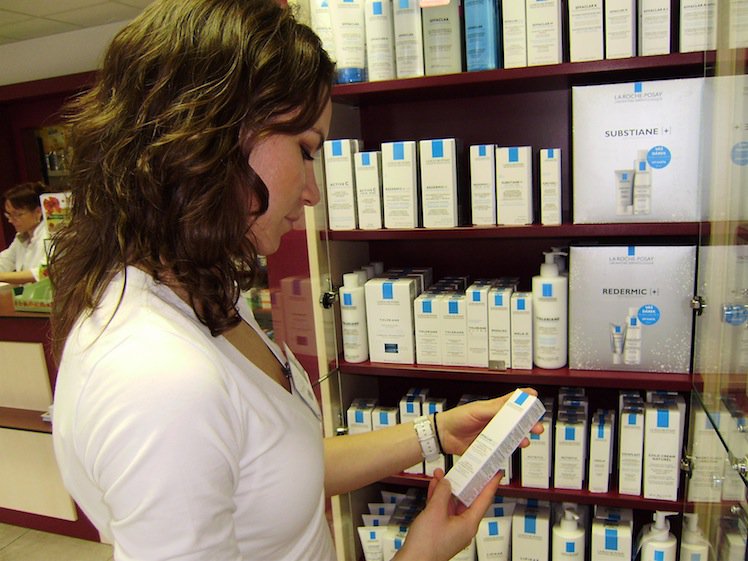
Mums most often buy products from the La Roche-Posay, Ladival and Daylong ranges, which are available as classic body lotions, sprays or gels. For exposed areas of the face, a stick with a sun protection factor can be used. But the main thing is not to forget to apply it thirty minutes before going out in the sun. And don’t skimp – spread about seven teaspoons of sun cream thoroughly over your whole body.
“This event has shown that we are able to devote our attention to all our clients and provide them with expert advice. I’m also pleased that patients responded very positively to Pharmacy Day,” sums up Mgr. Magdaléna Čížková.