Česky
Česky


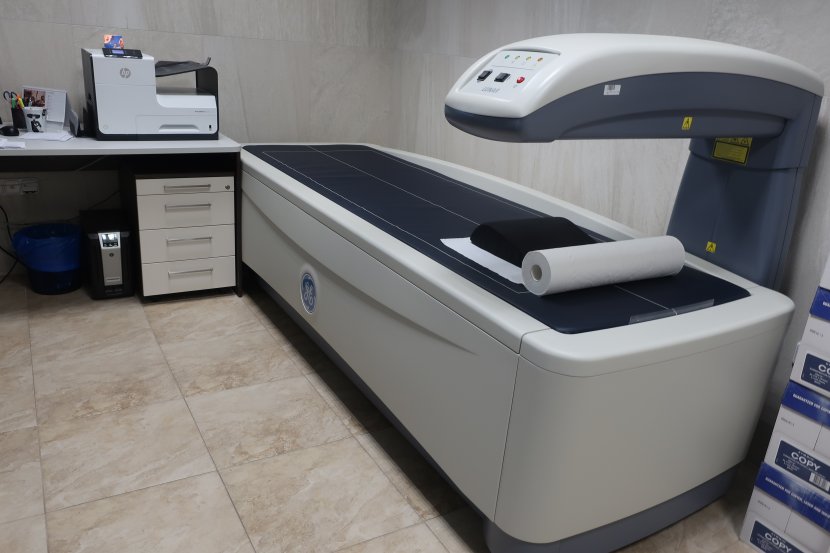
Densitometry is a method that determines the mineral density of bone and the density of bone tissue. Everything is evaluated primarily on the basis of the amount of calcium in the bones. The examination method is fast, does not burden the patient and is painless. The patient lies on a special bed, is dressed, and the scanner captures one or more areas of bone - usually the lumbar spine and the upper part of the femur. The result of the bone density is transferred to a graph.
"In the region around Hořovice, there is very limited opportunity to diagnose and treat osteoporosis. Until now, we have had to send patients to other centres. Now we are able to take care of them right here, which increases the availability and comfort of this service for our patients," explains the reasons for the investment Michal Průša, director of Hospital Hořovice. The new Lunar-Prodigy device, designed to investigate bone thinning, cost just under two million crowns and can examine up to two thousand patients a year. Hospital Hořovice also opened an osteology outpatient clinic where patients with osteoporosis are monitored and treated. Among the most serious manifestations of osteoporosis are low-impact fractures, which can occur, for example, during a sudden bend, swing or turn, or a fall from a height. The forearm, vertebrae and femoral neck are the most commonly injured. It is reported that one third of women and one fifth of men over 50 will suffer an osteoporotic fracture in their lifetime.
STRONG BONES FROM YOUTH REDUCE THE RISK OF OSTEOPOROSIS
The device, located in the radiology department, is operated by professionally trained staff led by certified osteologist Andrea Skládaná, MD.
Why is osteoporosis more and more widespread nowadays?
It is due to better education and awareness of the public and doctors. This is also linked to more Densitometric examinations performed. In addition, people are living to an older age and osteoporosis tends to occur in people over the age of 50.
How many people suffer from it in the Czech Republic?
About 15 percent of men and a third of women over the age of 50. Among people over 70, the percentage increases even more - to 39 per cent for men and almost half for women. Overall, up to one million Czechs suffer from osteoporosis.
So is it a disease of the elderly?
It occurs mainly as a disease of post-menopausal women and people over 70. But it doesn't avoid younger people either. In the latter, it is mainly a secondary disease, for example, after taking corticosteroids, after chemotherapy or during anorexia in young women.
How is osteoporosis treated?
If the cause of osteoporosis is another disease, this disease needs to be treated first. Otherwise, treatment is divided into so-called medication and regimen measures. The treatment of osteoporosis involves drugs that prevent the bone from calcifying and then drugs that rebuild the bone. Patients must take care of their calcium and vitamin D intake and get enough exercise during treatment. Walking at a brisker pace, recreational sports, fitness exercises, preventive exercise programmes and therapeutic physical education are recommended. It is also important to eliminate risk factors such as smoking, excessive alcohol use and salting.
Is osteoporosis hereditary?
Heredity is considered to be one of the determinants of achieving "peak bone mass" in osteoporosis. Bone density gradually increases physiologically from childhood, when bone mass reaches its peak between the ages of 16 and 26. The time and value are genetically encoded in each individual.
Is there any way to prevent the disease?
Prevention is important from a young age. The main thing is enough exercise in children and a good lifestyle. Strong bone built in youth is then essential in preventing the onset of osteoporosis later in life.
One million Czechs suffer from osteoporosis. After the age of 70, the disease threatens every second woman.