Česky
Česky


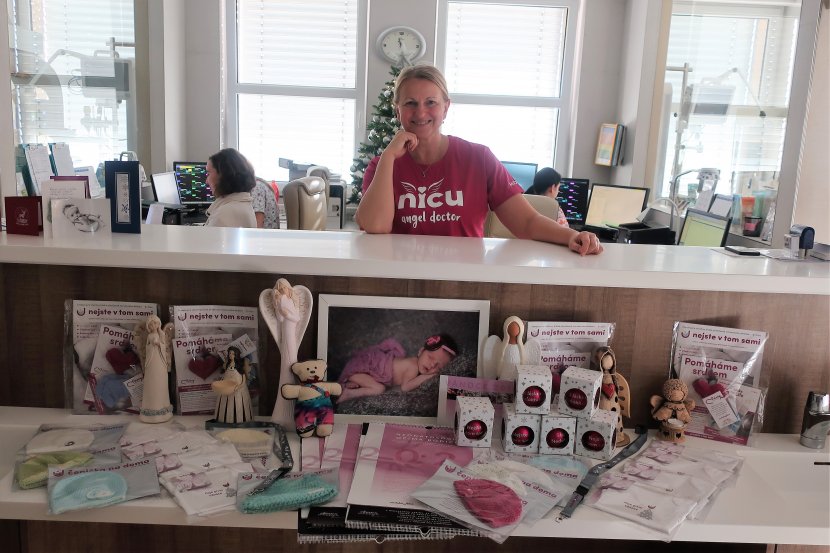
Doctor, why neonatology? What was your path to this field?
I can't think of a nicer one. Neonatology is a wonderful field, but of course, it's challenging. But it was a big accident (smile). After I graduated in 1993, it was a problem to find a place in Prague and somewhere in paediatrics. After being unemployed for three months at the labour office, I passed the audition at the Provincial Maternity Hospital U Apolinář, where I started as a secondary doctor in the neonatal ward on 1 November 1993. I soon found out how beautiful this field was, and I had no idea how big my heart would become. Gradually, I went from caring for physiologically healthy newborns to caring for the smallest and at the same time most fragile babies. Soon you also learn that you are not only caring for the patient - the baby - but the whole family and how important communication is.
When you started in neonatology many years ago, how big or small were the babies you normally cared for then?
Anyone starting to work in this field must first become familiar with what is physiological, i.e. the premature physiological newborn and its natural postnatal adaptation. I started the same way, in the physiological newborn ward, and gradually worked my way up to the smallest babies. In the 1990s, care was developed for babies with birth weights below 750 g, all of them were on controlled ventilation, had only infusions for the first few days and started feeding from day 3 to 5 of life, receiving antibiotics. Saying that makes me realize how different everything is now. Gradually their birth weight drops well below 500g and their treatment strategy is exactly the opposite, achieve spontaneous ventilation as soon as possible, feed mainly milk, wean them off infusions quickly and limit the antibiotics.
The limit of viability is set by legislation at 24 weeks of gestation. It is not so long ago that there was discussion about raising it (to a later week). How do you feel about this as a neonatologist? I ask mainly because, as any mother of a premature baby, it always upsets me when I hear that bigger babies should be saved :-)
I understand your upset, but on the other hand, these opinions often come from ignorance and actually a bit of fear, fear of the unknown. The official viability limit hasn't changed since I started working. Since 1994 it has been set at 24 weeks gestation, but the mortality and morbidity of these babies was high in the 1990s. The development of medicine, the improvement of the results of care for these children and new experiences from abroad now allow us to accept children from lower weeks of pregnancy, but no lower than 22+. But it is very complicated, it is not always possible to determine the exact week of pregnancy. At the same time, it must be remembered that these children from the so-called 'grey zone' (22-24 weeks of pregnancy) can have major complications. It is advisable to involve the parents in the decision-making scheme at the limit of viability. They will be the ones to care for the child in the future. If the parents agree to all the risks and the baby has the will or desire to fight after birth, then the baby should be given a chance. But it is very individual. I encounter the negative attitude of the general public, but unfortunately also of the professional community quite often. But I always have one answer: "Those who have not experienced it will not understand. "
How big, or small, was the smallest baby in your care, doctor?
The smallest baby I cared for weighed only 440 grams at birth.
What week was it born? How old is he? Do you have any news on how he's doing today?
She was a girl, born at 24 weeks gestation. The hardest part is always the "technical" provision for these little babies. Sticking a cannula into the small veins or intubating with the smallest cannula. And even in the first few days, these babies physiologically lose a few dozen grams. The little girl was discharged home after a few months without any major complications. Today she is 10 years old, attends the 3rd grade and is learning very well. Sometimes they come to see me in Hořovice.
Are you in contact with any of your patients and their parents? Do you know how they're doing after their release from the hospital? How do they do later in school, in sports, what they enjoy and don't enjoy when they are older children, schoolchildren?
If you open my phone, you will find dozens of contacts of parents of my patients, some of them will be in their twenties (smile). Yes, I have been in contact with many parents since Apolinar, where I worked until 2011, and also from Hořovice, where I work now. I think these contacts are the driving force that propels me forward and gives me feedback that it all makes sense. Some of them are already studying at universities, there are also excellent athletes among them (for example, the twins of Tomáš Dvořák). But it must be said that there are also children among them who have some difficulties and the lives of their families have been turned upside down. I am very happy to see them too and to watch each of their partial successes.
In general - can you somehow summarize in simple terms what are the chances of premature babies to have a full life without major health complications? If we were talking about the little ones, born around the viability threshold or even before reaching it?
Neonatology is a field that is very dynamic and has made great progress again in the last decade. I don't work with the smallest babies anymore, but I watch it from afar. Sometimes I still serve in Podolia, so I do come into contact with them a bit. Approaches are changing from the delivery room onwards, ways of supporting breathing, nutrition or antibiotic strategies. The whole field is moving towards being as minimally invasive as possible and trying to just help immature babies in general with what they can't do rather than outright treating them. If these borderline viable babies make it through the postpartum adaptation, the first 2-4 days, their chances of survival are greatly increased. But then other pitfalls await them in the form of infections, chronic lung disease, eye disease - retinopathy and more. However, the incidence of these complications has been declining significantly in recent years even in these youngest children. So the chance of a full life is certainly there, but how high is hard to quantify, it is very individual.
And if we're talking about the "bigger" babies, the ones born, say, after the 32nd week of pregnancy?
I guess the chance of full health is really high there, isn't it? To think that giving birth after 32 weeks of pregnancy is already risk-free is a misconception. Moms worry about them just the same. These babies are definitely at a completely different stage of maturity, but to say that they have zero risk is really not the case. They too can develop complications like the little ones. But of course in a much smaller percentage. The chances of full health are much higher, and they are increasing every week.
What about developments in neonatology? If you were to play fortune teller - where do you think neonatology will go? What are the biggest "changes of the future"?
As I said, neonatology is a very progressive field and that's the beauty of it. From what I can judge in my 26 years of practice, approaches to care have done a 180 degree turn. The word most often bandied about in most publications and studies is minimal invasiveness, the search for practices that lead to its further reduction. What will the future hold? It is hard to say. One of the main avenues is certainly prevention of immaturity, screening mothers at risk of preterm birth, seeking early treatment and delaying preterm birth. The first swallows are already in the screening of so-called pre-eclampsia, which is one of the reasons for premature births.
Recently, the news of a lamb born in an artificial womb was reported in the media. Is this the way to go or is it more of a unique scientific and medical experiment that only pushes the boundaries within science (and a kind of sensationalism)?
The artificial womb has been on the table for several years, it would actually be quite physiological - the babies would be calm in the water, nobody would disturb them, they would not be touched, they would be in the dark, they would be nourished by an artificial placenta - just "natural development" in hyperbole. But I think that's still music of the distant future. But who knows?
You personally - what would you like to experience in your practice as a paediatrician in neonatology, what would you like to encounter on a regular basis (and at the same time, what do you see as possible and even probable in the future)?
I would like to see as few immature babies being born as possible and, most importantly, to have as few complications as possible. I would like all mothers to be able to participate in their baby's nursing care from the earliest days, so that there are no visiting hours. On my ward we subscribe to the theory that if there is a well adjusted mum, there is a well adjusted baby.
Your answer actually brings us to the topic of so-called developmental care, which I also wanted to ask you about. What is your opinion on this approach to newborn care? I suspect positive :-)
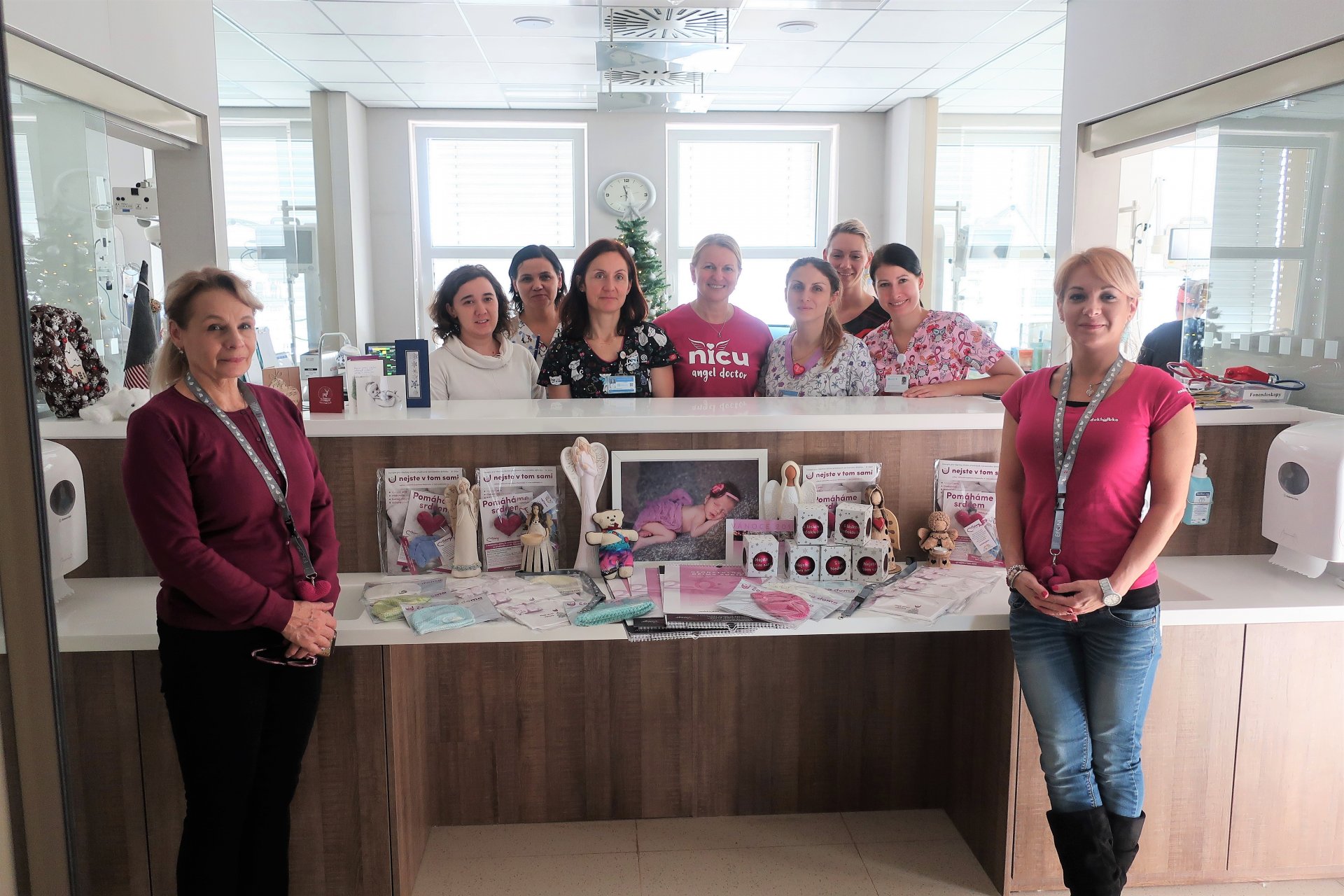
This approach is my own. Developmental care for immature babies is kind of a given in my department, we try to make it as natural as possible. We don't have a set procedure, but if you read what developmental care entails, we actually have 90% of it primarily set. There are virtually no lights, we just have spot lights over each baby used only when we infuse cannulae. We try to limit noise as much as possible, helped by a "big ear"- a device that monitors the noise level in the room. All the children are tucked into their beds. Our dominant features are the involvement of parents in nursing care from the first hours after birth, although it is true that we have to actively encourage some mothers to get up and see their babies (smile), unrestricted visits, presence at all procedures, kangarooing, breastfeeding support and the earliest possible rooming-in nursing even for babies weighing less than 1500 g.
More than once I heard from a mother who had the opportunity to meet you in neonatology as a doctor of her premature baby the sentence "Dr. Dokoupilova is an angel! She's great!" How do you have that angelic reputation preceding you? What is it? Is it the blonde hair?
I don't know.) But seriously... Very soon after starting my practice in neonatology I realized that every baby has a mother who also needs care, not medical but often psychological. Just to talk about everyday things. It doesn't matter if it's a crying mom whose lactation hasn't kicked in yet, but otherwise has a beautiful four-pound baby in her crib, or a mom who just gave birth to a tiny baby in her 24th week of pregnancy. They both need the same thing. Support and the feeling that they are not alone, that someone understands them and will patiently listen to their cries, concerns and understand their fears. It's hours and hours that I try to give to mothers. I kind of had it naturally from the beginning. I try to teach it to my younger colleagues as well, because then the whole atmosphere of the ward is completely different.
Is there anything you would like to say to parents who are just coming to the incubator or cot with their premature baby?
I feel that it is a big test in life that you can never prepare for. Try not to question everything, because the feeling of not knowing and uncertainty can hurt a lot, and unnecessarily so. Trust your puppies to handle it. Also, feel free to tell them they'll get their asses kicked if they're naughty. Don't be afraid to seek psychological help if necessary. It's part of the situation, and not all of us are strong enough to handle it without "cringing". Arm yourself with patience and fill yourself with love, these are the two most important words that should accompany you before you take your baby home. Fingers crossed.
MUDr. Milena Dokoupilová is the head of the Neonatal Department of Hořovice Hospital. She originally comes from Moravia, from Olomouc, where she grew up until she was 20 years old. Then her life took her to Prague. After graduating from the Medical Faculty in Prague, she joined the Neonatal Department of the Perinatology Centre of the Apolinář Hospital in Prague on November 1, 1993. Her daughter Iva was then two years old. She became a specialist in neonatology in 1999. She focused mainly on methods of non-invasive ventilatory support of extremely immature newborns and their stabilization in the delivery room. She also participated in pre and postgraduate training of Czech and foreign doctors and participated in a number of research projects. As she says: "It has always been important for me not only to take care of the children, but also to take care of the parents." In 2009, she and her co-authors completed and published a book for parents, Born Prematurely, to make it easier for parents to understand the issue of immature newborns. She was nominated for and won the Purple Heart Award by parents in 2010 and 2011.
After 18 years of gaining the best experience with the smallest babies, in 2011 she was offered to build her own ward at the hospital in Hořovice. "My dream has come true," she says. "To design my own ward to my liking, to have people around me who love this work. Who could ask for more," he adds. In 2014, her department was awarded Perinatology Intermediate Centre status. The department is as open as possible to parents, who are a direct part of the nursing team. "We try to look for the least invasive approaches and to entrust babies to the care of their mothers as quickly as possible," says the doctor, describing her department's approach to caring for babies. An indispensable part of the team, she says, is head nurse Mgr. Kamila Prádová, who has co-created the centre from the very beginning and every year organises the Castle Garden Festival for grown immature children with the nursing team.
At the end of the story about herself, the headmistress confides. She also graduated from medical school and despite seeing how demanding the job was, she decided to follow in my footsteps. She is getting into the secrets of neonatology in Podolí."
Source:
You are not alone, issue 2019/09 "Neonatology through the eyes of parents"
Nedoklubko z.s. | V Olšinách 82 | 110 00 Praha 10
Non-profit organization supporting premature babies and their families.
Supported by the Czech Society of Neonatology ČLS JEP.
Founding member of the European organization EFCNI.