Česky
Česky


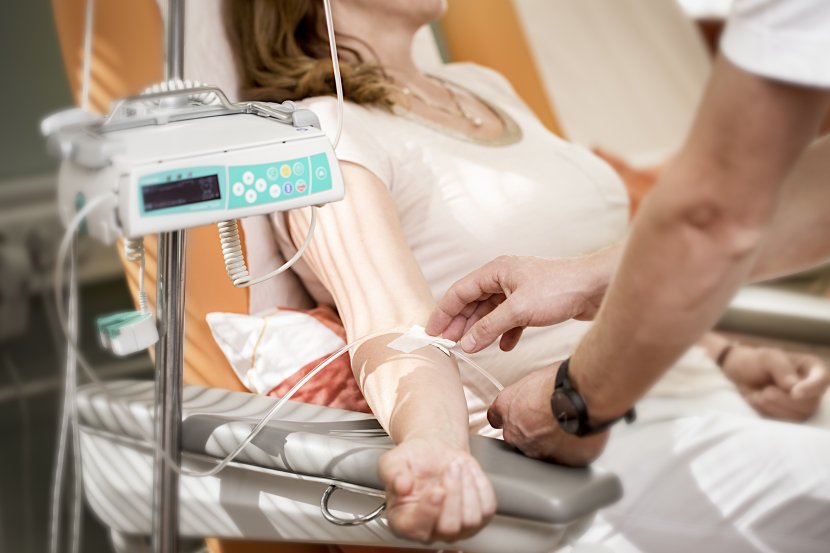
Although we consider robust health to be one of the most important things in our lives, we often don't act accordingly. Early and correct diagnosis is the basis for successful treatment for the vast majority of health problems, and the reverse is also true - if we let disease run rampant in the body, the consequences can be fatal. Thanks to modern medicine, it is becoming increasingly successful in treating cancer. On the other hand, the number of cancer patients is increasing. The only way to protect ourselves is through a healthy lifestyle and, above all, prevention. In general, the earlier the diagnosis, the easier and more effective the treatment. We talked about this issue with Martin Šmakal, head of the oncology department at Hořovice Hospital, which is part of the Multiscan Oncology and Radiology Centre.
How responsible are Czechs in preventive examinations?
Czechs, both men and women, are quite responsible. In terms of the European average, we are definitely among the better ones. Especially gynaecological and mammographic preventive examinations are regularly attended and have a high quality of evidence.
What is the focus of the cancer prevention programme for women?
The cancer prevention programme is quite a broad topic. The simplest prevention is provided by each of us, while the highly specialised ones are already organised by the state health service. Prevention targeting different types of cancer also requires different approaches and starting at different times. The basic prevention programmes for women include gynaecological and breast examinations. These programmes clearly have the greatest benefit and are relatively simple, with little difficulty or inconvenience for patients. However, this is not to leave out other examinations, such as those of the digestive tract.
If you had to list just three benefits of this examination, what would they be?
With a gynaecological examination or a colon examination, we look directly at the area with optics, which gives us invaluable results. Many of the other methods use sonographic or radiographic techniques, for example, and although these are excellent examinations, eye contact with the possibly affected area is a huge benefit in assessing the local findings.
Is it true that early detection greatly aids the cure itself?
We almost always require to know the extent of the examination and the histological structure of the eventual tumour before we start treating the cancer. It is quite certain that early stage cancer has a completely different prognosis than highly advanced disease, often with metastatic spread. The therapeutic results correspond to this. For example, in the case of breast cancer, if the patient is treated for stage 1 (i.e. the smallest) cancer, the chance of a permanent cure is between 80 and 90%.
How often should a woman ideally have cancer screening?
Specialised cancer prevention is gradually reaching younger and younger patients, and I believe that in the not too distant future this will become standard from the age of 40. I would not underestimate self examination (of the breasts for example) at all. It is also important to react early to difficulties that are new and cannot be clearly explained by the patient. Although it may be a minor matter, a consultation with a doctor is certainly in order.
How is the examination carried out?
Most women have an idea of how gynaecological or mammographic examinations are carried out, either from their own experience or from hearing from their colleagues or friends. If we mention, for example, a colonoscopic examination of the colon, we first have to empty the colon and then use a colonoscope, which is inserted through the rectum into the entire colon, to carry out the examination. I also like to complement a very simple examination such as a blood test, because we can get a lot of important information from this examination as well. Oncomarkers in the blood tend to be the standard for cancer prevention.
Does one doctor take care of the client throughout the process?
Comprehensive cancer prevention is often led by a single doctor, but he or she must certainly work closely with other colleagues such as radiologists or gastroenterologists. Today, teamwork is inherent.
How long does the examination take?
A comprehensive cancer programme can usually be completed within 14 days, but sometimes we add some additional tests based on the results of the examinations performed.
When will the client know the result?
We usually invite the patient for a final assessment in about 14 days to three weeks, at which time we fully inform her of all the findings and, if no cancer has been proven, we also inform the patient of appropriate follow-up appointments.
If you had to give your patients one piece of advice, what would it be?
I would definitely advise them to come in for advice at any time with a medical problem, even if it later turns out to be nothing serious. Coming in a few months later can mean significant life complications.
For more information, visit the website www.altoa.cz.