Česky
Česky


Why did the field of plastic surgery win out for you as a doctor?
I didn't go to medical school with the vision of doing plastic surgery. My motives were different, I wanted to help people. I was a senior who had to have two more certifications. First general surgery and then plastic surgery. It took nine years in total to achieve this specialisation. I was first attracted to hand surgery, which is a very interesting field. It covers the whole population, from children with developmental defects to the elderly with degenerative changes due to wear and tear. Replantation surgery is a very demanding surgery, taking up to 12 hours, the whole time under a microscope.
Is hand surgery or post-traumatic plastic surgery an area that you will focus on at the Hořovice Hospital, or will it be aesthetic surgery?
Post-traumatic plastic surgery is demanding both financially and in terms of time. Overall, the treatment is long, as is the rehabilitation. In AKESO we want to focus on aesthetic surgery for the time being. Aesthetic surgery is a broad subfield. You have to be able to do the whole spectrum of procedures, yet there is room for specialization. I personally focus on combined procedures under one general anesthesia and rhinoplasty. I love the artistic and sculptural work involved in nose reshaping.
Can you compare how much of the field of plastic surgery is aesthetic work (breast augmentation or modeling) and how much is post-trauma work (such as burns, etc.)?
Injuries are very seasonal. Most often, as a plastic surgeon, you will come across patients who have cut on a circular saw in the summer when they were preparing wood for the winter. But in my experience, I think aesthetic plastic surgery is starting to dominate slightly. Compared to trauma, the aesthetic part of plastic surgery is about 55 percent of what we do today. More and more of our clientele in the Czech Republic are foreign women. The reason for their decision is mainly financial. I will use rhinoplasty as an example, i.e. rhinoplasty of the nose, for which they pay up to four times the price in neighbouring Germany compared to the Czech Republic.
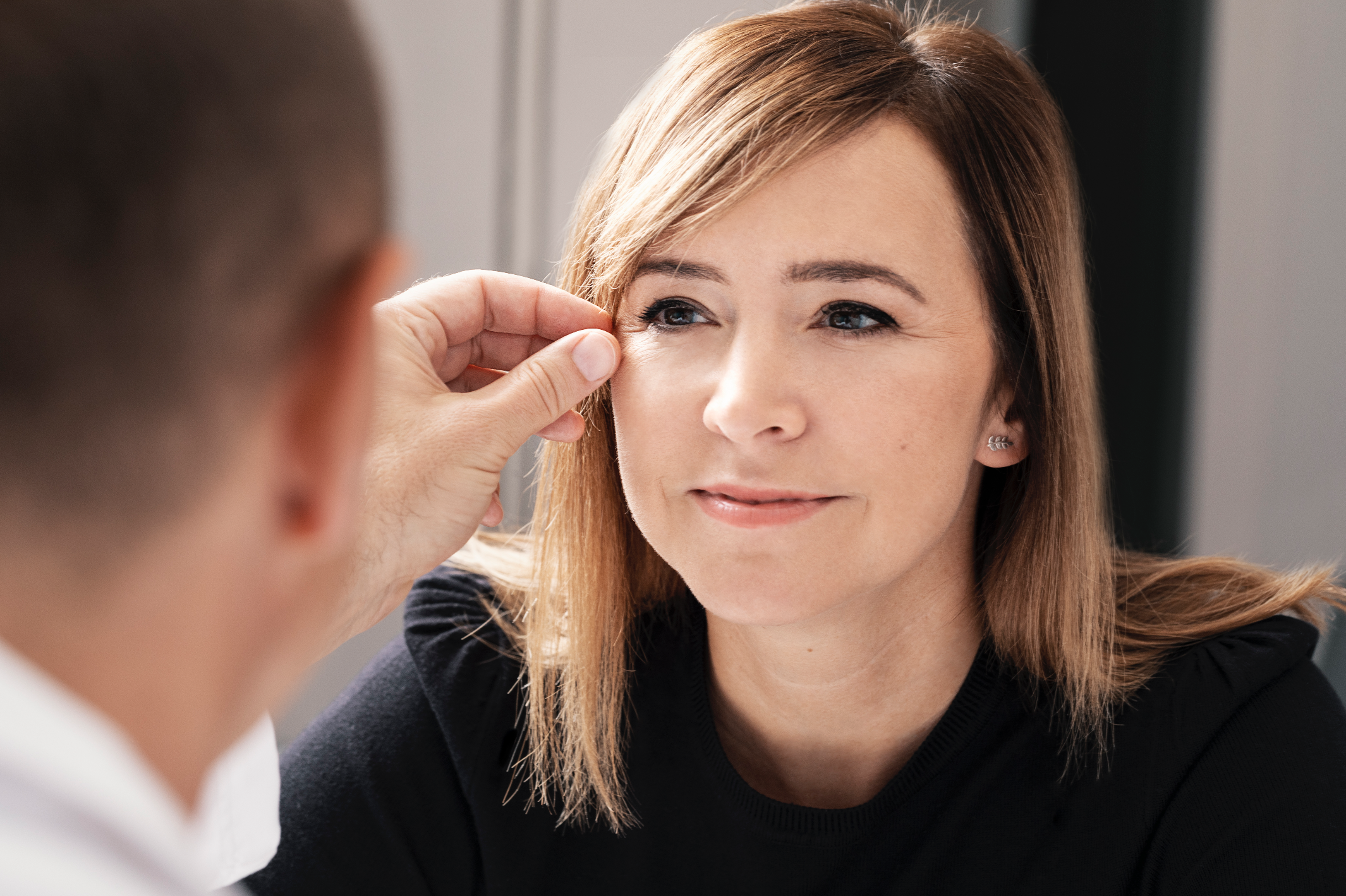
"I love the artistic and sculptural work of nose reshaping."
A large part of your career is linked to Spain. What is the biggest difference in plastic surgery in the Czech Republic and Spain?
Czech plastic surgery is one of the higher European standards. As I have already mentioned, for many foreigners, procedures here are significantly cheaper than elsewhere in Europe. But if I had to mention a difference other than financial, it would be the difference in the doctor's approach to the patient. If I look at Barcelona, for example, that is a city where society has been set on private medicine since the late 19th century. It is common to go there to see a private doctor. That is why it is common in Spain for doctors to realise how important it is to build their name. And this approach is close to my heart. I want to advance my knowledge, I don't want to become stagnant professionally. A life without a goal would seem unfulfilled.
What are the trends in aesthetic surgery in the Czech Republic and abroad?
The internet is everywhere nowadays, it blends in regardless of borders. Aesthetic surgery and its trends come in waves. Just look at the 60s when the Twiggy style was popular, which was something completely different from the Kardashian style that is in demand today. Lip augmentation, most often with hyaluronic acid, is trending today, and breast augmentation is definitely a long term trend. There is a big demand for plumper shapes. More and more these days I am seeing women who prefer augmentation by fat transfer, both in the breasts and the buttocks. The effect is twofold - problematic areas are suctioned and better shaped, the fat itself is then used to fill and lift breasts or buttocks that have sagged and partially emptied due to pregnancy, weight loss or ageing, which is also a better alternative for me personally, as I do not have to work with material that is not my own.
As far as cosmetic surgery is concerned, do the Czechs excel in any of their requirements?
The Czech clientele does not excel in special requirements. Comparing my professional experience, I have seen the most daring demands from German clients. I have met a few dominatrixes from the BDSM scene in my work who wanted totally unconventional procedures and took it as an improvement of their job position.
Do you ever talk patients out of aesthetic procedures?
Yes, about a quarter of my potential clients do. It happens when the expectations of the outcome of the surgery are unrealistic or when, as a plastic surgeon, I do not see any benefit or improvement in the requested procedure. At the same time, plastic surgery is a voluntary surgery. The patient should be motivated and this includes his interest to heal properly after the surgery. If there is motivation on the part of the patient, that is always a good sign. It is worse if the patient is forced to have the procedure. An exceptional case in our business is when a partner or husband wants to do it, but the patient does not identify with it, does not know what to expect from the procedure, and then is often unhappy with the result. The patient's motivation and expectations are one of the topics often discussed in professional circles. During the consultation, you need to gauge whether expectations are exaggerated. This is very difficult. You have to deal with the fact that the partner is not satisfied with the result. The psychological aspect and its influence on the whole process is a much underestimated but integral and very challenging part of our profession.
How does such a consultation with the patient before the surgery take place?
It is necessary to conduct the consultation in a light-hearted manner and at the same time to be able to ask questions sensitively. Patient questions are a very important part of the consultation for me. For me, a good patient is one who is as informed as possible about the procedure.
How much does social media influence your work?
The pressure of the virtual social world is great and has long been unhealthy. In my practice I am confronted every day with photoshopped photos. Often the results demanded are unrealistic because the photos are obviously edited. I don't want to promise anything that is possible in these photos, but not in reality. I am very limited by body proportions, tissue quality, tissue elasticity and other factors that the patient doesn't take into account as much during the procedure. In the postoperative period, healing, compliance with the instructions, resting regime and gradual recovery with subsequent integration into life to the full extent is a separate chapter. It is one thing to design something and another to perform the surgery itself. The part of the body, the material you are working with, is alive, sometimes unforgiving and will not allow you everything. It's just a process of several months of the body coming to terms with our interference with its integrity. The effect is not instantaneous.
And did anyone leave you with a mess?
I'm sure. Some clients aren't 100% convinced. A common example is when a patient eventually changes her mind about the procedure, coming to the consultation with the knowledge that her friend has already had the procedure. It is important to reassure patients that it is about their body and their decision. In our practice, patients still come in with visions of an idol of eternal youth and beauty. But we must remember that tissues and cells, as their building blocks, deteriorate and die over time. The time factor plays a very radical and undeniable role in our lives.
Plastic surgery is one of the new services at the Diagnostic Centre of Hořovice Hospital. What is your goal, how do you want to be better than your competitors?
We want to be the best in the most professional, but at the same time personal approach to each person and their problem. I don't use the term patient or client on purpose. My goal is to make the process from consultation to surgery to full recovery more humanly valuable and personal for them.