Česky
Česky


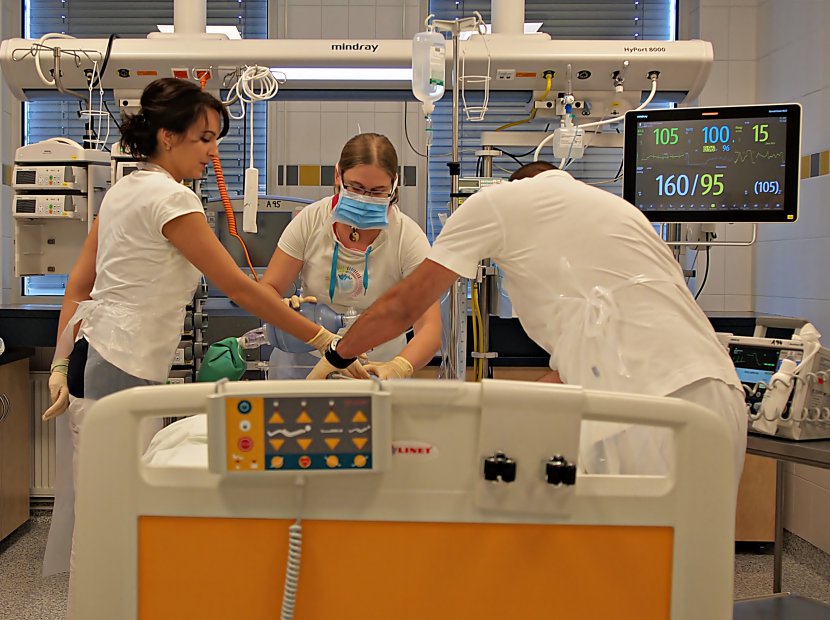
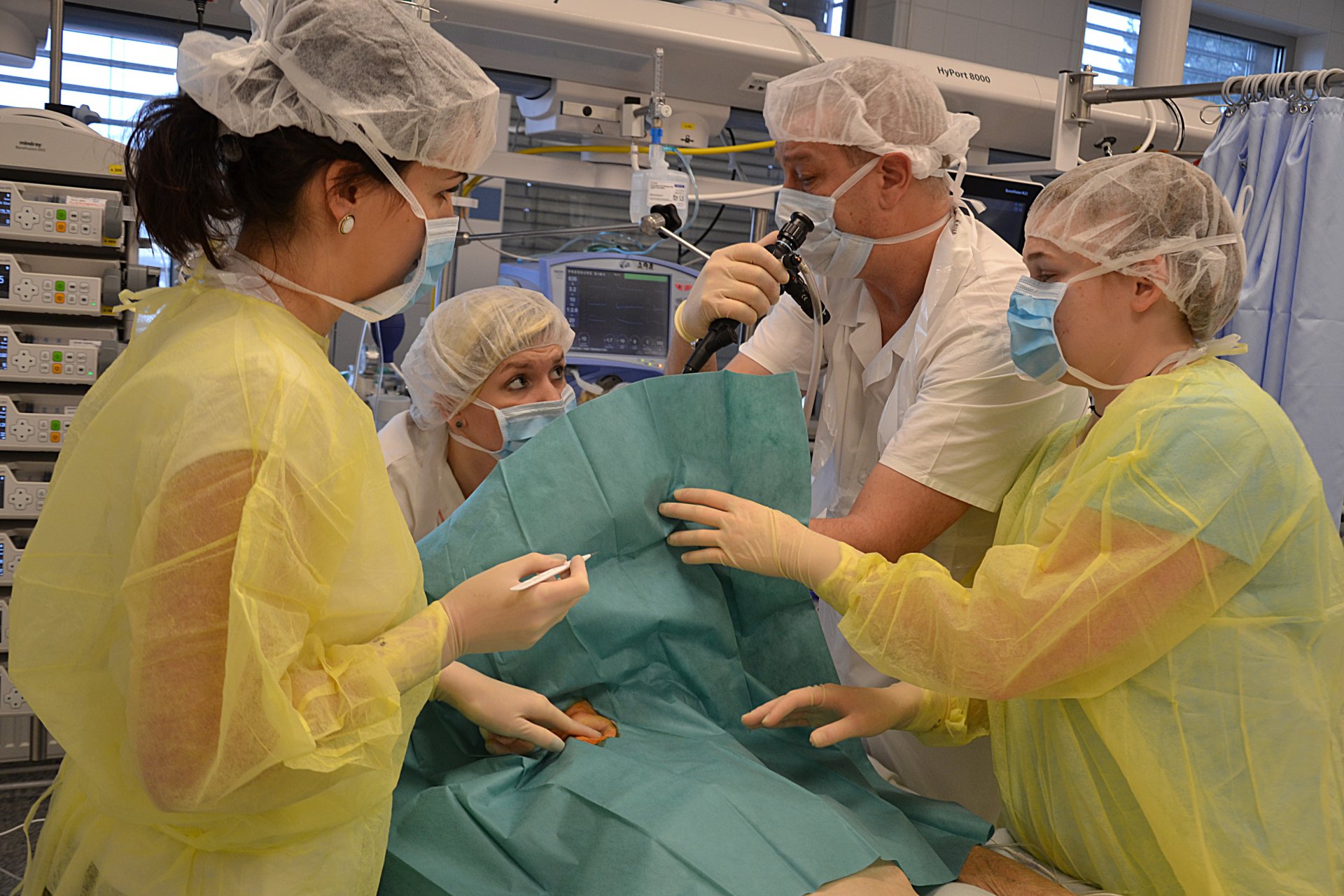
But more important than the equipment are the people who work here, their commitment and mutual cooperation. Here, more than anywhere else, every second counts. So who are the medical staff here? What does their working day entail, what do they encounter and where do they find the energy to fight for the lives of others? I don't think many people look at this department. And if they do, they probably won't remember it. So let's take a look at this ward through the eyes of a doctor, a nurse, a paramedic, and a patient who was admitted here.
The doctor's view
"If I'm not on duty overnight, I start on the ward at seven in the morning," says MUDr. Miloš Koudelka, a doctor in the ARO department. "The day starts with a debriefing, where the doctors, together with the head of the department(Jiří Steinbach, MD), give each other information about the overnight shift. They talk about the current patients in the ward and those who have passed through the anaesthetic outpatient department and are scheduled to undergo surgery. Then they all disperse to their duties, administering anaesthesia in the operating or delivery theatres, caring for patients on the ward or providing consilia with a focus on preparing patients for surgery. And there are a lot of these in a day," adds Koudelka. Every day after normal working hours, two doctors remain on duty, because it is necessary to provide planned and acute surgical procedures even overnight... And finally, even babies are not left behind with their arrivals into the world. And there are still patients on the ward who need constant care and supervision! It's not infrequent that the medical staff here run out to cardiac arrests, hospital-wide. In January this year alone, they performed nine. "Sometimes we have a really big rush, we don't stop all night. We run between the operating theatres, the delivery room and the ward. It happens that surgical programmes run until the early hours of the morning. It's good that there are two of us on duty, I can't imagine providing the service in one. At the same time, it is sometimes very difficult to be able to detach from events in the hospital and not bring them home. And then having leisure interests absolutely unrelated to medicine, I see almost as a necessity," finishes the young doctor.
A nurse and paramedic's view
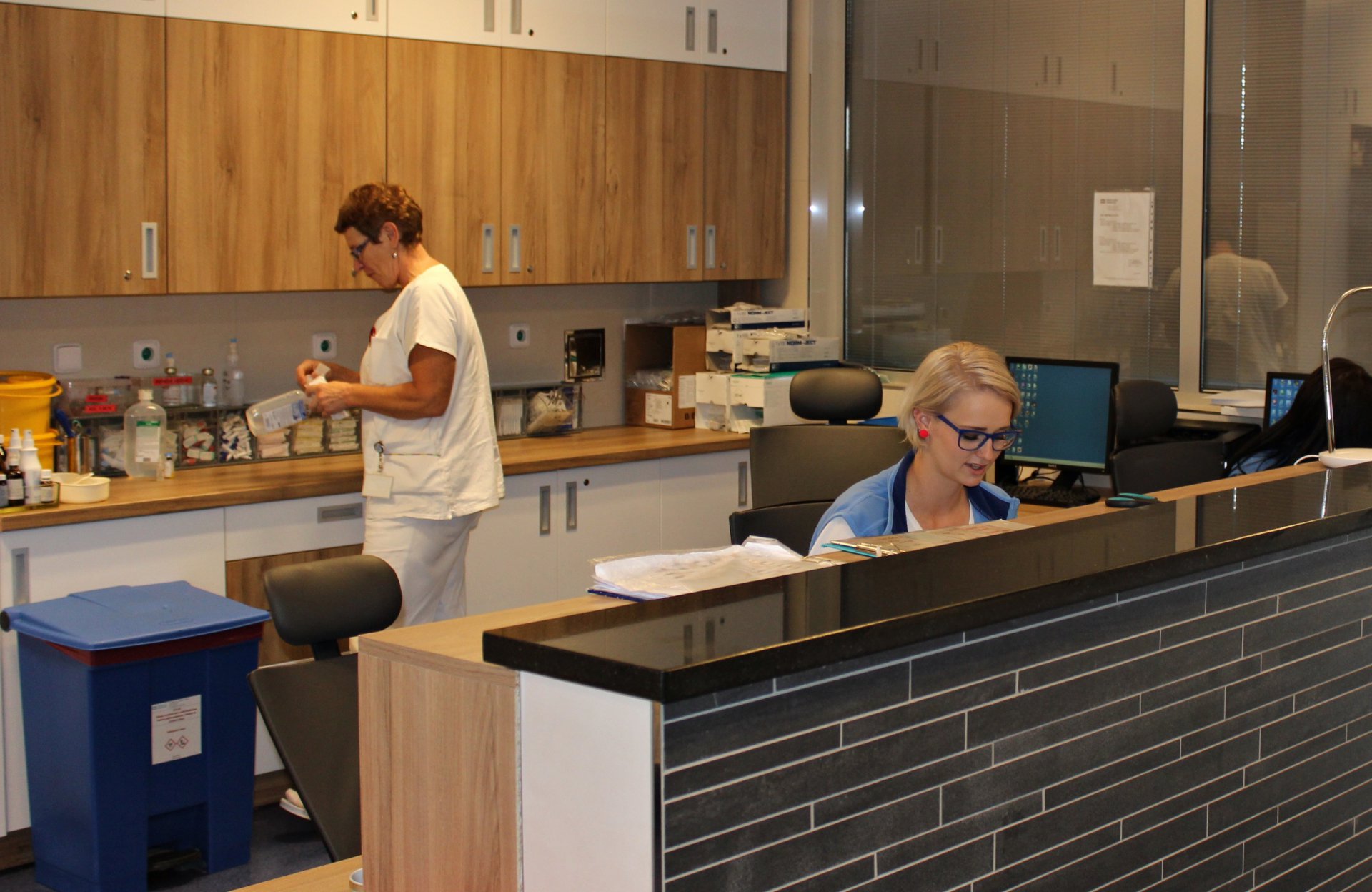
The nurses (both women and men) of the A&E department are in almost constant contact with the patients. They monitor monitors, administer medications, dilute dosing devices, feed patients with probes, prepare them for surgery and provide specialised X-ray or CT scans. Last but not least, they take care of them hygienically. "I come to work at around 3:30 a.m. if I have a day shift," says Libuše Hamouzová, a long-time nurse in this department. "First we have a debriefing session where we pass on information about the patients to the others. Although we have these divided for each shift, it is essential that basic information about all patients is shared. We also help each other with the more difficult tasks when needed," adds Libuše Hamouzová, who has been on the ward for 24 years. When asked what unusual things she has encountered recently, she says that nothing surprises her anymore. It is obvious that there is no shortage of work; in addition to caring for the ward's patients, anaesthesia must again be provided during surgical procedures, as well as in the maternity ward, where it has already happened that five caesarean sections were performed during the night.
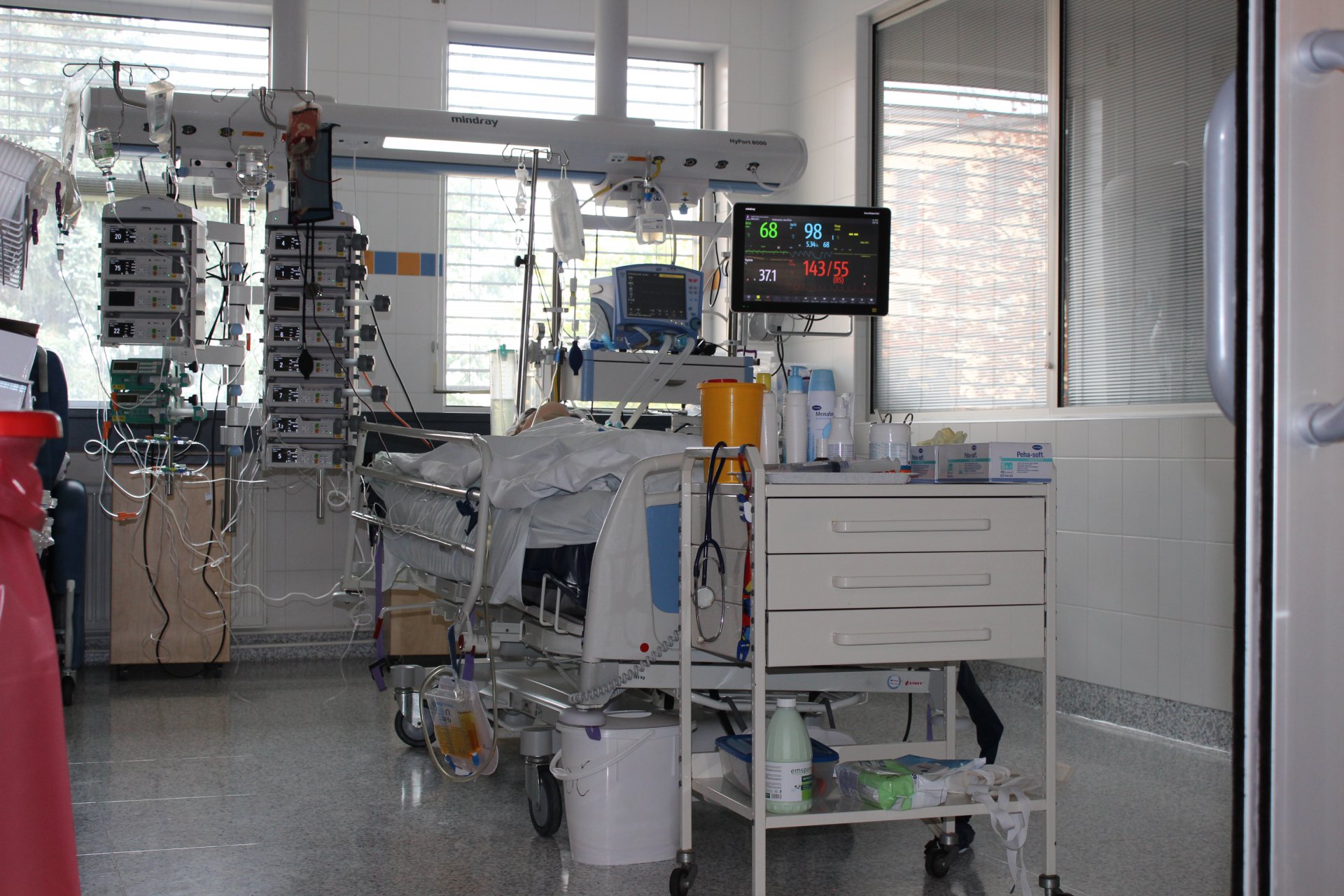
"We can have up to 14 patients in the ward at a time, most of them in a very serious to life-threatening condition, we use up to 3 dialysis machines at a time and provide resuscitation for patients for the whole hospital. Often our work is physically demanding. That's why I'm glad there are 7 of us here," says Petr Kotva, a young paramedic in this department. He has been working in the department for 8 years and together with his colleagues, he also finds time for first aid courses for the public - of course in their free time, when they visit primary schools or various public events and teach not only children how to provide first aid. "We're a really good bunch here, we help each other and I can confirm that we have a very specific sense of humour... Otherwise it wouldn't work, the valve is needed. I myself fight off the stress of my job with alcohol and fishing," says the burly rescuer with his typical smile.
(Note - in about half an hour, when Petr Kotva was telling about the events on the ward, meanwhile his colleagues prepared one ventilated patient for the planned transfer to the operating room, started dialysis for another patient, admitted another to the ward and inserted a central venous catheter for another... and intubated him because of his generally deteriorated condition...)
ARO from the patient's point of view
"I would never have dreamed that I would be lying in the ARO ward," begins the story of Klára Malečková, a young mother of two boys - twins who were born in the Hořovice maternity ward. She and her children lived through the whole pregnancy in perfect order, the birth started on its own, so she and her husband arrived at the maternity ward, where literally in no time both boys were born safely with a nice birth weight. Unfortunately, a while after the babies were born, complications arose when the uterus, very stretched by pregnancy and birth and with a weak wall, began to bleed instead of contracting. The blood loss was so great that cardiac arrest occurred. "I know from the narrative that the paramedics of the A&E department, with Peter Szeghy, MD, at the head, immediately started resuscitation and saved me...The day after that, when I was hospitalised in the A&E department, I had an attack of eclampsia for some unexplained reason. My blood pressure skyrocketed and it resulted in cardiac arrest. Again, these guardian angels were with me immediately and by putting me into artificial sleep with breathing support, they normalised my condition. I am very grateful to everyone in this ward, the doctors and nurses. Without their dedication and professionalism, my boys would be without their mother today," the young mother finishes her story.