Česky
Česky


Sir, you have been working in Hořovice for a year and a half. How have your expectations been met?
Here in NH I have found very good working conditions created by the enlightened approach of the owner and the hospital management. You know, there is always something to improve, to take things a little further, to improve the organisation of work, to make the environment more friendly for people. But it can't be done overnight.
In my professional practice so far, I have always tried to set a personal example to my co-workers, rather than persuading people who may not even know me at length.
In addition, I am still fascinated by working with younger colleagues - doctors who are passionate about their work, do not suffer from prejudices and are happy to accept everything new, and are also very happy to quickly learn innovative procedures, previously unknown types and techniques of surgery applied, for example, in cancer patients, in gynecological endoscopy, in senology, i.e. procedures that they have not yet had the opportunity to see or participate in. On the other hand, my young colleagues enrich me, without them I would be nothing, because our work is and must be a team effort. Their help, support and interest is a very important prerequisite for the good results of our work together.
As you say, you are a gynaecologist with a focus on endoscopic and oncological surgery. But I suppose your scope of practice is a little broader?
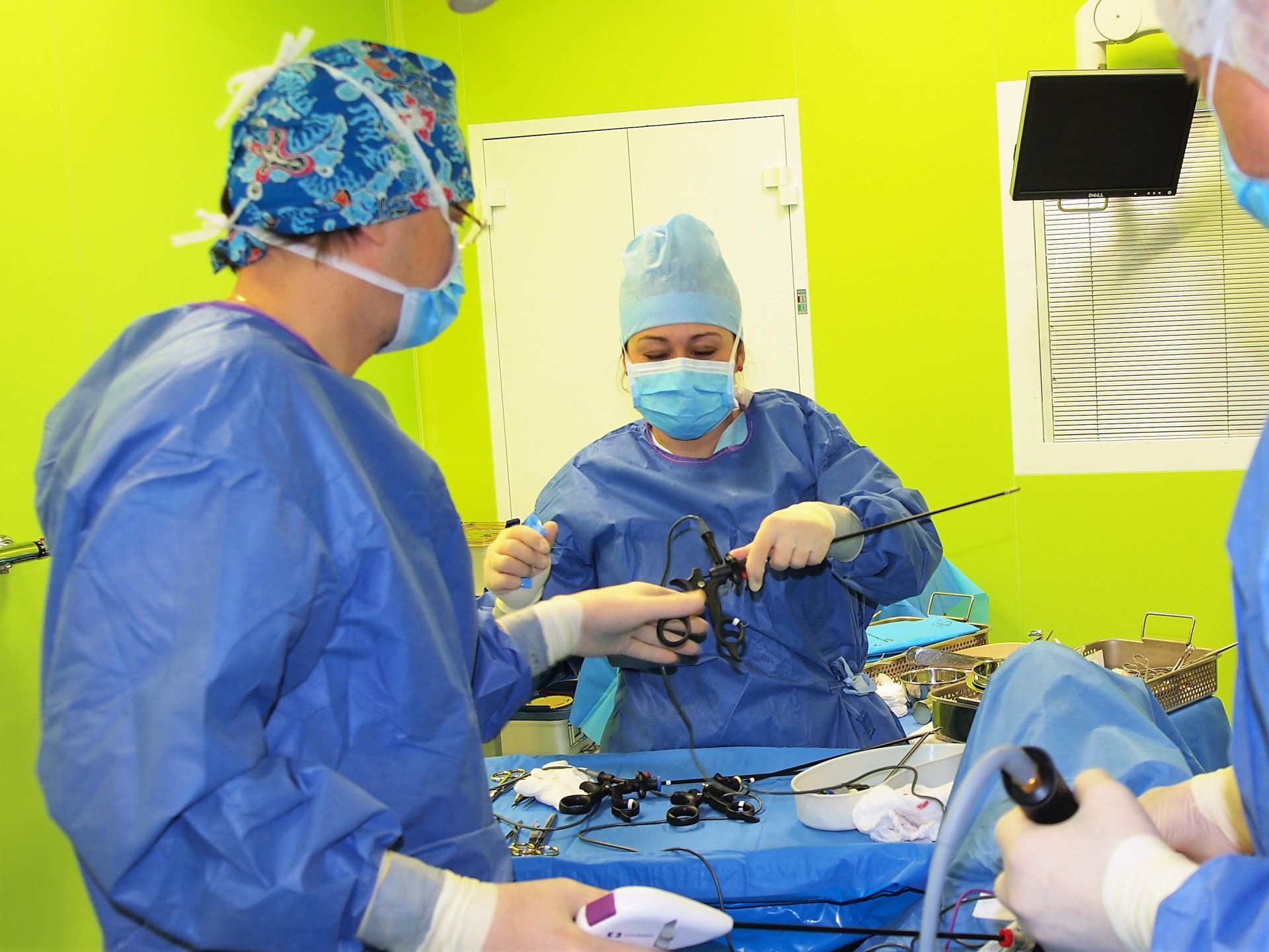
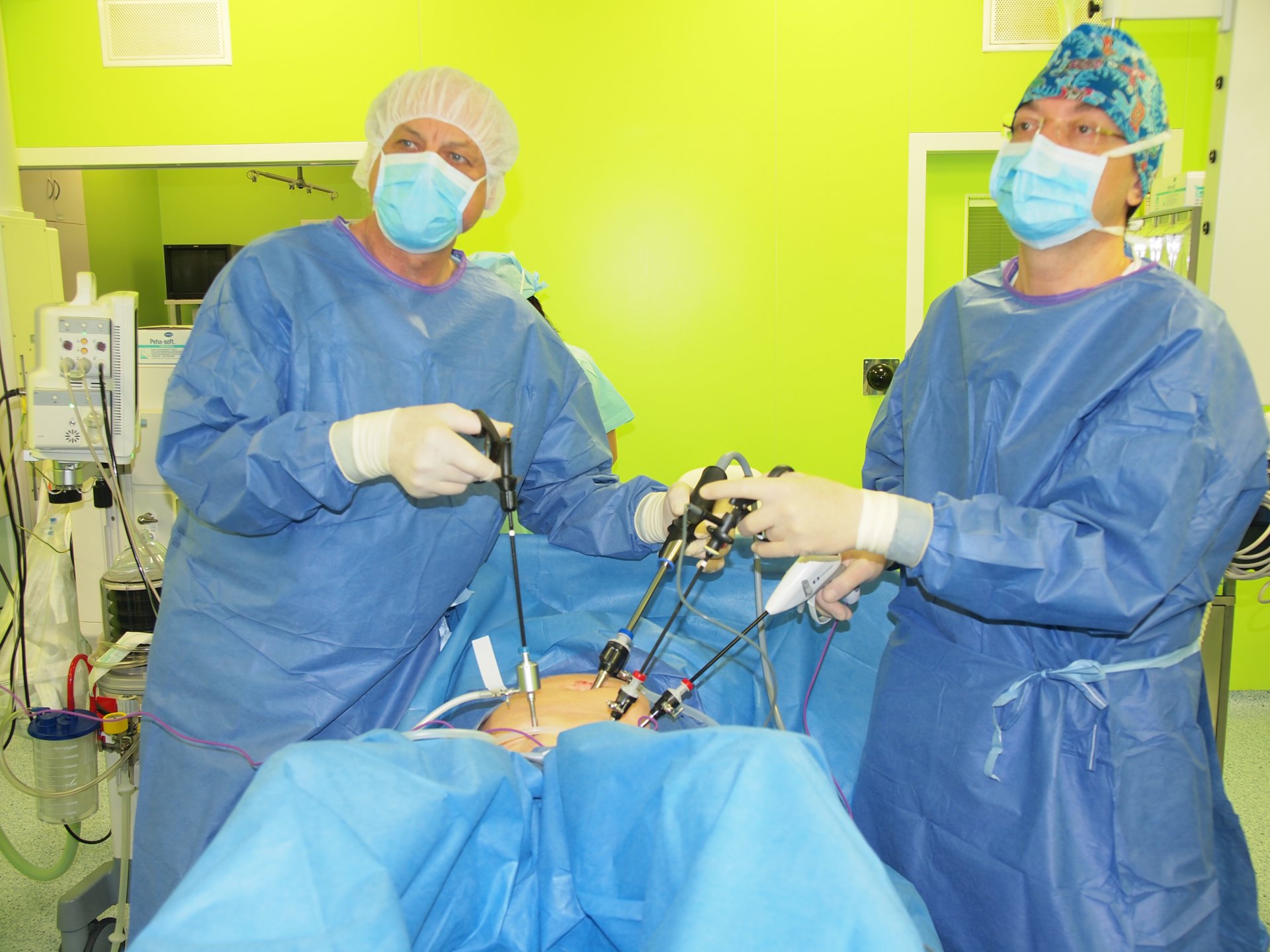
Yes, if anyone wants to do a good job as a chief of surgery in medicine and at the same time wants to have a good night's sleep, they should know the issues of the profession in its entirety. In the case of a surgical field such as gynaecology, this means, of course, in addition to the relevant education and theoretical background, to confidently handle all types of operations, to master all surgical approaches. That is, open abdominal surgery, laparoscopy, vaginal surgery, nowadays also robot-assisted surgery, senology, etc. In short, to know your craft. Or, as one of my younger colleagues says: "four wires and a piece of wood (violin - note by the author), but if you know how to do it..."
You know, everything can be trained, practiced, what about it, only in medicine, compared to other areas of human activity, learning the craft and training it takes many years, rather several decades, and you cannot speed it up. But if you are lucky, have a strong will, enough patience, a little skill, in short common sense, these qualities will safely guide you through the decisive moments of the work and also determine its quality. In my case, these are the moments when operating on the retroperitoneum, on the large abdominal and pelvic vessels, on the breast, etc. Moreover, the actual art does not only lie in the elegant and safe execution of the whole operation, but above all in its proper planning according to the individual needs of the patient and the diagnosis.
Half a year ago you changed your workplace, you came to the hospital in Hořovice from the same position at the ÚVN Prague. Why did a doctor of your calibre leave Prague?
I guess at this stage of my professional life, I am fulfilled by the idea of working as a rural chief physician, who performs his profession with confidence at a good level so that all people - patients from near and far - can rely on him and turn to him with confidence with any problem and be sure that they will be helped. I have only changed clinics twice so far. After eleven years and after fifteen years. In the second case, it was the time I served in ÚVN Prague, before that it was a clinic in Královské Vinohrady.
It is probably related to the search for the meaning of my work, also for a certain peace and background for myself and my family, which could then pass on to me, to my performance, and thus actually to my patients, without distinction, both local ones and patients from our Prague outpatient clinic, and actually also to my colleagues.
I am going my own way today, in the rather trivial conditions of the current Czech healthcare system, which, unless it is fundamentally reformed, in my opinion, is in danger of collapsing soon. I am still looking for a way forward.
Despite the difficulties of the Czech health care system that you are talking about, which are obvious, I assume that the hospital in Hořovice has a good reputation. How does it compare among Czech hospitals?
The Hořovice hospital has a large catchment area. Today it is already popular with patients from all over the country and abroad. The hospital is newly reconstructed, or rather its further reconstruction and expansion based on generous investments is still underway.
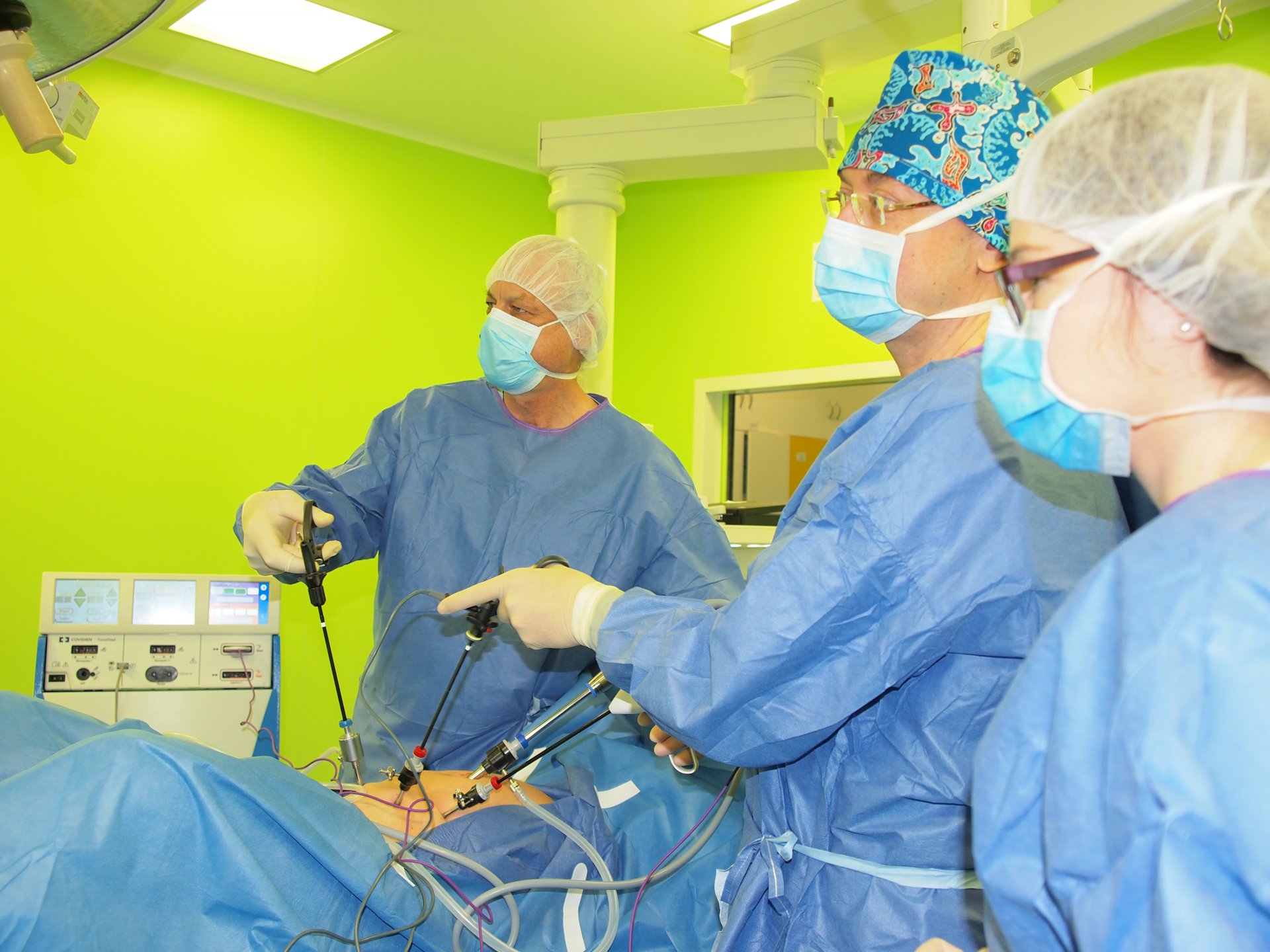
The NH is equipped with modern equipment, from my point of view- the place where I spend most of my working day- the operating theatres are absolutely comparable to any top-notch facility at home or abroad. Hence, the range and level of services provided is of a high standard.
You mentioned investment and equipment. What new developments have your gynaecology department seen in this respect?
First of all, I consider it a great success that we have managed to assemble and equip the necessary number of operating theatres with new surgical instruments in record time. Furthermore, this year we managed to obtain a new laparoscopic tower for our department, with components of a very high technical level. Last but not least, in the spring of this year we completely renovated the hysteroscopy tower, which was no longer suitable for small gynaecological procedures, including the purchase of new endoscopic instruments for hysteroscopic surgery.
We also acquired new ultrasound equipment for the department and outpatient clinics and completely equipped another outpatient clinic focused on paediatric gynaecology, which is led by a newly arrived experienced and skilful colleague from the clinic in Motol, MUDr. Leoš Teslík.
As you can see, the hospital management has an open hand for rational investments, both in equipment and personnel. Moreover, other plans for the long-term development of the field - quite spectacular - including a new operating room, which would be available for our field, have been completed...
In Hořovice, the investments are going in the right direction- directly for the benefit of patients and, ultimately, for the benefit of us healthcare professionals and our work- without unnecessary intermediate steps and interest groups or politically influenced and lengthy decisions, as is often the case in the public sphere, where the patient and the medical staff unfortunately remain mostly in last place. If I had not seen with my own eyes how a hospital "grew" in one year I would never have believed that in the system of reimbursement for health care in this country, something like this is possible.
Have you taken on any other personal challenges?
The tasks you are asking about are more on the organisational level, especially in the field of specialisation training of young doctors - graduates of medical faculties. Furthermore, the implementation of some innovative or hitherto unused procedures in the field of medicine, but this, as I have already mentioned, will require a great deal more effort.
I have set myself the task of anchoring the individual stations of our department, staffing them, and stabilizing their operation so as to make it as easy as possible for young colleagues during their specialized postgraduate training.
Then I am concerned about the permanent expansion of routine endoscopic surgery across the whole spectrum of procedures, with a lot of work around the innovation of instruments, etc., or the introduction of routine gynaecological surgery within the scope of this subspecialty, with the associated establishment of an oncogynaecological team in collaboration with colleagues in the oncology department, which certainly belongs to this excellent hospital and in fact is already functioning without problems. Of course, it is essential to maintain the existing specialty accreditation of the department.
There are many good ideas, we have a vision in cooperation with the hospital management, and we have the will to work.