Česky
Česky


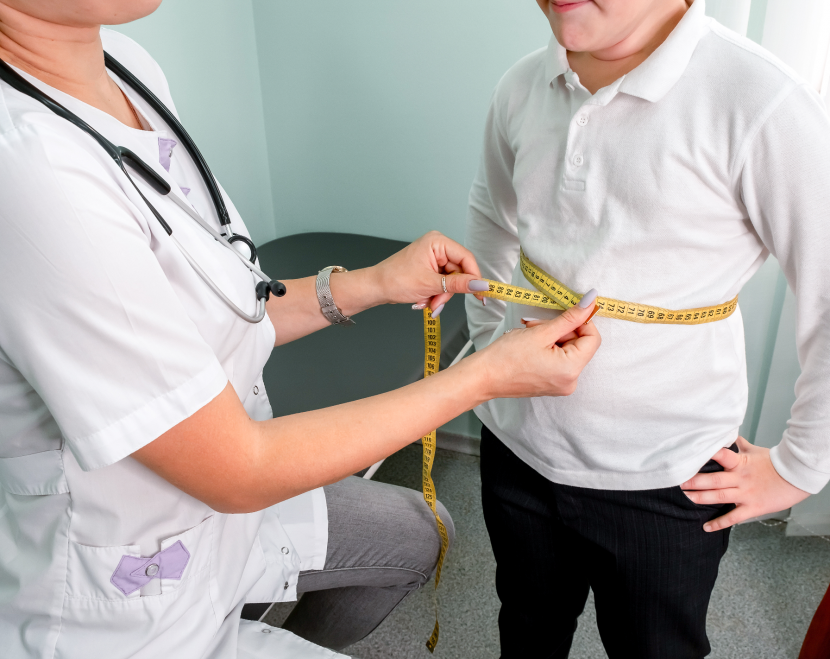
Does your practice confirm the results of recent research that showed an increasing percentage of obese children in the Czech Republic?
In our outpatient clinic we deal with complex treatment of eating disorders. The fact that currently about one in four children in the Czech Republic is overweight and one in ten is already obese is of course reflected here. Parents with their children are seeking our care more and more frequently and the appointment times are increasing enormously. But this is also good news for us, it means that parents are aware of the problem and want to address it.
Crucially, the rise in obesity in the child population brings with it an increased incidence of serious health problems. Even children are being diagnosed with metabolic syndrome, which we used to attribute mainly to adults - they have high cholesterol and triglyceride levels, suffer from hypertension and high blood sugar. We are seeing an increased incidence of sleep-disordered breathing, called sleep apnoea. Children are also at risk of developing hepatic steatosis, a disease in which fat is deposited in the liver at an increased rate, thereby reducing its function. This is compounded by postural and musculoskeletal problems.
It should also be remembered that, as children face pervasive societal pressure to be thin, obesity also has a particularly pernicious effect on their self-esteem. This adds to the psychological problems. Obese children carry a significant health burden into adulthood, and 3/4 of overweight or obese children will continue to have this problem into adulthood.
What do you see as the causes?
Obesity is a current problem in modern times. Over the last quarter century, the number of obese children has tripled due to a combination of declining physical activity and excessive calorie intake. However, a similar trend has been observed in the adult population, with six out of ten Czechs being overweight and one in five being obese. We cannot expect that if adults have weight problems, it will be different for children. Children follow their parents in their eating habits and lifestyle.
Practically speaking, there are two causes of obesity: as physical activity decreases, calorie intake increases. In terms of physical activity, children are spending less and less unsupervised and unorganised time outdoors with friends; their activities and social life are moving indoors. Moreover, in the last two years, due to the COVID-19 epidemic and the long lockdown, routine movement to and from school, clubs, PE or sports with parents has disappeared.
The other part of the problem is the excessive calorie intake. To this I would add irregular eating and lack of sleep. When we talk about excessive calories, there are often several typical problems that recur. Children often do not eat breakfast and do not have a regular eating regime. The irregularity of their eating is mainly due to the fact that they eat very little lunch after skipping breakfast (we often see them refusing to go to the canteen so that their classmates do not laugh at them when they eat), and then they have their first meal after they return from school, when they eat what they can get their hands on and eat almost continuously until the evening. And then there is the lack of sleep that goes with it. We know that if children of older school age and adolescents do not sleep at least 8 hours a day, they tend to be overweight. Sweetened drinks in particular and the habit of eating in front of a computer monitor or television screen are other major dangers for children. It has been shown that if a person does not concentrate fully on what he or she is eating, he or she ends up eating much more and is hungry sooner after eating.
How could this situation be addressed?
I see the solution on two levels, societal and family. At the societal level, the problem of childhood obesity must be clearly named as a serious epidemic that affects our children and their health, and the extent and consequences of which are in the hands of all of us. The State and health insurance companies have the tools to fund education and prevention programmes, support the work of paediatric general practitioners in this area and establish a network of practices specialising in the prevention and treatment of childhood obesity. I would also see room for non-profit organisations and community self-help groups; families often struggle with their children's obesity in isolation, and it is necessary to remove the stigma that accompanies this struggle and allow them to support each other, exchange information, contacts with experts and proven intervention and treatment options.
The European Society for Gastroenterology, Hepatology and Nutrition (ESPGHAN) and the European Childhood Obesity Society (ECOG) are addressing this issue on the occasion of Childhood Obesity Day on 4 March 2021 in a Manifesto for a Change of Approach to Childhood Obesity addressed to government institutions and health authorities. They identify three key points for immediate action: the need to raise general awareness of childhood obesity, an emphasis on evidence-based recommendations in this area, and support for research (A Manifesto for Change Childhood Obesity, ESPGHAN Public Affairs Committee, in collaboration with members of the ESPGHAN Nutrition Committee and ECOG to mark World Obesity Day 2021).
Parents have a key role to play in the effort to end this epidemic, and we cannot successfully intervene on behalf of the child unless we gain parental cooperation. Parents need to realise that their child's weight is in their own hands. It has been reported that 2-5% of cases of childhood obesity are related to the primary disease or the use of medication, the rest stemming from habits within the family itself.
Back in 2015, the American Paediatric Association released a guideline* on childhood obesity prevention that includes practical advice for families on healthy eating and lifestyle choices. It emphasises breastfeeding support, and goes on to encourage healthy eating habits, including eating fruits and vegetables at every meal, 5 times a day. It is recommended to consistently limit fruit juices for toddlers, reduce sugar-sweetened foods and drinks, keep screen or monitor time to a maximum of 1-2 hours per day, and keep children under two out of these devices altogether. It is important to promote physical activity as part of healthy childhood development and obesity prevention. Children and adolescents should be active for at least one hour a day, in smaller periods of time.
We often equate sport and physical activity. A child does not have to go to a sports club to get enough exercise. For obvious reasons, children with weight problems in particular are resistant to organised sports, but just take your child for a walk, don't drive him or her a few blocks to school, but walk them to school. Sometimes to increase daily physical activity, it helps to activate a child's natural competitiveness and download an app on their phone that measures steps per day or floors climbed; sometimes it helps to start exercising together at home. Movement is all around us, it's just important not to resist it and to identify early on for each child the limitations and barriers that prevent them from moving, whether it's a dislike of competition or a fear of losing, and find a way that works for them.
Does the coronavirus pandemic have an impact on this?
In my opinion, the coronavirus pandemic has only accelerated an adverse trend that we have been seeing for three decades. It has allowed children to be exposed to the factors that lead to obesity in a completely uncontrolled way: the lack of exercise, the extreme amount of time spent in front of computer screens and phones, or the excessive supply of unhealthy food in homes where the only balanced diet for the child was otherwise provided by the school canteen. Our approach to dealing with the COVID-19 epidemic has cut into the souls of our children in a radical way, and we must admit that while we have been relatively successful in protecting them from the effects of the virus itself, the collateral damage to our children's psychosocial health will be addressed for years to come.
How can parents help, how can schools or school canteens help to prevent the number of obese children from increasing?
The role of parents is crucial in this regard. As I mentioned above, more than 90% of childhood obesity is related to an imbalance between energy intake and energy expenditure, not to the child's primary disease. Therefore, we paediatricians and other professionals in the field must provide parents with enough information about the causes and health consequences of obesity and its possible prevention so that they know how to give their child a balanced age-appropriate diet and how to ensure a healthy lifestyle for the whole family. As parents are the first and irreplaceable role models for every child, they are the ones who choose the food for their children.
The school is absolutely irreplaceable in the prevention of obesity. Including 'health' education in the school curriculum would enable children to learn about the principles of a healthy lifestyle from proven sources so that they can take an active and knowledgeable role in their own health. Children are the unwitting recipients of a lot of information about different eating styles, diets and supplements and a thorough education in the basic principles of healthy eating could give them a sensible insight.
I see school canteens as one of the strong points of our system on children's nutrition. No one is obese because they go to a school cafeteria regularly. Quite the opposite. For many children, school canteens are the only source of quality food during the day. However, in my experience, school canteens are not always able to offer children food that is balanced and tasty, and there is certainly room for improvement.
*(Stephen R. Daniels, Sandra G. Hassink, COMMITTEE ON NUTRITION, Steven A. Abrams, Mark R. Corkins, Sarah D. de Ferranti, Neville H. Golden, Sheela N. Magge, Sarah Jane Schwarzenberg; The Role of the Paediatrician in Primary Prevention of Obesity. PaediatricsJuly 2015; 136 (1): e275-e292. 10.1542/peds.2015-1558).