Česky
Česky


How do you assess the contribution of OCHRIP so far?
In spring, three years will pass since its opening at the Hořovice - NH Hospital and we have managed to dispel all doubts with the results achieved. The OCHRIP pilot project has been successful and has even exceeded our expectations. It has shown that the care of chronically ill children is underestimated throughout the country and that we are a great asset to the families of our patients.
What was the hardest thing to push through?
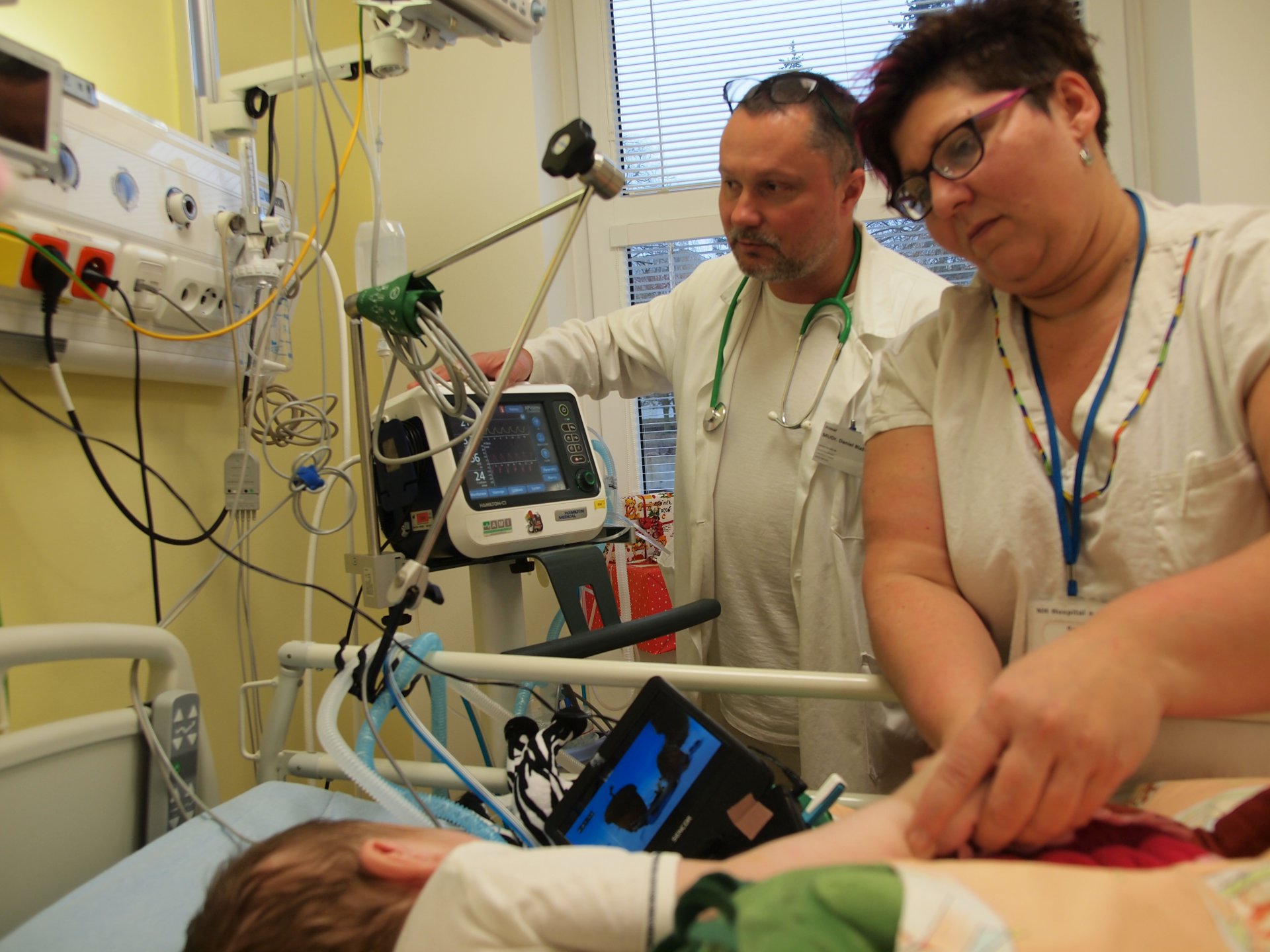
Adult wards already existed at the time of our launch, and it was obvious that similar facilities would be needed in pediatric medicine. All those who work in paediatric A&E or ICU know that many of the patients who receive long-term treatment there, although they still need support for basic life functions, no longer require the highest type of acute 'acute' care (and therefore the most expensive). The approval of the operation of our new department was therefore completely uncomplicated by the county health board. However, the financing of this type of care is a completely different issue. Although it is slightly cheaper than care for acute patients in paediatric A&E, it is clearly more expensive than care in adult A&E. This stems from a number of specificities of paediatric patients. We ourselves have already gone through two MoH tenders and have now finally been allocated a follow-up intensive care (NIP) bed. In other words, OCHRIP beds. Intensive negotiations are still ongoing about the amount of payment for them. I am happy that these are being conducted by the hospital representatives with the Ministry and the insurance companies and I am a provider of "only" expert opinion and can attend to my patients. So far, we are dealing with reimbursements for individual patients on an individual basis. Explaining to the representatives of the health insurance companies exactly what we do and how demanding it is sometimes really difficult. It often helps to be invited directly to the department. They are usually surprised by the kind of patients we have and the care they receive.
Every new project struggles with the problems...
If it were not for the extremely helpful attitude of the hospital management and the board of directors headed by Ing. S. Zavalianis, we would not have succeeded. It was necessary to create lists of materials, instrumentation, medicines, create operating rules for a completely new unprecedented department, make modifications to the existing premises, etc. Last but not least, it was not easy to provide erudite medical and non-medical staff in a short period of time. The project was fortunate and an extremely experienced and passionate nurse Mgr. Pavlína Hesounová. Without her, the implementation of the department would have been unthinkable. Thanks to our continuous cooperation we have reached the current excellent state. We have gradually eliminated a number of minor operational deficiencies and optimized both medical and nursing procedures. We have also rotated several physicians and nurses since the beginning of OCHRIP, mainly due to the extreme complexity of this type of care. Finally, we successfully completed both the hospital-wide accreditation process and the ISO inspection. The importance of our department is also evidenced by the fact that most delegations visit us during their visit to Hořovice Hospital. Representatives of hospitals that are considering establishing a similar department send their representatives to us to see what a successful OCHRIP looks like and what its operation entails.
Who exactly is OCHRIP for?
Initially, we thought it would be necessary to go around to individual health facilities caring for chronically ill children to raise our profile and attract patients. However, it turned out that already weeks before the opening the professional public knew about us. We soon filled all six beds we currently have and have had a 100% occupancy rate ever since. The patients in the ward are diverse, mostly very seriously, sometimes terminally ill. They are patients with different types of diagnoses chronically affecting basic life functions, whose support is still needed to varying degrees. For example, severe polytrauma with persistent sequelae, craniocerebral injuries with consequent effects on brain function and varying degrees of impaired consciousness to the degree of apalic state or vigil coma, and upper spinal cord injuries with inability to ventilate spontaneously. It also includes a spectrum of neurological diagnoses (neuromuscular degenerative diseases in progression, degenerative CNS diseases, severe forms of therapy-unresponsive epilepsy, severe forms of cerebral palsy, terminal stages of receptor encephalitis, etc.), genetic defects, congenital untreatable metabolic defects, inoperable congenital defects (most often cardiological) and last but not least, paediatric cancer patients in the terminal stage where treatment options have been exhausted.
Have you ever encountered the opinion that care for such seriously ill children is "useless" and economically disadvantageous?
These discussions are taking place across society and there are many conflicting views. WHO defines chronic resuscitative, intensive and palliative care for children as active and holistic care for the body, mind and soul of the child, of which family support is an integral part. Health professionals must alleviate and remove the physical, psychological and social stress of the child. The current social morality, influenced by show business trends, shows the ideal of a young, beautiful, healthy and successful person and any deviation is unacceptable. The extreme in the form of disability and incurable disease must be removed from sight, preferably behind the high wall of a medical institution. We can then pretend it does not exist. Many times we have witnessed a situation where the sight of our disabled and often terminally ill paediatric patients was not even tolerated by some of our medical colleagues. People who have never encountered a similar situation before, especially lay people in the health care sector, are under such stress that in some cases they even collapse and after leaving our ward they lead the talk that the old Spartans "knew how to handle it" better. Most of the time we are lenient with the emotional views of the lay public because under the pressure of the situation their thoughts are greatly affected. The truth is that the stress at work is immense. Much of it rests on the shoulders of nurses who are in constant contact with patients throughout the shift. They are to be thanked for maintaining a high standard of care for these patients at all times and without fluctuation in such demanding conditions. In our department - doctors and nurses - we work together as one team. We are fully aware of the severity of our patients' illnesses and a certain helplessness in the face of a progressing incurable disease. Many patients end their life journey in our ward, but our professional task is to make their departure from this world, if necessary, as painless and comfortable as possible for themselves and their parents and relatives.
Are there situations where you no longer have palliative care available?
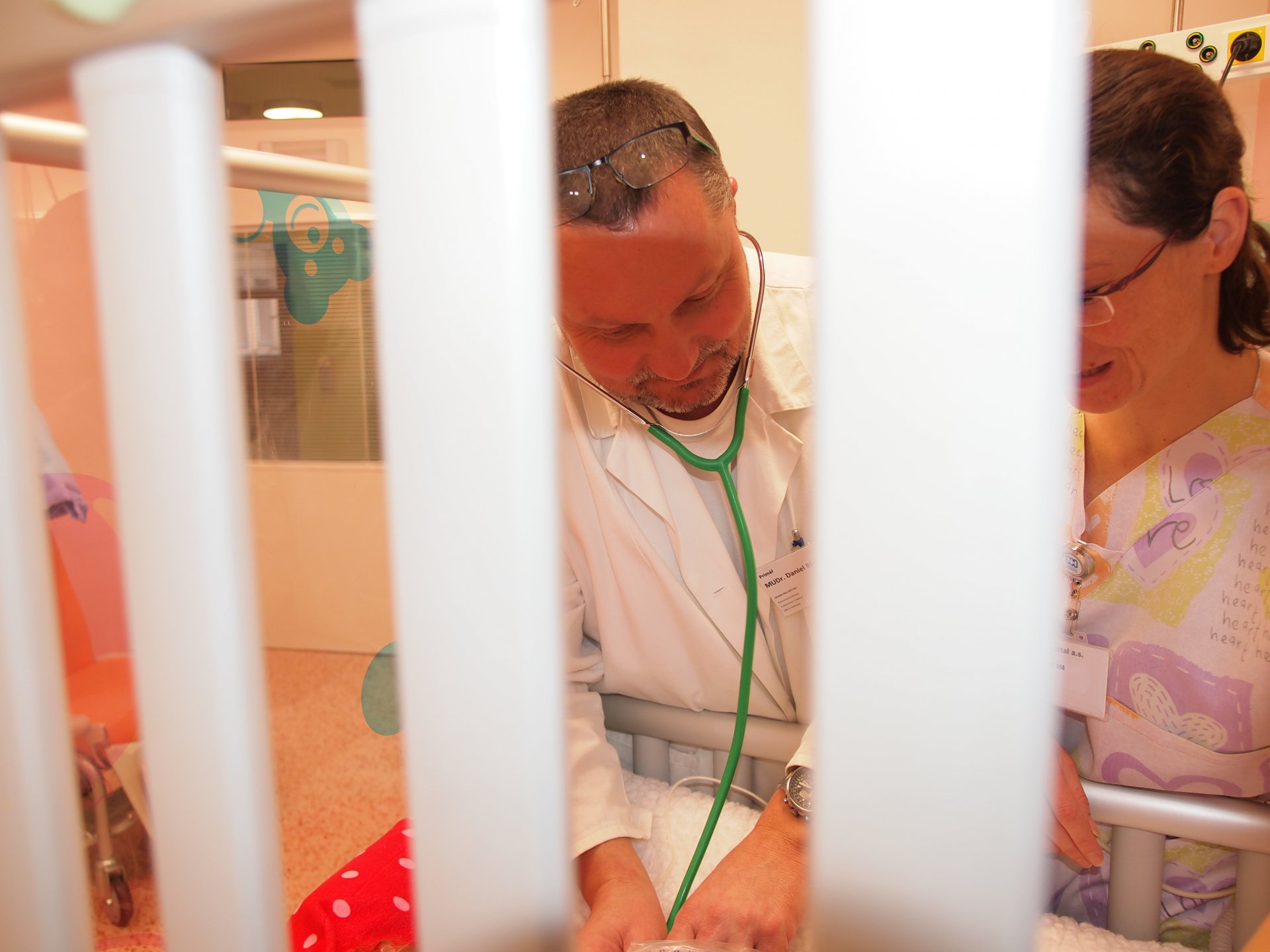
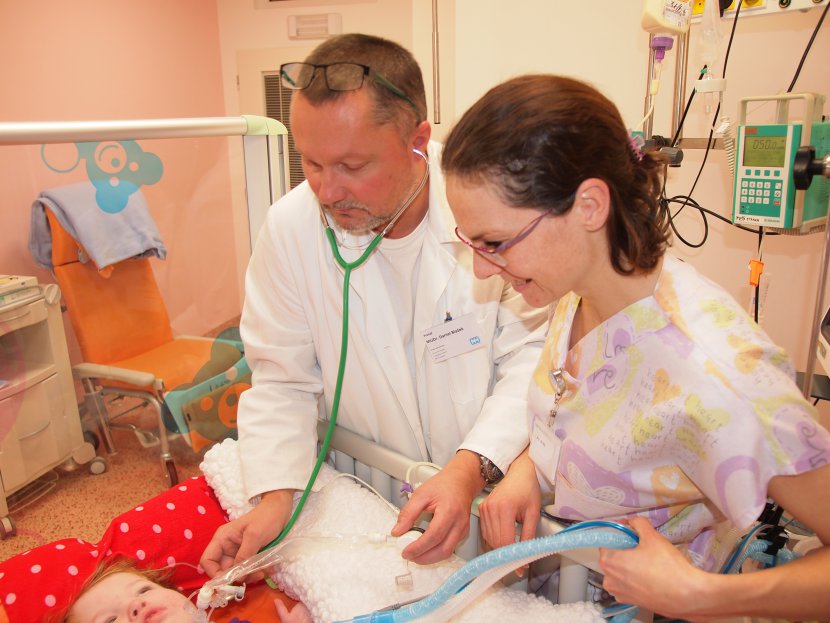
The proper understanding of the term "palliative care" is a constant pain that plagues us in discussions with lay people and professionals alike. Few people are aware of exactly what the term means. Effective palliative care requires a multidisciplinary approach involving the child's family and usable societal resources, which should be used successfully especially when causal treatment options are limited or exhausted. Our patients have a variety of diagnoses chronically affecting basic life functions, and support is still required to varying degrees. Our patients receive palliative care while they are still receiving causal treatment. These two medical streams go hand in hand until the end of hospitalization. When it comes to the terminally ill patient, palliative care naturally takes precedence towards the end of therapy and must enable him or her to leave this world with as much dignity as possible. It is not just about basic care for the patient's physiological functions, but the nurses and all the staff involved are also concerned with the patient's consciousness and psyche, the development of his or her emotional side, intensive rehabilitation and occupational therapy. The environment in which our patients and their parents reside could be called home without exaggeration. Each room is colourfully painted, there are drawings with children's motifs on the walls, there are sanitary facilities and a corner for rest, the patient has his own toys in bed, there is a TV in the room. Doctors, nurses and specialized staff provide psychological help and psychological support to patients and especially to their parents and relatives, we have time to talk with them not only about their child but also about their life problems. All this together has a very positive and encouraging effect.
Where can we look for the end of life? What is your position on euthanasia?
The more I deal with this issue, the more I realize how complex these topics are in terms of social morality, philosophy and ethics. I am struck by how many lay people feel called to make decisions about these complex issues. Most of these people have never even come close to a chronically ill person with a terminal illness, let alone understand what ongoing care entails. I'm almost allergic to statements like that, that modern medicine already has such resources that no one in the world needs to suffer at the end of their journey through life. Surely these people have never been in LDN institutions, old people's homes, children's nursing homes, etc. Believe me, so much suffering, both mental and physical, is almost impossible to bear. That is why I think that our OCHRIP for children, which by its very nature is aimed at eliminating this type of hardship, is of great importance not only for the six patients currently hospitalized with us, but is like a bright hope for all other pediatric patients with incurable or prolonged illnesses. I have attended many international conferences on intensive care in the terminal stage of life for adults and children. The largest intensive care and ethical medicine capacities around the world address the issue of so-called EOL (end of life) decisions more or less successfully depending on local resources, religious orientation and medical reserves. The issue of euthanasia, even in the area of children, is an integral part of these discussions. In our country, for example, the Czech Society of Palliative Medicine ČLS JEP is dealing with these issues. In cooperation with foreign societies and colleagues, rules and recommendations on how to proceed in the case of a dying child are already being drawn up. This concerns, for example, the extent of the care provided in accordance with the severity of the disability and especially the patient's consciousness, the initiation of support for organ systems, connection to a ventilator and so on. With Mgr. Hesounová, Bc. Štorkánová, MUDr. Djakow, PhD. and others, we actively participate in such conferences in order to provide health care to our patients according to the most up-to-date world standards.
How do parents of sick children learn about OCHRIP?
Even before its opening, I assured the management of Hořovice Hospital that we would have more offers than we could satisfy. I had experience from the children's inpatient ARO at the Motol Hospital, where I worked for a long time, and I knew that each such unit has up to several chronic patients who cannot be transferred anywhere because of the intensity of the care provided. My assumptions came true and we were virtually full even before we opened. Since then, we have had what is known as a waiting list, which consistently has more patients than we have beds. During our tenure, the nurses and doctors have received many thank you letters from parents and relatives of our patients
How do you cope with the stress that working at OCHRIP brings?
When one sees the professionalism and personal commitment with which the nurses work with patients hooked up to breathing machines, infusion pumps and various monitors, one would think it is a quiet job. The opposite is true. Only high professional standards, many years of experience and immeasurable psychological resilience allow us to create the picture painted above. Hidden stress is omnipresent. We work with severely handicapped children, often terminally ill, but in many cases fully or partially conscious, communicating nonverbally with us, playing and requiring human tenderness and love like other healthy children. This is the most psychologically difficult part of our work. The nurses are almost surrogate mothers to the patients; the patients hug and cuddle them. Many of our colleagues - nurses can't stand being in our workplace for a long time. And those of us who stay? We have a specific style of humour, by which we build a shell around our own minds, which allows us to endure the constant psychological pressure.
With your workload, do you have time for hobbies?
I used to play a lot of sports, I used to do gymnastics when I was younger. I played the violin, piano and also football. But my biggest hobby has always been flying. I used to have a pilot's license for gliders and currently I fly a helicopter of the Police Squadron of the Czech Air Ambulance of the capital city. Prague as a doctor. If I have any time left at all, I at least devote myself to flying radio-controlled models. However, it is enough for my happiness if I can get to my wife and children. I try to devote every free moment to them, it is the greatest relaxation for me.
Is there any social understanding of the meaning of OCHRIP?
Every society is judged morally by how it takes care of its disabled, handicapped, sick, old and dying citizens. As long as one is healthy, it is easy to condemn the economically possibly disadvantageous health care of terminally ill children. But believe me, most of these people who so passionately debate the need or otherwise of our department have not the slightest idea what they are actually talking about. We have verified this many times during the visits of the officials in charge, health officials and politicians to our OCHRIP. These people were truly shocked, often unable to complete a short tour with us.
It is imperative to emphasize that we also have patients who, given their underlying diagnosis, can and do cure or improve their condition enough that they can undergo further therapy in a standard medical facility and eventually live a full life! This fact is often overlooked and is one of the strongest motivators for the psyche of doctors and nurses in our department.
Josef Zábranský