Česky
Česky


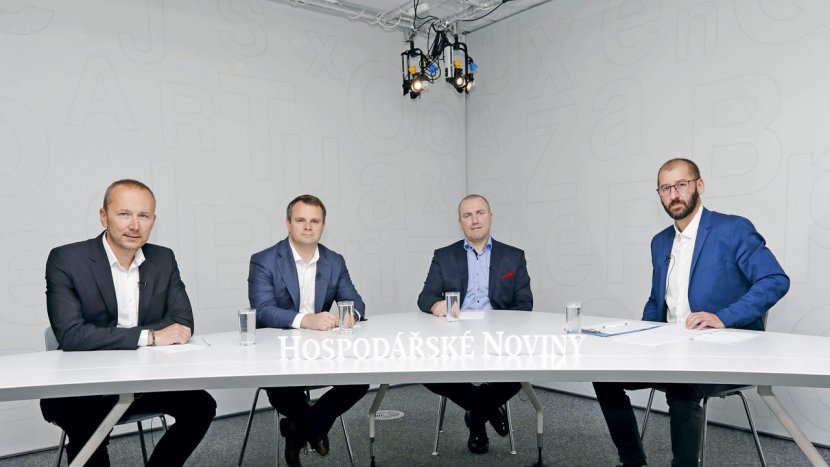
Companies whose owners are directly involved in their management are better able to cope with the crisis. And decision-making on a new direction is disproportionately faster than in large global companies. AKESO holding, an operator of medical equipment, or Titan-Multiplast, a manufacturer of plastic products, have proven this in practice.
These are purely Czech companies, which, along with eight other companies, succeeded in the Best Managed Companies corporate governance quality competition. The competition has been organised by the consultancy Deloitte since this year. In a discussion organised by the Economia publishing house, representatives of the companies evaluated what had changed in their management during the coronavirus crisis.
Quickly, but above all strategically
At AKESO Holding, which includes the hospitals in Hořovice and the medical facilities in Beroun and Pardubice, the arrival of the epidemic meant that many changes had to be made to the daily routine of healthcare. In addition, the management of AKESO Holding decided to completely redesign the plans for the upcoming expansion of Hospital Hořovice - so that it would be prepared for such a crisis. Titan-Multiplast, on the other hand, made a fundamental change in its production programme overnight - it focused on transparent plastics - Plexiglas. "We started to produce, for example, protective glass for cash registers in shops, which suddenly everyone needed, and in large quantities. Thanks to this, we managed to cover the dropped orders," said Lukáš Horn, managing director of Titan-Multiplast.
However, the uncertainty brought about by the covid pandemic continues. "You can't make quick decisions all the time, especially if companies don't have enough data to do so," said Miroslav Svoboda, a partner at Deloitte, which organised the company evaluation programme. "It's important for companies to redefine the paths they take to reach their goals, but they still need to maintain their direction if they want to survive," he added.
But Czech companies have no problem with this - they are strong in their strategies, have clear visions and direction. That is why they are prepared for such crises. "What they could improve is their day-to-day management, corporate systems and measurement of productivity and other indicators," Svoboda summarised the conclusions of the assessment, which was carried out at around 20 Czech companies before the onset of the crisis. On the other hand, the biggest weakness across the Czech market in general lies in finance. "In times of plenty, companies underestimated financial management the most," Svoboda pointed out. According to him, it was a great stroke of luck that when the crisis was announced, companies were already preparing for it.
Uncovered loyalties
Businesses are realising that if they can manage the crisis from an HR perspective, they will be better placed in the labour market. If they treat people generously, they will attract future employees. They are still in short supply. In particular, in the AKESO holding's healthcare facilities, they could not choose their employees much either before the crisis or now. Moreover, during the emergency measures, it became clear how loyal people are.
"Employees' reactions to the measures varied a lot. A lot of people were willing to pull together with us. But then we also had those who preferred to flee or be passive aggressive. Our willingness to reward these employees and allow them to develop further will depend on this. We have learned a fundamental thing: not all people identify their interests with the interests of the company and we have to take that into account," said František Vlček, Director for Processes, Quality and Efficiency at AKESO Holding.
Even Titan-Multiplast has been suffering from a lack of people for a long time. However, according to Lukáš Horn, the staff behaved loyally in the crisis. The company also experienced the advantage of diversity in terms of employees during the emergency. They had to engage university students at that time. "Because they were mostly from other disciplines, they came with new perspectives. With their knowledge, we were able to save money," Horn said.
Covid disrupted transportation and production, and as a result, supply chains. Companies had to look for other sources. Conservatively managed Titan-Multiplast had been working with its suppliers for ten to fifteen years until the advent of covid.
"By having more than just a business relationship with them, we were able to sustain production. But as far as Plexiglas was concerned, the material for its production ran out in Europe in about a week and delivery times stretched to eight months. We had to shift our purchasing to the East, where the pandemic had not yet occurred. We have tried materials from Russia and other post-Soviet republics and continue to buy from them," Horn explained.
Companies have not had to diversify their supplier portfolio over the past few years. The fact that they were not used to looking for alternative sources proved to be a big problem when logistics were disrupted. "As a healthcare facility, we had contingency plans for all possible disasters, but when the government decided on a state of emergency, they were all useless to us. We had no supplies, supplies were even a month late, we were suddenly dealing with people we didn't know. Now we know how fragile logistics is," said Vlček from AKESO Holding.
Hana Vacková, Hospodářské noviny, 23 September 2020
Listen to the full interview here.