Česky
Česky


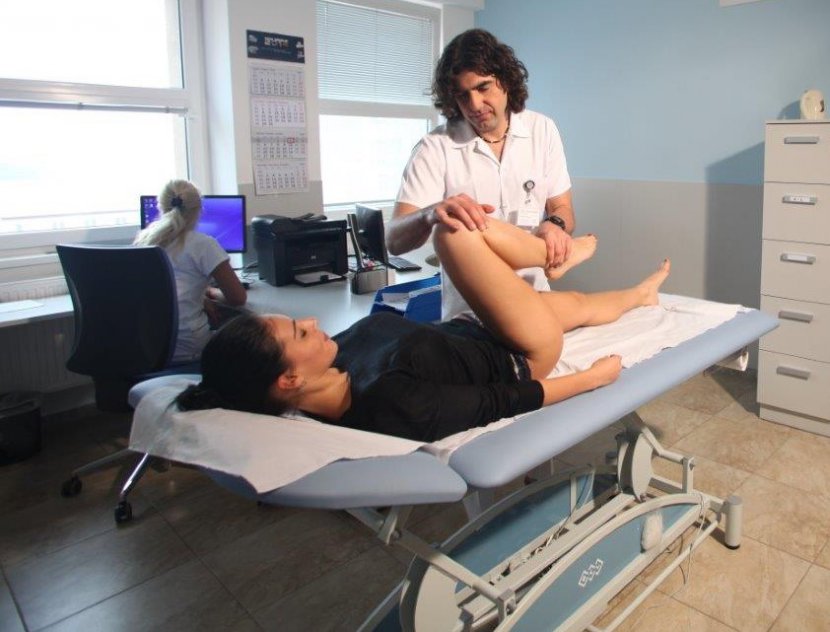
They say that every second visit to the GP is for joint or back pain. If this is true, is Czech orthopaedics sufficiently equipped to deal with the problems of such a huge number of patients?
You are right, the orthopaedic surgeon is often sought out by patients. This is due to the broad spectrum of the field. These include degenerative disorders of large joints, musculoskeletal injuries and common orthopaedics such as tennis elbow, forefoot problems, growing pains and so on. At the interface with rheumatology, orthopaedists are sought by people with small joint pain, and at the interface with neurology, there are isthmus syndromes-carpal tunnel, cubital tunnel, cervicobrachial syndrome, back pain. At the interface with surgery, these are mainly post-traumatic conditions and non-traumatic musculoskeletal pain. This is due to the fact that the orthopaedic surgeon is busy in the outpatient clinic and has relatively long waiting times, which can exceed one month.
How is orthopaedics in Gorovice? Do you operate on patients from Berounsko or from other areas? How many operations do you perform per year?
Hořovice orthopaedics fortunately operates supra-regionally. The Beroun district has about 80,000 people, which would be quite on the edge of the required efficiency. Therefore, the proportion of patients from Beroun in the field of joint replacements and arthroscopies, for example, represents only 25 percent of our patients. The remaining 75 percent are from Prague, Pilsen, Karlovy Vary, Ústí nad Labem, South Bohemia or various districts of Central Bohemia.
Patients very often complain about waiting several months before surgery. What is the situation with waiting times in Hořovice?
Waiting times are set by the insurance company. The average wait for a joint replacement is one year. This is considered acceptable by the insurance companies. In our hospital, the waiting time for major joint replacement surgery averages 4-5 months. We are now booking for February, which is consistent with the above.
Previously, it took several weeks for a patient to get back on their feet after orthopaedic surgery. How is it today?
We try to get the patient out of bed on the first day after surgery. If the patient is young and cooperative, then it usually goes well. In the case of the elderly, we aim for them to be able to walk up and down stairs independently on crutches on the seventh day of discharge from hospital.
Previously, the hospital stay after a joint replacement was three weeks. Now it's seven days in our hospital, or even just 2-4 days abroad. Here it is due to the fact that the patient pays for the hospitalisation and is therefore motivated to leave the bed soon and return home.
What about follow-up rehabilitation? What can you offer to your patients and what experience do you have in working with the Beroun hospital?
We differentiate ourselves from our competitors by trying to offer more to the patient. I'm sure that an 85-year-old person is not able to go home and drown in the fireplace after seven days, so we suggest to all our patients a follow-up stay in our Rehabilitation Hospital Beroun, where they spend another 2-3 weeks. Here they will fully warm up and perfect their walking and help them to return home, where they will then have the option of spa care, which must be taken within three months of the operation.
What about complications with your surgeries?
Complications are a concern for us, as they are for all surgeons, so we try to standardise and speed up our work as much as possible. The biggest scare is infection, today we have less than half a percent complication rate due to infections, which in a national average of 1.5% looks good for our hospital. Also, on the hip luxation or nerve-vascular bundle disruption side, we're running on the promille numbers, which is pleasing, but also obliges us to be cautious and prudent in the future.