Česky
Česky


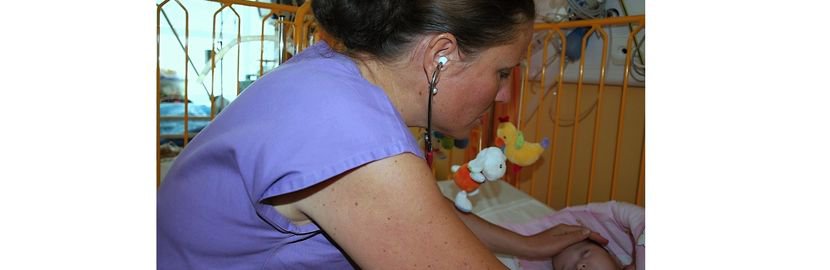
Mrs. Chief Medical Officer, although you are not working at the hospital in Hořovice for the first time, could you briefly introduce yourself to our paediatric patients and their parents?
I have been actively involved in medicine since 1997, when I finished my studies at the 2nd Faculty of Medicine of Charles University and started working as a paediatrician at the Intensive Care Unit of the Department of Paediatric Surgery at Motol University Hospital. Gradually I passed the attestation exams in paediatrics I and II and after seven years of working in intensive care medicine I went on maternity leave. My daughter Štěpánka was born, with whom I stayed at home for a year and then gradually started to return to work. At the same time, I started working one day a week in a general paediatrician's office. In 2008 I graduated from intensive care medicine. My cooperation with the hospital in Hořovice dates back to 2010, when I started working in the children's ward, and from 2011 I worked there for a year and a half as deputy to the then head of the department. During my time there, I managed to invite colleagues of paediatric surgeons and anaesthesiologists from my former workplace in Motol to collaborate with me and to start a Saturday surgery programme, which has now been successfully running for the fifth year. In 2013, I returned to Motol for two years and since June this year I have been back at the children's ward as the head of the department. I have also been working as an external paediatrician for the mobile hospice Journey Home for more than a year. That's my eighteen-year career in a nutshell.
In my personal life, I am a proud and happy mother of an almost eleven-year-old daughter, with whom I live in Prague during the week, but during weekends and holidays we move to a cottage near Hořovice.
What are the most important changes you have noticed during your two-year absence from the hospital?
A lot of work has been done in the reconstruction of the hospital. Given my professional focus, I would particularly highlight the facilities of the neonatal ward and its intensive care unit, where mothers can feel really at home. The children's ward has moved to new premises. During my last post, I spent many hours of my time preparing its renovation not only in the plans but also on site. Today, I look back with pleasure on the result of that work. Hospital Hořovice has a modern and pleasant impression on me, which in my opinion is an integral part of the successful treatment of our adult and paediatric patients.
A much-discussed topic at present is the dismal situation with paediatric doctors. How would you assess the situation in this respect nationwide and especially in the Beroun region?
The situation is really, dare I say it, critical and I would not single out Beroun or Hořovice in particular. It is a nationwide problem. In my opinion, there are several causes. First of all, there is the change in the postgraduate medical education system. The less than ideal salary conditions, particularly for doctors starting out, and their frequent departure abroad, also play a part. Another limiting factor is the uncertain future of general practitioners for children and adolescents. I believe that all of the above factors then lead to a lack of interest in paediatrics in general.
What are the prospects for solving this problem? How do you plan to staff your department?
Well, with exaggeration I would say that I will probably have to clone myself..... Seriously. In a short space of time I have managed to secure our GP surgery, and a new doctor will be joining in a few weeks who will be devoting herself entirely to our ward. I also need to get at least one more board certified doctor with enough experience, which I am working hard on. As I mentioned earlier, this is not an easy task, but I believe that I will be successful in accomplishing it as soon as possible. Otherwise, the number of young doctors in the department is quite sufficient at the moment and I am pleased to say that they are all very skilful, hard-working and passionate about the field. We are also working very closely with the neonatal unit and the paediatric chronic resuscitation unit so that our doctors are educated in the full range of care for paediatric patients.
Did you want to be a doctor when you were a child? What do you like about the profession?
Honestly? If I remember correctly, I wanted to be a doctor very briefly when I was very young and then not at all for many years. Both my parents were teachers and I couldn't really imagine any other future. Gradually I moved towards special education, and during my studies at grammar school I volunteered at the Jedlička Institute in Prague and helped with handicapped children. That was until my fourth year, when I decided at the last minute that I would go to medical school after all. However, I knew from the beginning that I wanted to work with children, so I directed my efforts towards admission to the 2nd Faculty of Medicine at Charles University, which is the most focused on the paediatric population. I was successful and after six years I graduated successfully and joined the Intensive Care Unit of the Department of Paediatric Surgery as an aspiring paediatrician.
What do I like about this profession? I have asked myself this question many times and many times have not found a clear answer. What is it that brings me the most joy? Probably the opportunity that has been given to us physicians, that is, to help in the best possible way where it is needed. The greatest satisfaction for me is every child patient cured and their happy parents. But even where we can't cure, and we still get into such situations despite all the huge advances in medicine, I see great meaning in our work and can rejoice despite some sadness.
What hobbies do you have, how do you relax at all?
I unwind every day (that is, when I am not serving) with my almost 11-year-old daughter, it is a great joy and life boost. Otherwise, I play sports for sure, in the last few years I have been actively playing volleyball again, I go to the gym, on weekends I try to run or ride my bike or skate regularly, and in winter I ski. So that it doesn't seem like I always have to be doing something, I admit without torture that sometimes I just sit, read or look at our cottage garden, which I like to look after in my spare time. This is definitely another important form of relaxation. And of course, I must not forget meeting friends and occasionally going to the theatre, concerts or the cinema. I don't have much free time, but I try to relax, whether actively or passively. There is no other way in our work.