Česky
Česky


Hořovice and Sedlčany are similar in many ways. Both towns are the third most populous towns in their respective districts of the Central Bohemian Region. Both are set in a picturesque landscape, surrounded by nature. Hořovice, in the grip of the Brda and Křivoklát forests, has 6820 inhabitants. In Sedlčany, among the endless rolling hills, there are several hundred more. So many inhabitants, so many potential patients for the local hospital. While the Sedlčany one has been on a downward trend for the last few years, the Hořovice one is thriving. In Hořovice we can speak with a slight exaggeration about a boom. In Sedlčany, with the same exaggeration, we can speak of decline. Where is the difference? Why is one hospital crying that it cannot keep its single inpatient ward running because of a critical shortage of staff and an outflow of patients, and only fifty kilometres away inpatient wards across all four basic medical disciplines, even beyond them, are operating at full speed?
Perhaps not even to compare the two hospitals. But to see for ourselves how a hospital of district format, located halfway between Prague and Pilsen (with a teaching hospital within a fifty-kilometre reach on each side), can turn out to be a facility sought after by patients and staff, with a total capacity of 292 beds and a wide range of outpatient clinics, we decided to visit Hospital Hořovice.
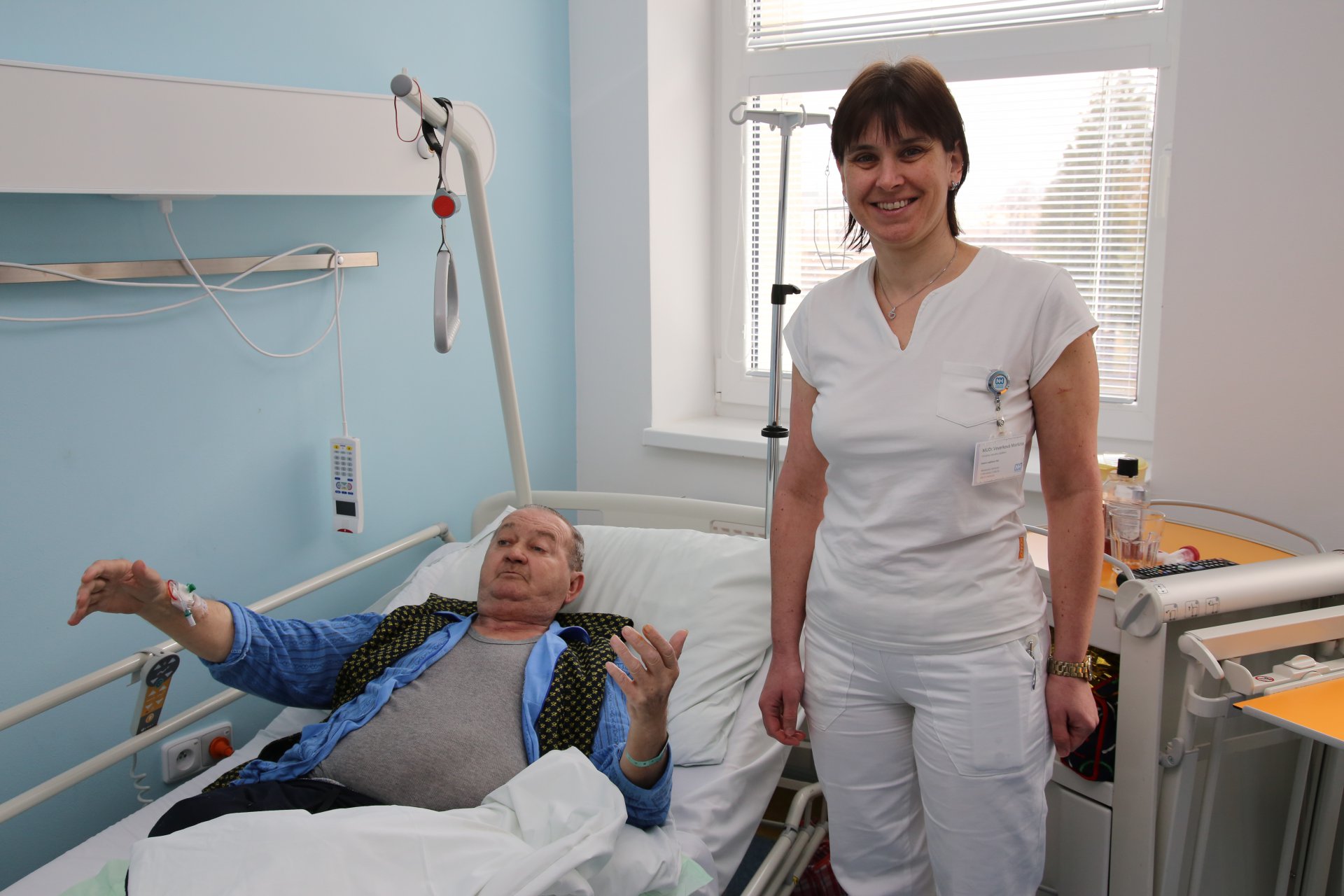
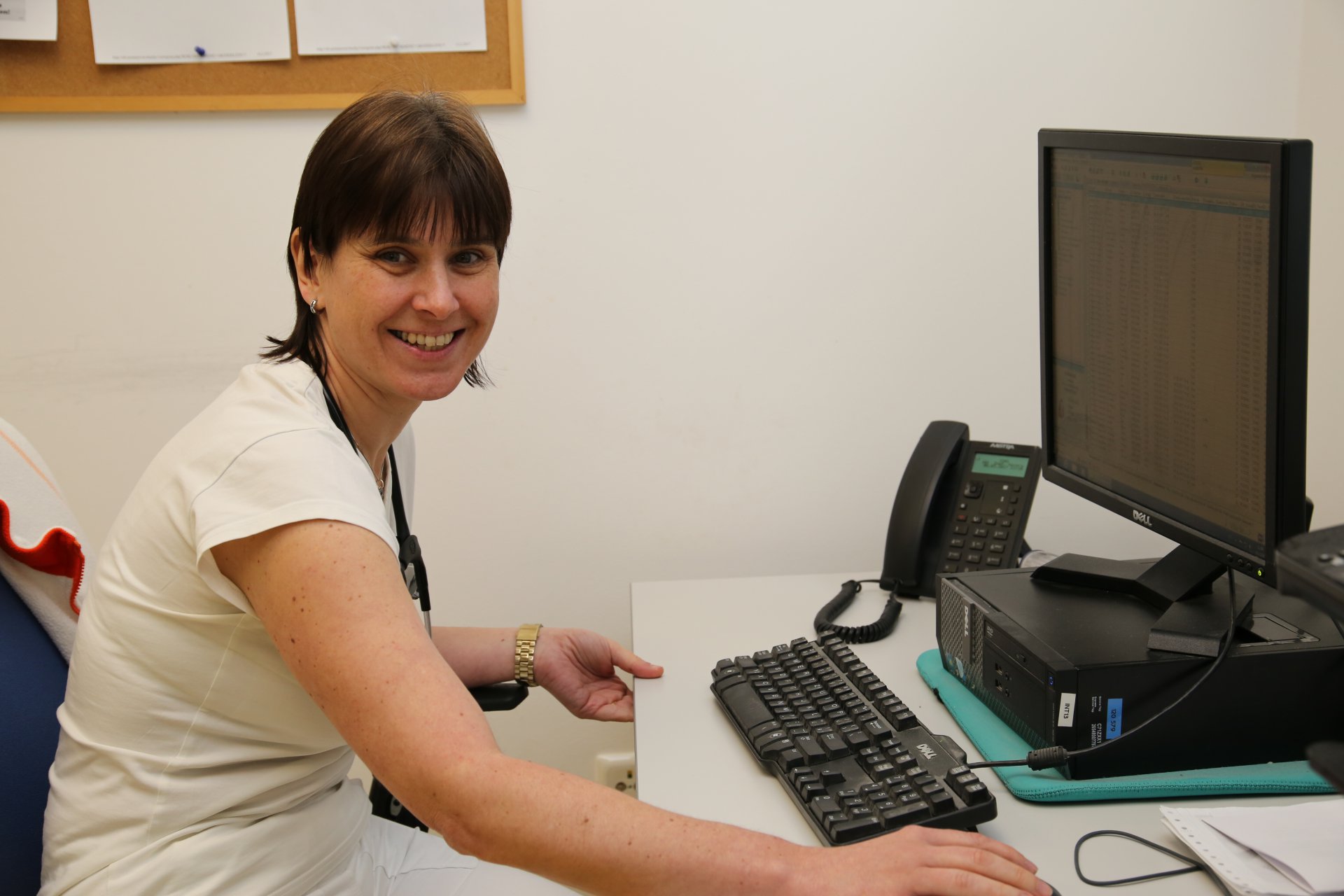
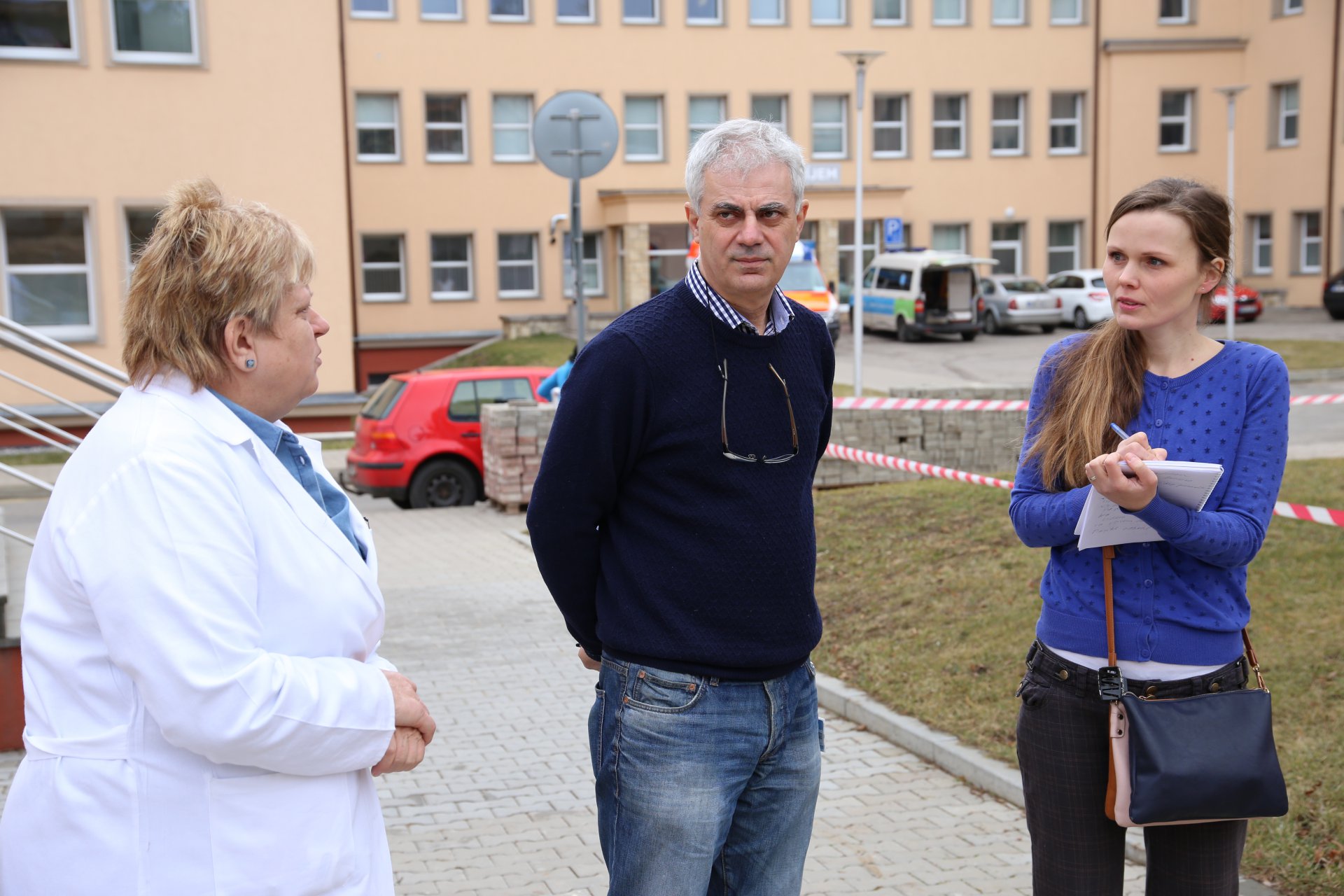
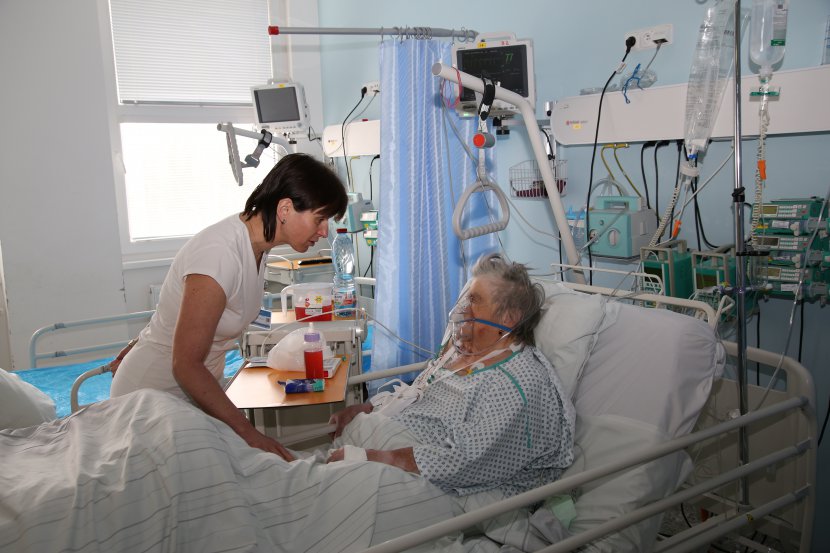
Konstantinos Tsivos, the hospital's spokesman, and Blanka Červenková, the head nurse, guided us for more than two hours through the beating grounds of Hospital Hořovice. The energy is omnipresent. We are gradually introduced to the individual wards, the extensive outpatient department and the snazzy cafeteria, which is a far cry from the usually tired hospital cafeterias. The longest stops are, of course, devoted to the inpatient ward and the downstream internal medicine outpatient clinics. Here we meet the head of the internal medicine department , Markéta Veverková. I can't believe that this young-looking, petite woman with a kind and shy smile has been working at the internal medicine department in Hořovice for twenty years. "The internal ward has thirty-two beds," she introduces us to the picture with basic data, "six of which are for intermediate care. In addition, there are three beds in the shared intensive care unit. The capacity of the beds, although the entire ward is newly renovated, is now insufficient, she says. The already high patient turnover is exacerbated by the limited operation of the internal ward of Strakonice Hospital. "Since last March, the operation of the internal ward in Rokycany has been significantly reduced due to a lack of staff. It was perhaps even considered to be closed completely. In the end, it was possible to keep it running at least partially. Even so, this means dozens of extra patients for us. That's why we still have two rooms in the opposite neurology department," the head of the department illustrates the situation we know from Sedlčany, unfortunately from the other side. She adds a bit of statistics to the overall picture of the occupancy rate of the Hořovice internal medicine ward: "Our occupancy rate is 86% on average and a patient stays in bed for an average of four and a half days."
In practice, therefore, we can speak of a busy ward where patients turn over very quickly. The fully occupied rooms are proof of her assertion. Follow-up care in Hořovice is provided by social nurses or, in particular, by a wide range of outpatient care. There are three internal outpatient clinics in Hořovice alone. Their operating hours complement each other so that they are available to patients every weekday. The state-of-the-art cardiology outpatient clinic is also open for a significant part of the working week. The same goes for the surgical clinic. Its surgery hours are more than accommodating to patients.
It is the cocktail of a wide range of outpatient care, friendly office hours, top-quality equipment of individual departments and, last but not least, the positive staff that attracts current and future patients in Horovice. Particularly in recent years, following extensive investment following privatisation in 2007, the hospital has seen an influx of patients from outside the catchment area. A notable indicator of the increased interest is the local Maternity Hospital U Sluneční brány. Here we have a moving encounter with the new parents of baby Antonín, who are being discharged home after five weeks in the maternity ward.
We meet by chance in the welcoming corridor of the sixth ward. A new mother with tears in her eyes says goodbye to the nurses. The touch is mutual. I overhear fragments of sentences: "I will miss you very much. Thank you very, very much for everything!"
Andrea Balounová came to the Hořovice maternity hospital to bring her son from Pardubice, a hundred and seventy kilometres away. "We suspected that the birth would come prematurely and that is why we looked for a maternity hospital where they are equipped for the arrival of immature babies. I was recommended to the Hořovice maternity hospital by my gynaecologist. When my partner and I came here to check it out, the decision was made. I really don't regret my choice. It's a beautiful environment. The baby and I were well taken care of. We were here for five weeks and I can't complain about one day here. It sounds funny, I'm really looking forward to going home, but at the same time I don't want to. I will miss many of the nurses and doctors. With the next baby we will definitely come to Hořovice again."
The maternity hospital at Sluneční brána is the largest maternity hospital in the Central Bohemian Region with over 1700 births a year. Twenty years ago, the number of births was around three hundred. In 2014, the neonatal ward was granted the status of a Perinatology Centre, allowing it to provide care to newborns from the 31st week of pregnancy. The head nurse of the neonatal unit, Kamila Přádová, has been working here for five years. She uses her experience from the perinatology centres at Apolinar and Motol. The same goes for the head of the neonatal ward , Milena Dokoupilová, who came to Hořovice to build the centre for premature babies.
The other departments of Hospital Hořovice that we visited, including the internal medicine department, do not complain about the lack of staff. The aforementioned internal medicine department, and many others, have the so-called accreditation for first-type education. Freshly graduated doctors therefore have no problem in achieving tribal certification in the first two years of their practice. According to the chief physician Markéta Veverková, their release for internships at university hospitals is counted on. "Certainly, releasing doctors for internships can have devastating consequences for the department," the chief admits the difficulty of the situation. "It is not a matter of weeks, often even years, when doctors, although they are still our employees, work in other hospitals. We have applied to the Ministry of Health for higher accreditation several times in the past. So far, unfortunately, unsuccessfully. It is not so much that we are not able to provide specialist training. Rather, it is a tendency to concentrate higher-type accredited departments in teaching hospitals," he explains. Fortunately, she says, there are no binding contracts. It is this open and welcoming approach that distinguishes Hospital Hořovice from many other departments and makes it attractive to employees.
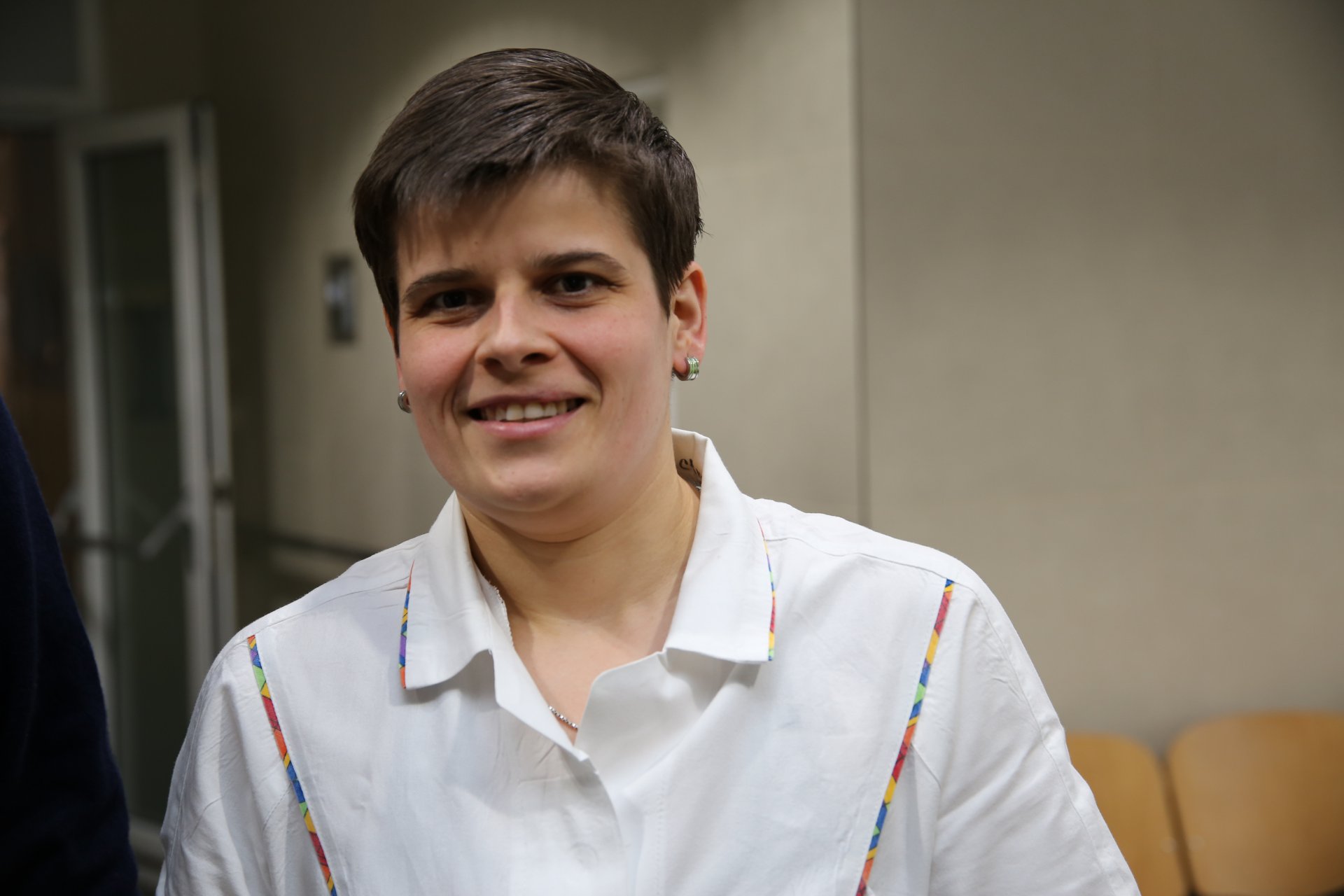
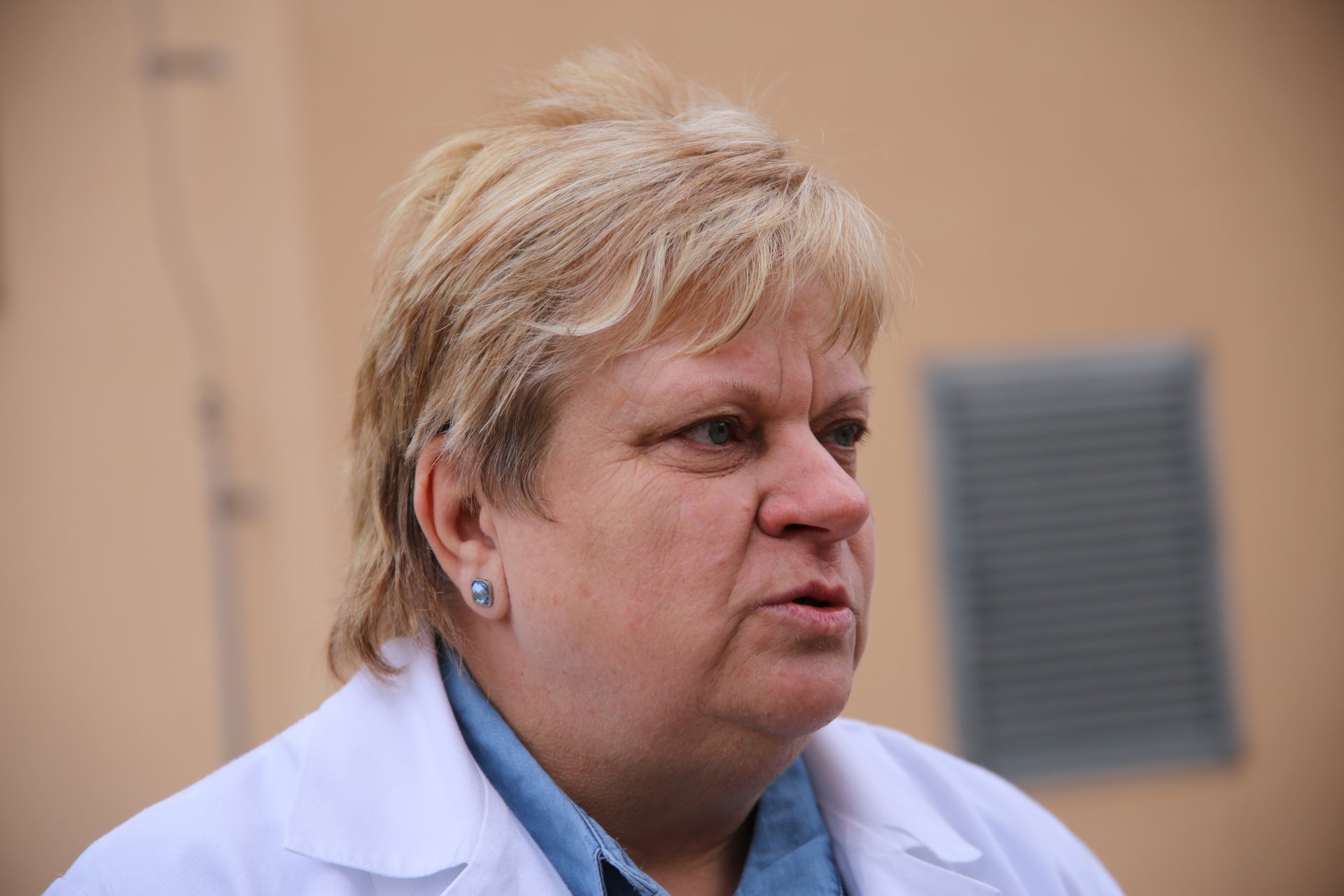
There is a general shortage of nurses in the eyes of their manager Blanka Červenková. In Hořovice they deal with it in their own way. Again with a friendly and especially individual approach. "You know, I want to find a moment for a personal conversation with each nurse. To find out what is bothering her at work. What could be improved. Where to make the job easier. We've hired clerical staff on all the wards, which greatly relieves the station nurses from paperwork. We have young nurses. Many come from the Beroun medical school, with which we work closely. They will appreciate the staff nursery that is currently under construction. Nurses can place their children here on a priority basis and from the age of one. We also try to accommodate mothers on parental leave. They only work maybe five times a month. The benefit is mutual. The nurses keep themselves professionally fit during their parental leave and we don't feel their absence from the workplace as much," Blanka Červenková describes her strategy.
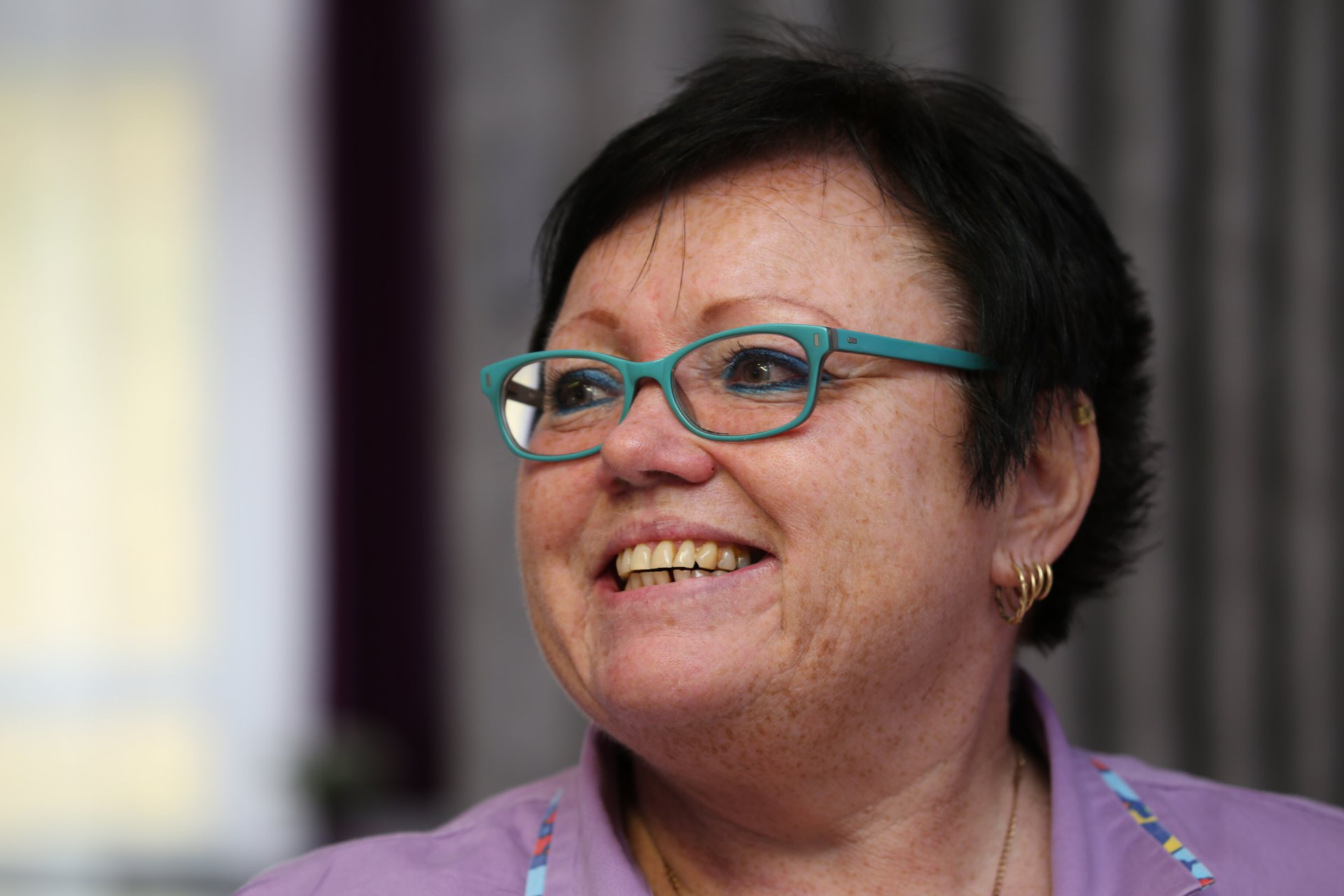
I can see the proof in the fresh smile of Ludmila Benešová, a nurse on parental leave who is currently serving in the sixth-grade ward. "I go to work a couple of times a month to rest," she laughs, and she too appreciates the construction of the staff nursery.
Not only the vitality of the young, the experience of the senior staff in Hořovice can be appreciated. Blanka Červenková continues her story as she shows the nursery under construction. There are ladies of retirement age among them. For example, we had several nurses from the ARO. Just before their retirement, we reassigned them to a standard workplace in agreement with them. The nurses have been greatly relieved from the exhausting work in the ARO and they are passing on their rich experience in the standard workplace and staying on. ", he adds.
The head nurse, as she says, has not believed in tabular salaries for a long time. If the hospital wants to behave like a progressive commercial entity, its pay policy reflects that. Many factors are taken into account, including educational attainment, the difficulty of the workplace, and the quality and quantity of the work done.
Hand in hand with an exemplary staffing policy, the ubiquitous team spirit and public loyalty to "their" hospital works nicely. The non-anonymous small-town environment is also evident here. A group of young floorball players from Komárová, under the guidance of their coach - the station's surgery nurse Veronika Prokopová, donate blood to the local blood transfusion station in droves. Their unexpected reward is a financial sponsorship from the hospital for the purchase of training equipment. The examples could go on and on.
I'm necessarily interested in the history of the hospital. It's only slightly older than Sedlčanská. It celebrated its 60th anniversary last year. Its historical development took place in the context of the development of our country. Until 1991, its founder was the District Office of National Health. Two years after the fall of the Iron Curtain, the District Office of Beroun became its founder, and later the Regional Office of the Central Bohemia Region. From 2005 until its privatisation in 2007, the hospital was managed by the Regional Hospital Příbram.
"I must admit that a significant part of the staff and the public, including myself, was afraid of privatisation by a foreign investor," recalls Blanka Červenková, a vital lady who devoted forty-two years of her life to the hospital. "I am glad that none of our original fears came true. The hospital has not disappeared, nor does it serve only patients outside the guaranteed care of health insurance companies."
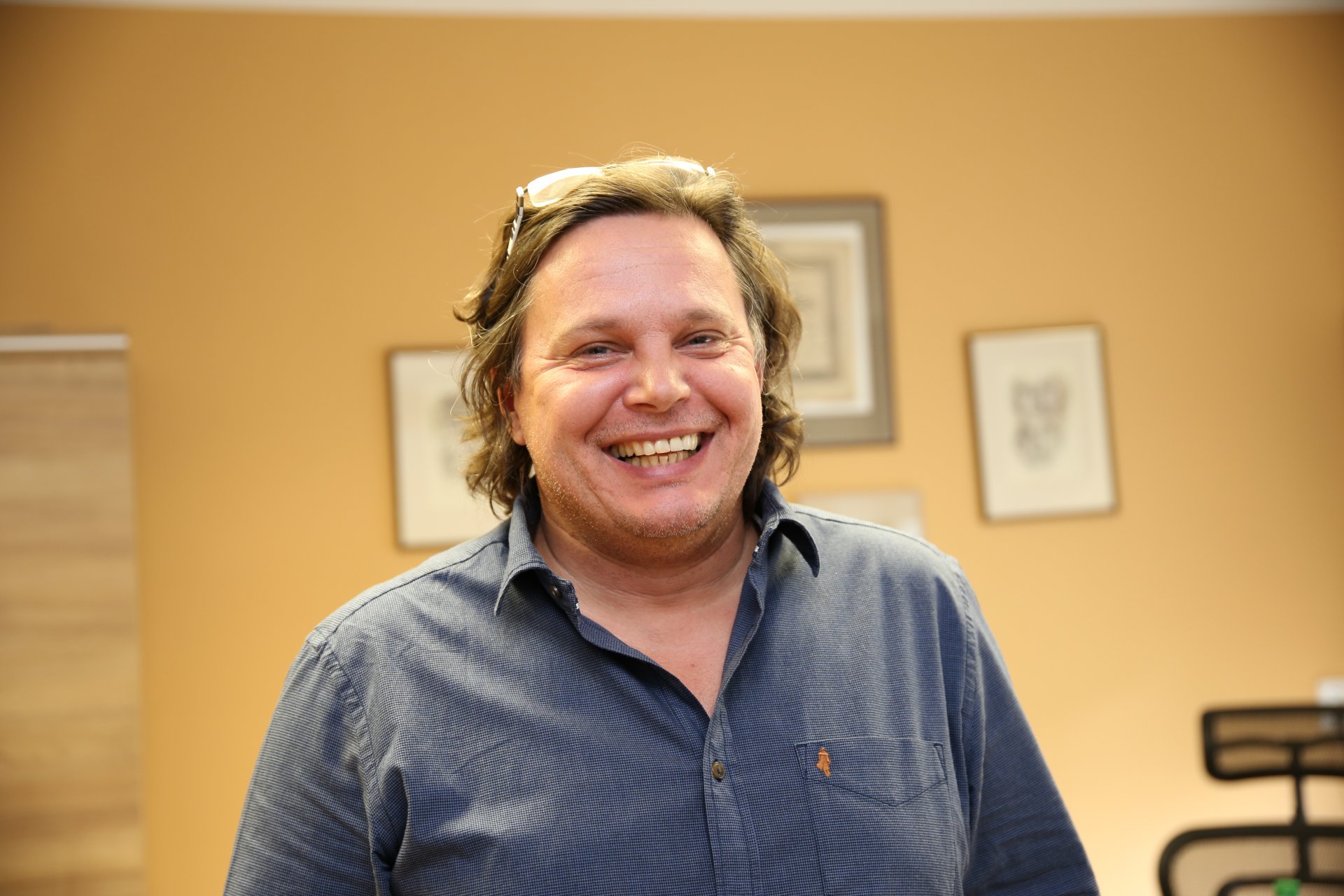
Markéta Veverková, head of the internal medicine department, confirms the same feeling of uncertainty ten years ago. In her words, it took two years for the employees to believe the new owner that he really meant to fulfil his vision of where the hospital was going. According to the owner Sotirios Zavalianis, his aim is to create a medical facility that not only provides standard medical care in the best possible quality, but also provides services unique in the Czech Republic. And all this in the most pleasant environment for the patients, who at the same time they consider as their clients.
The considerable investments made so far and the open attitude of the management towards its employees are indicative of the fulfilment of the vision. The head nurse, however, does not leave all the credit to contemporary management alone and adds: "I think the hospital has always been a bit lucky with its leadership. Everyone who has led it has wanted to improve something, to build something, to steer the hospital somewhere meaningful, no matter what period it was in."
We got a little attention when we left. A paper gift bag, with a presentation booklet of the hospital and a small white box inside. It wasn't until I got home that I took it out and before I opened it, it flashed through my mind, "A mug. Hospital. Who's gonna drink out of that?" I opened the box and was pleasantly surprised. The contents of the mug were indeed. But stylish as all get-out. Stainless steel, with only a dull logo of two all-saying letters. NH. I like coffee out of it. And it doesn't give me that dreaded hospital taste at all when I think of my visit to Hospital Hořovice.
Lucie Kakosová
Photo.