Česky
Česky


How do you evaluate the changes that the hospital has undergone, now from the position of the head of neurology?
During the almost 23 years of my activity in the hospital in Hořovice, many things have changed, I would say almost everything. The entire hospital has undergone extensive reconstruction, it is equipped with a number of state-of-the-art devices, new operating and delivery rooms have been opened, and a new rehabilitation centre has been built. There have also been significant changes in personnel - new teams of doctors and nurses are working in most departments. Some departments have disappeared (e.g. ENT), new departments have been built, such as neonatology, orthopaedics, neurology. There have certainly been changes in the behaviour and actions of the medical staff towards their patients, but also in the behaviour of the patient towards the medical staff. Interpersonal relationships have changed. It is necessary to realise that the reputation of a hospital is not only made by its beautiful surroundings and equipment, but also by the people who work there.
With what plans have you taken over the management of the neurology department? Are you preparing any innovations?
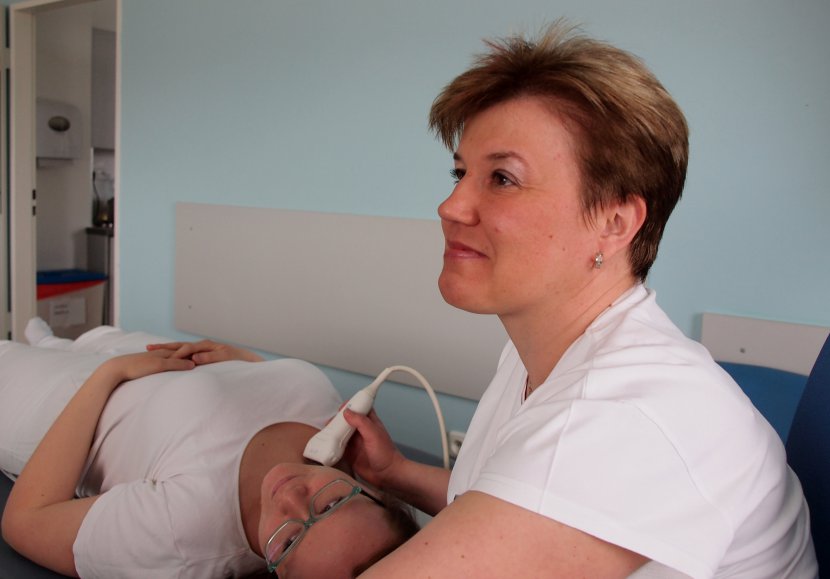
The neurology department was established at Hospital Hořovice in September 1989 within the former internal medicine department. A year later, the department as such was opened. During its existence, the Hořovice neurology has a good reputation not only among our clients from the wider area, but also at higher specialised departments. I would like to continue this tradition and, with a team of doctors and nurses, provide patients with comprehensive neurological care, focusing especially on vascular diseases of the brain, with the extension of preventive diagnostics to include ultrasound examinations of extra- and intracranial arteries and treatment of chronic painful conditions. Our doctors are currently trained in the basics of Chinese medicine, acupuncture, myoskeletal medicine and mobilisation techniques. I would like to see more doctors trained in EEG(note: An electroencephalogram is a record of the temporal change in electrical potential caused by brain activity) and EMG(note: Electromyography studies the function of skeletal muscle by examining the electrical biosignals emanating from the muscles) diagnostic methods.
What are the current scientific trends in neurology?
Neurology has seen dramatic developments in the past two decades. Formerly an extremely conservative field, it is now a field with the possibility of using the most advanced non-invasive or interventional methods - such as CT, MRI, PET, interventional radiology, deep brain stimulation, etc. The development and research of new drugs, diagnostic and therapeutic procedures is evolving dramatically. What was valid two years ago is now obsolete. In particular, the treatment of autoimmune diseases of the nervous system, extrapyramidal diseases, treatment of epilepsy, etc. has seen great development. It is for these reasons that we cooperate with higher, especially Prague-based institutions and their specialised centres such as Prague Motol Hospital, Na Homolce Hospital, ÚVN Střešovice or VFN Karlovo náměstí.
Have you noticed any significant changes in neurological diseases? What are they influenced by?
In recent years, there has definitely been an increase in the number of patients with chronic vertebrogenic problems, patients suffering from oncological diagnosis or autoimmune diseases. The number of stroke patients is increasing, especially in younger and younger age groups. I see the causes of the increase in these diseases mainly in the current way of life, the so-called 'hurried times', in the constant mental and physical overload of people, in an incorrect lifestyle and in a lack of exercise.
How close is neurology to psychiatry, and are there boundaries between these fields?
There is no fixed boundary between neurology and psychiatry. There are a number of neurological diseases whose first clinical signs include psychiatric symptoms- e.g. limbic encephalitis, Huntington's chorea, psychogenic seizures, etc. Or they are manifestations of late stages of neurological diseases - e.g. Parkinson's disease. Just as a patient being treated for schizophrenia may have a neurological problem. Pain, chronicity or slow progression of the disease, sudden paralysis from full health brings high demands on the psychological resilience of patients. Patients become anxious, depressed. That is why the compulsory three-month internship in an inpatient psychiatric ward is part of the pre-service training of young doctors.