Česky
Česky

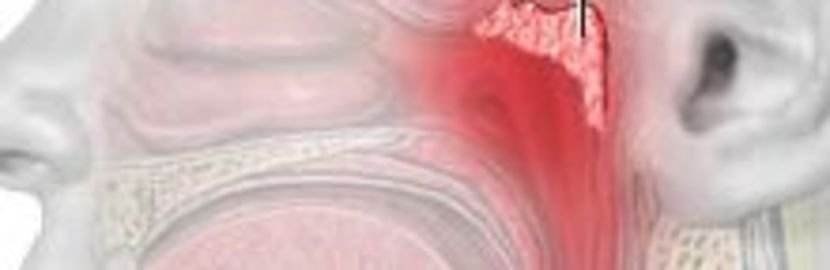
It is actually a lymphatic tissue that sits on the vault of the nasopharynx, and its enlargement leads to a number of even quite serious difficulties. Repeated inflammation of the middle and outer sinuses, rhinorrhea, hoarse speech, hearing loss are common. Due to the size of the nasal tonsils, the child breathes through the mouth (we encounter so-called facies adenoidea, when the child has a typical facial expression with a drooping lower jaw and an open mouth), snoring and sleep disturbances occur, the child is tired, restless, and may suffer from headaches.
If your child has any of these symptoms (not necessarily all of them), it would be better to see an ENT doctor. The examination is not traumatic for the young patient, it consists of examining the ears, nose and nasopharynx, while the tonsil itself can be examined either with a finger over the mouth or endoscopically with the help of an instrument.
If the ENT doctor finds that the tonsil would be better removed, even then there is nothing to worry about. The procedure is now performed as an outpatient procedure, so the patient is usually discharged the same day for home care. The child ideally comes in with a pre-operative examination already carried out by way of their GP and can be accompanied by a parent in the department at all times. During the operation, the tonsil tissue is then removed under general anaesthetic and, if there is a finding in the tympanic cavity area, this is treated at the same time.
Removal of the nasal tonsils, or so-called adenotomy, has been performed in our hospital for a long time through the Children's Department. If you suspect an enlarged nasal tonsil or if your child has already been indicated for the procedure, please contact our paediatricians, ideally via the Children's Intake Department or by calling 311 542 242.