Česky
Česky


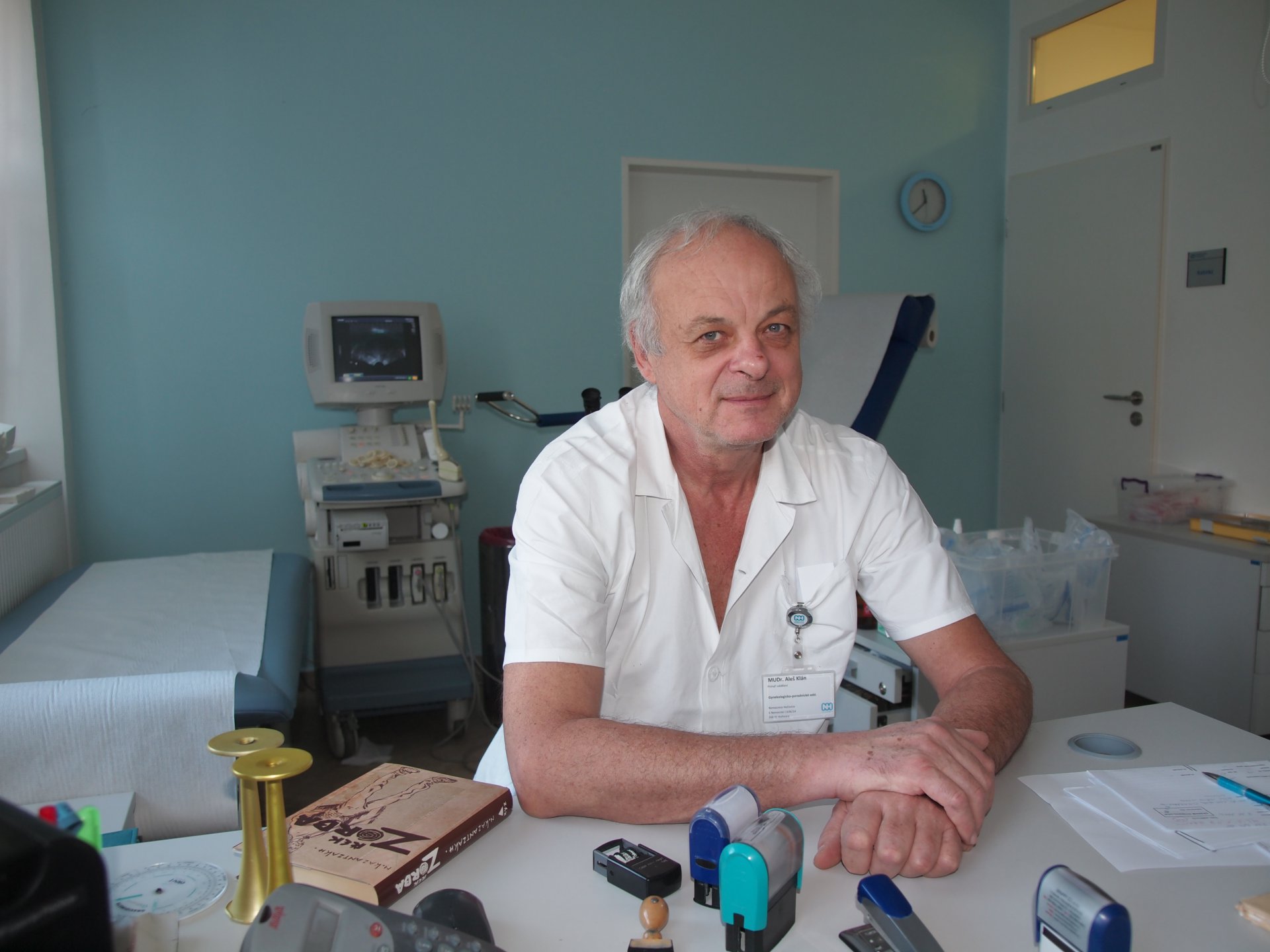
In less than a month we will celebrate 60 years since the laying of the foundation stone of the hospital. How would you assess the development of the hospital so far?
The development follows the development of society and the increasing standard of living in society. In the conditions of a small town, we have managed to build a large facility that competes with regional hospitals. Of the privatised hospitals in the Central Bohemia Region, it is certainly the most successful in terms of overall development.
What would you say is the biggest success and the biggest weakness of the hospital?
In my opinion, the greatest success is the fact that in the 1990s and in the first years of the 21st century it was possible to maintain the basic departments of the hospital and to take over some of the clientele from the Beroun area after the effective disappearance of the Beroun departments. I consider the biggest weakness to be the incompleteness of the sub-departments and the absence of some departments, such as urology.
From archive materials we have found that in the 1960s, with a capacity of 250 beds, i.e. the same number as today, there were only 21 doctors and about 100 non-medical staff, while today there are 120 doctors and 400 other medical staff working in the hospital. Why such a huge difference and what has changed in the healthcare sector over the years?
The work in the 1960s and today cannot be compared at all. Since then, the average life expectancy has increased and, unfortunately, the morbidity of the population has increased. This is most strikingly evident, for example, in the field of orthopaedics, which has seen the addition of implant surgery and artificial joint replacements. Many diseases are treated quite differently today. Patient turnover in hospital has also increased. I think people are also going to the doctors more than they used to. On the negative side, there has been a huge increase in administration, which has put a strain on health professionals. The on-call system with subsequent time off after night services requires more staff.
What do you think has caused the current staffing crisis in the health sector and how are you dealing with it? How do you perceive young medical graduates?
In the first place, I think it is the unfortunate system of postgraduate training. For doctors, it is currently one-stage and takes a very long time. In my opinion, the past system of two attestations, where the completion of the lth degree entitled one to work independently in outpatient clinics and departments under the supervision of doctors who had completed the 2nd degree, was more effective. Secondly, there is the much talked-about salaries of doctors, which, for example, are roughly four times higher than those of entry-level colleagues in the West. Today's population of young doctors, who have the opportunity to travel and can speak world languages, now have open borders and the ability to choose where they want to work.
You have worked at the hospital for over thirty years, you have spent virtually your entire professional life here, and your name has become synonymous with the gynaecology and obstetrics department. Have you ever been tempted to try somewhere else?
By nature, I'm a person who doesn't take well to change. Moreover, at a time when the future of our department was at stake, everything about it was close to my heart. I think I had people around me who were and are dedicated and kind and I didn't want to lose them.
How many children have you had in your professional life?
I've been asked this many times, but I'm not able to count. I've never done that. A few thousand?
What has changed in the attitude of mothers and the general population towards childbirth?
When I started, everything was decided by doctors and health professionals. Nowadays, parents are much more interested in the details and happenings of birth. In the 80s, for example, visits to the maternity ward were not allowed. Today, we can't imagine it without fathers and attendants being present at births. At the beginning of my career, women gave birth around the age of 20, today about ten years later. The paradox is that we saw it as a negative then and we see today's situation as a bad thing too. At an older age, various diseases can accompany childbearing and, in addition, the chances of getting pregnant decrease with increasing age.
You were recently selected as one of the top doctors in the whole country. Every time your name appears on social media, you become an object of recognition and admiration. Doesn't that make you feel like a demigod? How does your wife deal with it?
I have absolutely no idea how I got into this company. I wanted to approach the editor of the article, but I haven't gotten around to it yet. Personally, I don't think I'm one of the elite. I've never played demigod. I try to be humble. It takes a lot of humility to practice medicine. We're not omnipotent, although we'd like to be. Unfortunately, man is a mortal being. That's something to remember. Maybe one day people will live longer than the 100 years that is common in the forecasts. But it will still take a lot of effort and resources. My wife is certainly as aware of this as I am and it has not affected her in any way.
How do you cope with the various modern "fads" that keep popping up in the field of obstetrics? E.g. caesarean sections at the mother's request, home births etc.
I have a hard time with the fact that people harm themselves and take risks. It's a tax on being single. I wish them well, of course. Studying medicine takes 6 years, very often day and night. I've spent the rest of my life gaining experience. I learn without ceasing and I know many problems where I have room to improve and I don't know everything anymore. But a lot of alternative parents have the confidence that I would like to have someday. They use birth control, treat chronic illnesses from a young age, often plastic surgery, but, when they go into labour, they often refuse the basic medications we use. Often they can't imagine what's in store for them, but they know better than we do. Caesarean section on demand is a debated issue, under certain conditions society may have to accept it. It is important to remember that, as nothing is black and white, there are consequences. Good and bad. Home birth is the opposite. It's putting yourself at risk of natural selection.
What shifts do you expect to see in gynaecology and obstetrics in the next decade?
I can't predict the future. I really don't. I'm quite worried. I would like to see birth rates rise, maternal and neonatal morbidity fall, the number of C-sections fall, parents' trust in obstetricians rise. I hope that there will be fewer extremely premature births and fewer birth defects.