Česky
Česky


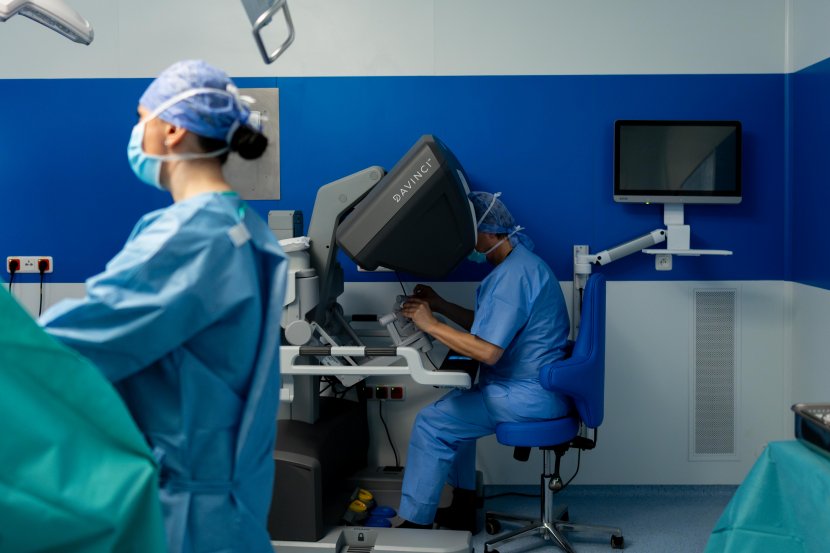
The da Vinci robotic system was commissioned at Hospital Hořovice in late summer 2025, alongside a newly refurbished operating theatre designed for robot-assisted surgery.
Its introduction was preceded by comprehensive preparations, including the refurbishment and adaptation of the premises, organisational changes, and the training and certification of healthcare staff.
Since the programme began, nearly 200 patients have undergone robot-assisted procedures. At Hospital Hořovice, the system is used in urology, general surgery, gynaecology and urogynaecology.
Urology is expanding the range of procedures
Urology plays a significant role in the robotic programme.
“In the first year of the da Vinci system’s operation, we performed around 120 procedures in the urology department. We began with prostate cancer operations, which still form the main part of our surgical work, and gradually added kidney operations for oncological conditions, primarily the removal of tumours whilst preserving the kidney. We also perform reconstructive surgery on the renal pelvis for congenital defects,” summarisesDr Petr Běhounek, chief physician of the Urology Department at Hospital Hořovice.
The urology team also has specific plans for the coming period.
“Next year, we would like to recruit another physician to the surgical team and extend the use of robotic surgery to our entire urology team. We will also be introducing prostate surgery for benign prostatic hyperplasia (BPH), which is a global trend,” adds Dr Petr Běhounek.
Robotic surgery has become part of routine practice
In the Department of Surgery, too, robot-assisted procedures became part of routine practice during the first year, and we have gradually managed to expand the range of procedures we offer.
“I regard the first year of robotic surgery at Hospital Hořovice as a positive one. At present, it is fair to say that robotic surgical procedures are now routine at our department,” saysDr Petr Šíma, Ph.D., a surgeon in the Department of Surgery.
Robotic surgery across specialisms
In the field of urogynaecology, the da Vinci system is used in particular for pelvic floor reconstruction and the treatment of severe pelvic organ prolapse.
“The lower gas pressure in the abdominal cavity compared with laparoscopy means less post-operative pain and a quicker recovery. Furthermore, the robotic system enables us to perform safe, high-quality surgery even on patients for whom laparoscopy would not be feasible,” explains Prof. Zdeněk Rušavý, MD, PhD, a physician in the Gynaecology Department.
The first year of operation of the da Vinci robotic system has shown that robot-assisted surgery has firmly established its place in the care of our patients. What was originally a newly introduced technology at our hospital is gradually becoming part of our daily practice, and the various specialist departments are further developing their expertise and expanding the range of procedures they perform.