Česky
Česky


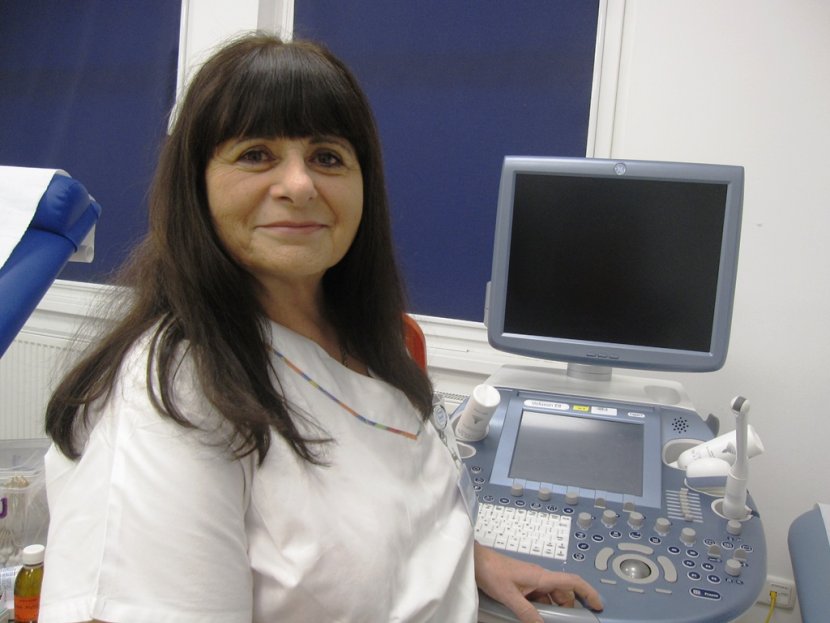
The year was 1967. This year was truly exceptional in the life of Anna, a general nurse. In January, while still a student, her daughter was born. In June she graduated from high school, but right after the holidays she was looking for a job, because her husband started his two-year basic military service in September. At the beginning of October, she started working as a nurse in the gynaecology and obstetrics department of the hospital in Hořovice. She was lucky to have her daughter looked after by her kind mother-in-law, as she still says. "At that time, graduates of the school took turns working in different departments - in the delivery room, in the sixth-grade ward, in gynaecology, which all took place within the same department. It was unthinkable for a nurse to say that she didn't know how to work in the operating room or in gynaecology or that she didn't know how to care for the mother. You have to know everything in this profession," explains Anna. After a while, her daughter was joined by a son and today Mrs Zpěváková is the grandmother of five grandchildren.
"My big dream has come true"
Even as a little girl, she dreamed of one day becoming a midwife. She and her best friend Marta often played nurse and doctor. After a while, their dream came true. Anna became a midwife and Marta a doctor specialising in gynaecology. After a short internship at the gynaecology and obstetrics department, Anna's employer gave her a recommendation for further studies. During her husband's war, she studied for two years as a midwife in Pilsen, where she commuted from Hostomice, where she lived. Because of the poor transport links, she usually left for Pilsen in the morning straight from the night shift. The studies were quite demanding, but it was manageable, especially because it was an external form. In two years she graduated as a midwife thanks to her mother-in-law, who helped her a lot with her daughter. Her childhood friend MUDr. Marta Martínková, who then headed the gynaecology and obstetrics department at the hospital in Hořovice for many years, also helped her a lot with her knowledge and advice. Since the beginning of the 1980s Anna Zpěváková has been cooperating with the current head of the gynaecology and obstetrics department , Aleš Klán. "Hundreds of patients have passed through our office over the years - my peers and their daughters. The role of a nurse is very important, but in the maternity and gynaecological outpatient clinic it is doubly so. Many times women come here with fears of various afflictions. It is up to the nurse to be sensitive, to be patient, to be able to empathise with the situation of ordinary women. She should be mentally resilient, physically fit and not lacking in skill. Managerial and diplomatic skills are also an advantage. I always try to approach a patient as if I were in her shoes. How I would want to be treated. Communication is also very important," explains the midwife and continues, "Every step needs to be explained to the patient in detail. The basics of a pregnancy check-up are a blood draw, a weight check, blood pressure measurement and a urine test. The readings form a set of symptoms that can indicate that something is wrong, for example, that eclampsia is imminent. This can be manifested by the presence of protein in the urine, swollen legs and high blood pressure. That's why blood tests and other measurements are so important. From the time the pregnancy card is issued, the expectant mother should be told what tests, examinations or screenings will follow. Most importantly, why it is done and why it is so important. But sometimes I also have to explain to the mother that pregnancy is not a disease and that tight jeans with a huge belt buckle can bother the baby," smiles Anna. The emphasis, she says, should be on lifestyle, massaging the tummy against stretch marks and preparing the nipples for breastfeeding. Apart from clothing, she also mentions low-heeled shoes so that the spine does not suffer and varicose veins do not form. "Nowadays, everyone finds information on the Internet, which is then used to 'educate' the health professional, but nowhere is it written that it is true," he adds.
Anna Zpěváková is most happy at work when everything goes well and a healthy baby is born. In her office, she cares not only for pregnant women, but also for gynaecological patients. After years of practice, she believes that a lot can be saved in gynaecology. No other organ, she says, can be removed so easily. However, prevention is extremely important. A bad finding can be solved if it's done in time. Sometimes she can't help comparing the working conditions for midwives in the days when she joined the hospital and today. As she says, working conditions have improved incredibly in recent years compared to what a nurse had to manage thirty years ago. "Back then, there were no ultrasounds, disposables, baby's heart sounds were listened to with a bare ear, examination gloves were washed, soaked in disinfectant, dried and then powdered and sterilised. Today, the nurse's job is made easier by a range of new examination methods and modern disposable equipment," he compares.
"I'm here to thank you for life."
"I don't like to make myself known," says Anna Zpěváková, but then she speaks up: "At least twice I have had patients come to thank me for their lives. I am very strict in my work. A pregnant woman came to the office and apologised for forgetting her urine bottle at home and said she would bring it next time. Like I said, I'm strict, so I insisted on collecting it. I shooed her off to the toilet with the shampoo. On examination, I found protein in the urine. I quickly took her blood pressure, which was very high. But because I know pregnant women's blood pressure can fluctuate, I told her to lie down here for a minute and we'd take her blood pressure again. After the next measurement, her pressure was even higher, so I knew we couldn't let her go home. She carefully asked what that meant. I didn't want to scare her, so I just pointed out that this condition could have a negative effect on the kidneys. Even for me, when I only have one? The patient asked. It was the morning, the lady wanted to go home, but I said it was out of the question and sent her straight to the ward to lie down. The same day a caesarean section was performed. The development of the disease went so fast that if I hadn't been so consistent, the mother might not have been here. Even the head of the ward acknowledged this and told her that she owed her life to me," says Sister Anna. As is well known, eclampsia requires immediate intervention, which consists of suppressing convulsions, lowering elevated blood pressure and performing (or completing) the delivery quickly.
The second case was similar, and thanks to Anna Zpěváková's experience, the crisis situation was managed. The expectant mother thought something was wrong with her urine at home. She said that there were small pieces in it. After measuring the pressure, it was clear that action had to be taken quickly. And in no time, the baby was born. "The protein levels in the urine were so high that the clotted protein looked like cottage cheese. Then, when I celebrated my 50th birthday, this mother brought me a bouquet and said, literally, that she had come to thank me for my life," Anna recalls. "I felt such satisfaction in myself that I had taken such good care of those two and put everything I could into it to avoid great inconvenience, if not the worst."
"I dread the day when I won't have to."
Asked if she has ever considered changing her workplace, she shakes her head vigorously, "No way, I never even thought of such a thing. I've always been happy here, especially with the team. In that time, at least two generations of nurses have passed me by. I feel that we get along well. You have to move with the times, be adaptable, tolerant and not mentor. I'm not dealing with any generational issues. Maybe the nurses do, but I don't know about it. I've worked here all my life. Years at the bedside. When my daughter was in first grade, I gladly accepted an offer to work the morning shift in the ambulance. But it's the same staff and the same management. I only have one employment contract with the hospital, the one from 1967," says Anna. In her life she follows the motto: Don't lie and don't cheat. "It's silly to talk about myself, but even though I'm alone in the outpatient clinic and no one is watching me, there is no way I wouldn't do what I'm supposed to do. I can then sleep well because I do my best for the benefit of my patients. I still enjoy my work very much, after all, that's why I got into it in the first place. But I'm afraid of the day when I'll be told I shouldn't come here anymore," says Anna Zpěváková.