Česky
Česky


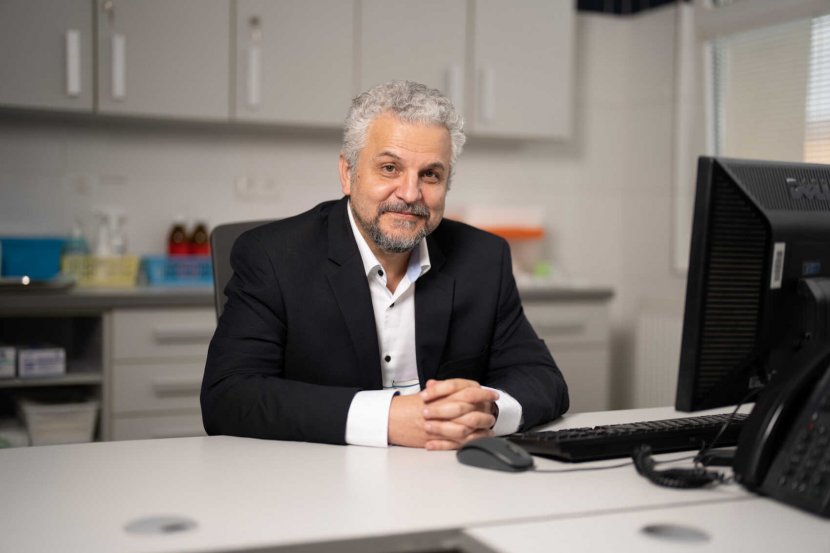
Imagine having a stomach ache every day, having to go to the toilet many times a day and dreading every meal. That's what life is like with Crohn's disease - an incurable autoimmune disease in which the body attacks its own intestinal lining and causes chronic inflammation. "The disease most often affects young people between the ages of 20 and 30. It can be treated but not cured. The patient remains under the care of a gastroenterologist and often a surgeon for life," explains Július Örhalmi, MD, PhD, FASCRS, MBA.
The disease brings significant limitations - patients sometimes have to go to the toilet 20 times a day, suffer from cramps, feelings of incomplete emptying (tenesmus), fatigue and weight loss. Modern biological treatments and surgical interventions can help. At Hospital Hořovice we perform gentle laparoscopic operations that preserve as much of the bowel as possible and minimise adhesions, which is essential, for example, in family planning.
Crohn's disease is not just a physical burden. Young people often bear heavily, for example, temporary or permanent ostomies - artificial outlets for the excretion of stool. "Stomy devices are now very discreet and people with stomas can live a full life," says Július Örhalmi, MD, PhD, FASCRS, MBA.
You can watch the full programme here.