Česky
Česky


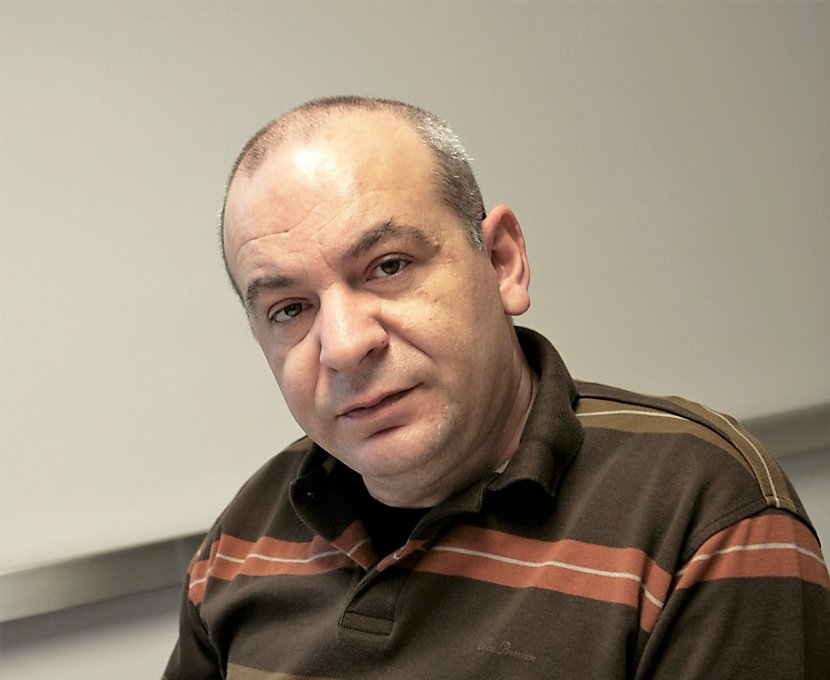
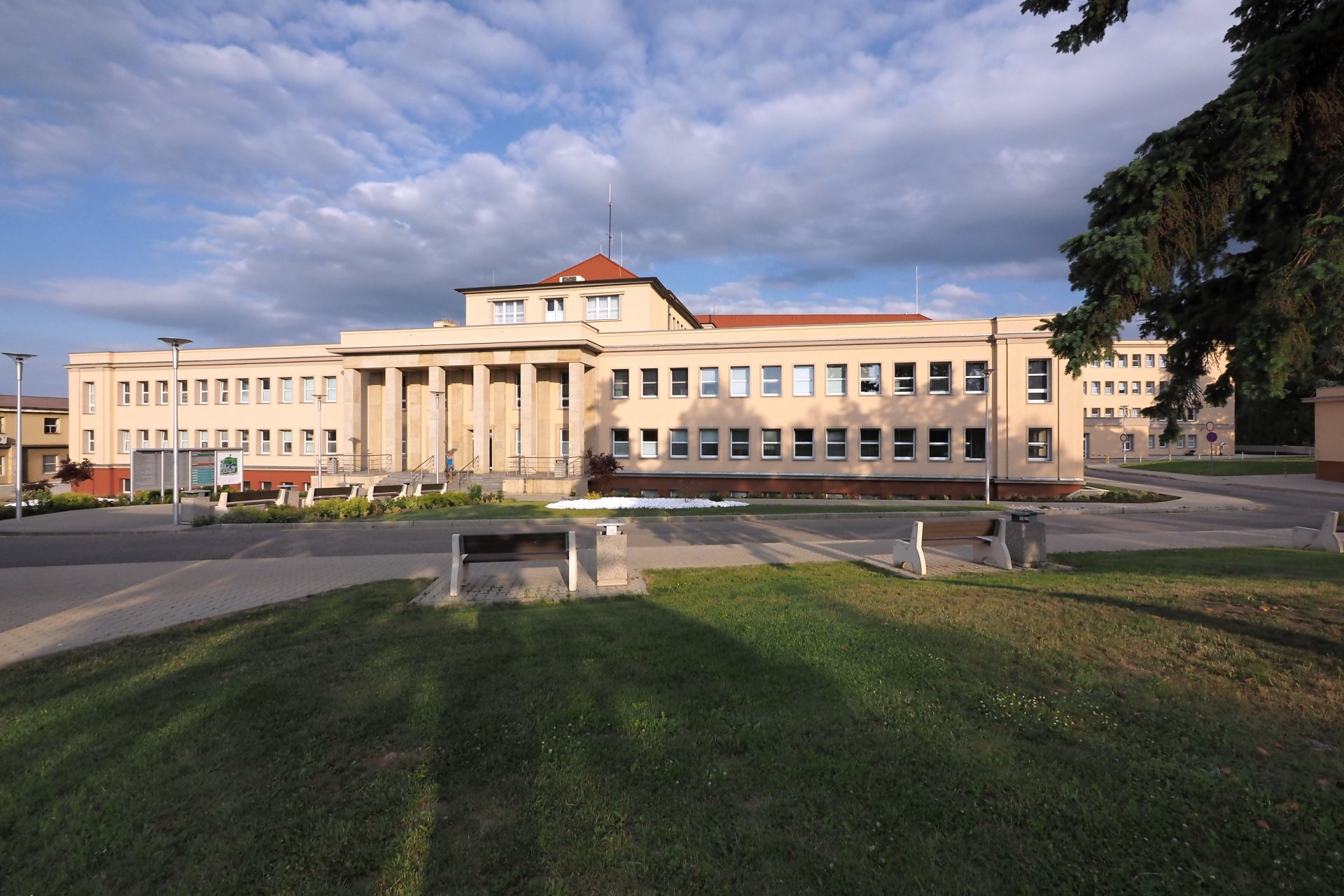
When Sotirios Zavalianis privatised the hospitals in Hořovice and Beroun in 2007, many feared that a mafioso was coming to the Podbrdi region to plunder the health care facilities and run away with the money. This did not happen. A Greek-born businessman who came to the Czech Republic in the 1980s as a student completely renovated both hospitals and gave them a look that attracts clients from far and wide.
The small hospital in Hořovice now boasts, among other things, the title of the largest maternity hospital in Central Bohemia. Last year, a record 1,701 babies were born here. Berounská, which used to be called the valley of death, has been transformed into the most modern rehabilitation facility in the country after hundreds of millions of dollars of investment. People from all over the Czech Republic come there after orthopaedic surgeries, injuries or strokes. According to Zavalianis, he has already invested CZK 2.8 billion in his hospitals.
"Here there will be a kind of gym for grandmothers, all the rooms will be air-conditioned, and we are counting on rehabilitation nurses and physiotherapists," says the entrepreneur as we walk among plasterboarders in the newly reconstructed LDN building in Beroun.
The difference is not only that we are not backed by politicians who decide on subsidies, but we also receive less money from health insurance.
The inconspicuous man walking around the hospital in jeans and a leather jacket, every now and then stepping away for a cigarette, is said to have the ambition to offer the best service to patients, regardless of how it will ultimately be valued by health insurance companies. He has used his own money to buy a plot of land for a car park, he is organising a sculpture symposium in the restored hospital park, he wants to plant a nearby hillside with a vineyard... It's actually a wonder that all this still brings him a considerable profit and the credit burden is minimal, around CZK 100 million.
Zavalianis's medical business, which also includes the Pardubice oncology centre Multiscan, is today the second largest private hospital group in the Czech Republic in terms of turnover, after billionaire Tomáš Chrenek's Agel holding.
How can private hospitals compete with state or regional hospitals if they do not have generous public budgets?
I would object a little to the term private hospital. It suggests that we are only for a select group of people. But we are a public health facility run by a private entity. People get the same care here as anywhere else, under the same conditions. We treat ordinary people.
Now, about your question. As far as funding is concerned, the difference to our disadvantage is not only that we are not backed by politicians who decide on subsidies, but also that we receive less money from public health insurance. People think that everybody gets the same amount in this respect, or even that we can extort more from the insurance companies, but that is not true.
In what ways do you get less?
The DRG system (clinical case classification system - ed.), which is supposed to set a certain fairness, is now in place across the country, but each hospital also bears a historical burden in the form of so-called individual rates. In this respect, we are in some 80th place out of about 140 hospitals. And if you take out the facilities that don't provide acute care, we're in one of the last places in terms of individual rates. As a result, this means that for example, we get some CZK 16 000 for a birth, whereas elsewhere it is almost CZK 40 000. The same is true, for example, for hernia surgery.
The majority of all hospital costs are made up of personnel costs, energy costs, building management. There is at most five to ten percent of which we can steal something.
And how do hospitals deserve an individual rate increase? Doesn't it help that the owner is investing several hundred million in its modernisation?
Nobody in the Czech Republic cares about that, nobody looks at quality. If I have an "eldéenka" with smelly six-bed rooms without sanitary facilities, without rehabilitation workers, I will get the same amount per patient from the insurance company as if we completely renovate it now. As I tell you, in the Czech Republic the quality factor plays no role in terms of insurance reimbursement.
I am trying to understand how it is possible that you are still investing and making a profit.
How do you do it when everyone else is just crying? Are you able to buy equipment, medical supplies cheaper, build and renovate new buildings cheaper?
Yes, we are undoubtedly working more efficiently in many ways. The fact is that when we wanted to reconstruct the internal medicine in Beroun, I approached a friend of mine who has a construction company and he told me that he could do it for CZK 140 million. And I told him I didn't have that much, and we started building with our own help. We ended up with one-third the price. Usually we build at half the cost of the public sector, and even the project documentation is significantly cheaper. As a private individual who is not subject to the Public Procurement Act, I can afford to import cheaper building materials, cables or tiles from Germany, Italy or Poland, for example. The public sector is not able to do that.
Even the scandals surrounding the former Central Bohemian governor David Rath or cases from northern Bohemia have indicated that many investments in regional hospitals are highly overpriced. At the very least, everything smacks of corruption.
Nevertheless, I reject the idea that the problem is - as Minister Babiš says populistically - that everyone is 'stealing'. The scope for theft is relatively small. The majority of all hospital costs are made up of staff costs, energy costs, building management and so on. There is a maximum of five to ten per cent of which something can be stolen. As a result, these are only small, the absolute minimum. Even if stealing in the Czech healthcare system stops completely, the basic problems will remain. Those who go on and on about theft are only covering up and delaying the solution to the real problems.
Unfortunately, I have the impression that people in the Czech Republic are only willing to pay for health care to a doctor in an envelope somewhere under the table, says Sotirios Zavalianis.
And what are the real problems? For example, will increasing payments for state insurance, as is now being discussed, help the health sector?
Yes, everyone will certainly welcome such an increase, but for me it is absolutely essential that there is a restructuring of the hospital network here. The network was established in the days when horses and carriages were still used. With today's commuting distances, it is unnecessarily dense. We do not need so many hospitals with such capacity, not least because we provide faster and more efficient care. This is a cardinal political problem that still no one wants to do anything about. Without restructuring, without closing some hospitals, it will never work well.
We should also build a functioning outpatient sector, not one that only operates Monday to Thursday from eight o'clock to two o'clock. If we do not do this, all the other steps are useless. Including increasing payments for the state insurance.
EKONOM magazine, Jiří Pšenička