Česky
Česky


How do you reconcile running a hospital with being a doctor? Do you still meet with patients?
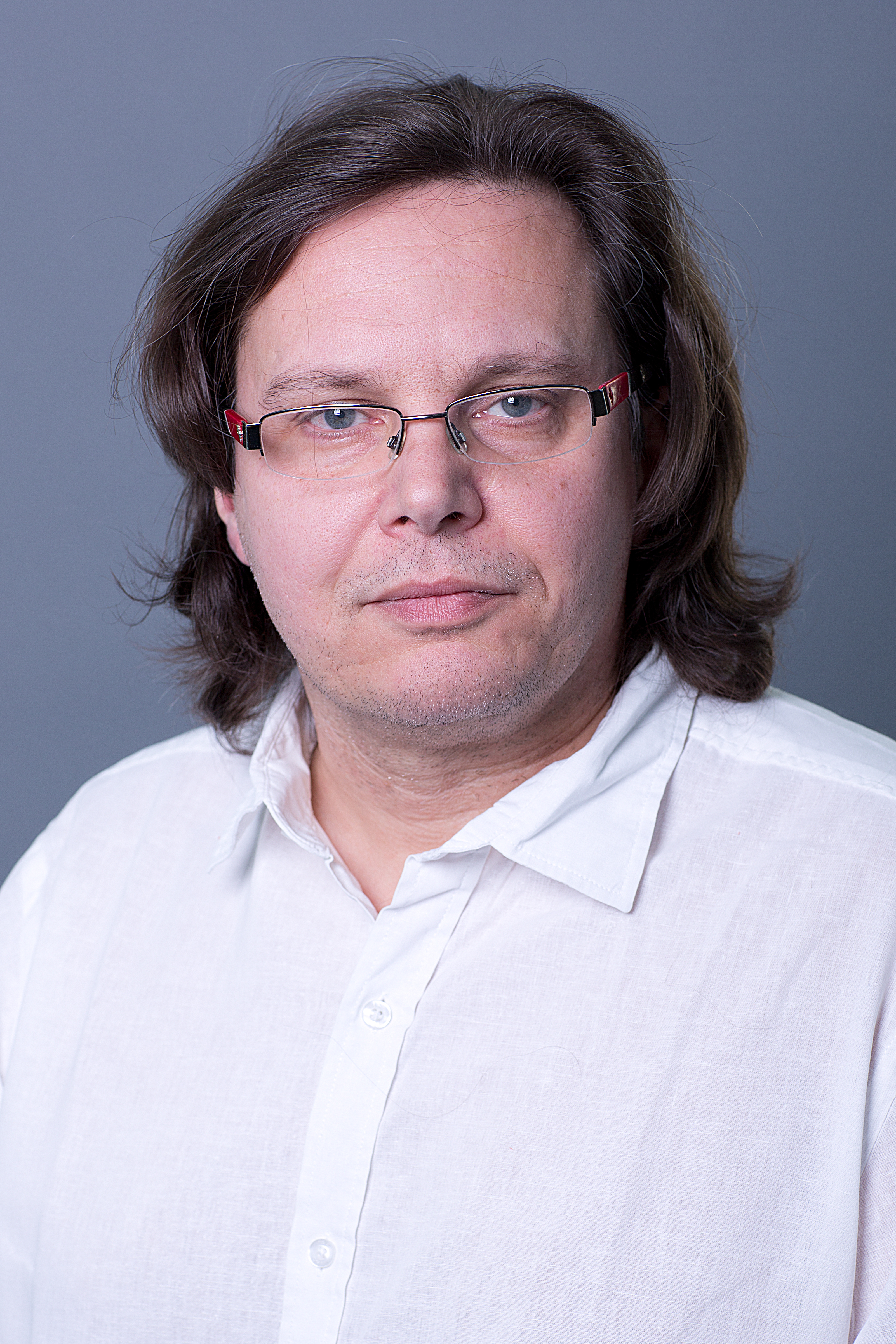
I have to start by saying that I never wanted to be a hospital director, almost exclusively because I couldn't imagine not being able to continue doing my beloved medicine afterwards. Although I have been a physician for over fifteen years in various leadership roles and most recently as a medical deputy director, I have always maintained my medical practice and even expanded it given the several specialties in which I practice. When I started as medical director, I knew that I would no longer be able to practice medicine on a daily basis. Since my policy is to do my best and I did not really manage the directorship, at least at the beginning, to my satisfaction, I was prepared for the first months in office to do only this activity at least until I was at least somewhat satisfied with myself. Of course, I could not leave the patients in my pain management clinic, so I stretched my clinic into the evening hours so as not to cheat the directorship. I am glad that perhaps my initial period in office has been bridged and I can now occasionally and predominantly devote myself to my original profession as an anaesthetist. I cannot in any way claim that I do not often miss my department, which I led for so long, and especially my colleagues.
What are you most proud of in your hospital?
I think we should be most proud of our hospital as a whole, especially what has been built over the years and where we have got to and the name our hospital has. I personally am proud to lead a facility that I am not ashamed of and whose staff I am proud of. Even though, thanks to our owner, the hospital in Horovice has been almost completely renovated and equipped with the most modern equipment, the people who work here remain the most valuable to me. I admire our nurses who have managed to cope with the changes in the system of their education and many of them now have a university degree and are not only proficient in their field of expertise, but also behave in an exemplary manner towards the patients and, although they spend a lot of time in the hospital, they are able to take good care of their families. I am proud of the achievements of our doctors who are treating more and more patients with quality and most of them with a smile on their face despite the high work and time demands. I also appreciate the support staff, many of whom have been able to be proficient assistants to the medical staff and some have even managed to graduate and upgrade their qualifications. I am proud to say that so far we have been able to build the hospital on friendly relationships not only between the medical staff with each other but also in the relationship between the medical staff and the patients.
Paradoxically, the Central Bohemian Region often pays for its proximity to Prague, as if everything was already heading there. Do you feel this too?
In the Central Bohemian Region there is a very dense network of inpatient medical facilities. Over time, a number of them have profiled themselves to focus on specialised activities, such as aftercare or rehabilitation. Nevertheless, individual hospitals still compete with each other, which is generally a positive phenomenon that, together with other influences, contributes to the improvement of health care. The existence of smaller hospitals in the vicinity of large and super-specialised Prague clinics is not entirely straightforward. Some of these facilities only provide a kind of basic service for the teaching or other large hospitals, dealing with simple cases and referring more complex ones to higher centres. They also act as aftercare facilities for catchment patients who have been treated elsewhere. This is not the route our hospital wanted to take, so we try to be self-sufficient in treating most diagnoses and only send a minority of patients to specialised centres. Hospital Hořovice is located about halfway, now a motorway, between Prague and Plzeň, so our goal is to be the only fully functional hospital in this region. We see the large teaching hospitals in both cities more as cooperating partners in many areas, not only in the treatment of our common patients but also in the area of undergraduate education for medical students and medical schools and postgraduate lifelong learning for health care professionals.
The trend of referring patients with certain diagnoses to teaching hospitals is of course felt and understood as a correct trend. Modern medicine requires the building of specialised centres that are highly equipped not only with technology but also with the appropriate specialists. It is right, for example, that severe injuries are concentrated in specialised trauma centres and that patients previously dying of myocardial infarction or stroke are helped in catheterisation and ictal centres. This does not mean that our hospital cannot treat our patients at the most advanced level; in fact, we are highly sought after in some areas of medicine. This is where I see the opposite trend to the one you mentioned in your question, with many patients even from large cities coming to our hospital. Our aim is to attract them to us not only by the excellent performance and quality of care, but also by the pleasant environment of a modern hospital and the friendly demeanour of the staff. I also see our role in the future as reinforcing these trends.
Traditional Chinese medicine is coming to the Czech Republic. Are you planning any cooperation with the Chinese side?
I think it is not only about Chinese medicine, but about an alternative to allopathic medicine in general. Despite my positive attitude towards alternative medicine, I cannot help but distinguish between charlatans and truly educated professionals. That is why only doctors with the appropriate certificates work in our hospital. Currently, our hospital has doctors working in our hospital who deal with, for example, acupuncture or hypnosis, and we are looking for opportunities to collaborate with other specialists.
What is most lacking in your hospital, what would you like to change or improve?
I would be a bad director if I said there is nothing to improve. Above all, it is necessary to work on oneself and try to be an example for others, because as I have already said, our great asset is the people who work here and if they do not go further, all technical and construction development will be of little use. But to answer your question more specifically and to use medical terminology, our biggest problem is growing pains. That is, the hospital is made up of a lot of departments and outpatient clinics whose activities are closely intertwined and as we try to do more work and recruit more people and then often struggle to reconcile those processes. It is obvious at first glance as the hospital grows through refurbishment, which of course causes some operational difficulties, but these have always been resolved. Also, the increasing demands for modern instrumentation and general technical equipment have been met, thanks mainly to our owner. So, to summarise the answer, there is always room for improvement and there is no stopping, I do not consider fundamental changes to be good and we are missing the twenty-fifth hour of the day.
Do you work with other hospitals in the county?
As I said, the cooperation with the big hospitals is mutual. The hospital in Beroun is our sister hospital, it is owned by the same owner, so our cooperation is very close and we cooperate widely. Our activities are complementary, basically we can say that our hospital is more focused on acute care and the Beroun hospital on aftercare, and it is especially known for its rehabilitation. We have good relations with other neighbouring hospitals, especially with the Regional Hospital Příbram.
As a top-level hospital, do you feel there are any differences between hospitals established by the region and private hospitals?
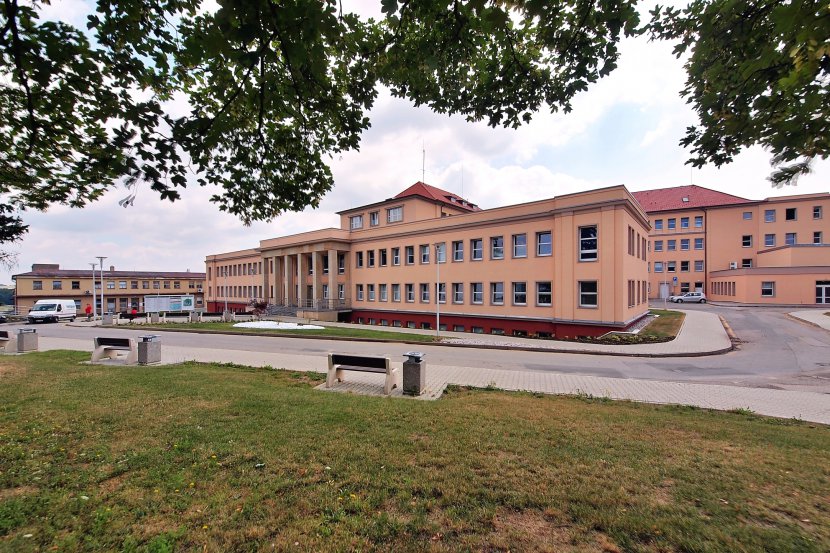
There is no simple answer to this question. To generalise, private hospitals have to do without subsidies and have to earn money for their operations solely through their own work, just like other private enterprises. On the other hand, their management tends to be simpler and flatter, and their operations often more efficient. However, there are differences in quality between hospitals established by the county, just as there are differences in quality between private hospitals. I can say for myself that the hospital in Hořovice was lucky during privatisation, the current owner Ing. Sotirios Zavalianis has taken exemplary care of the hospital, which must be clear at first sight to anyone who visits the hospital and sees what changes the hospital, built in the 1960s, has undergone in recent years.
In recent years, the hospital has undergone a major renovation. What has changed?
As I said in my previous answer, almost everything has changed. In the first phase, after privatisation, there was a major renewal of obsolete equipment and then reconstruction work began, when the whole hospital was rebuilt, new modern outpatient clinics were created, and the inpatient wards were spectacularly renovated, with their space expanded to create more comfortable rooms for patients. The children's ward was rebuilt and a chronic resuscitation care unit for children, unique in the country, was built. The operating theatres were also reconstructed and increased in number. A parking lot for staff was built and a large parking lot for patients is planned for next year. The cafeteria and staff facilities are currently being renovated. There are many plans for the future, the first of which would be the creation of a nursery for the children of staff.
You also have a renowned maternity ward. What do you offer your patients that is different?
Our maternity hospital is already one of the big ones, with around 1,600 births a year and the numbers are still rising. I see the roots of our maternity hospital's success, apart from the excellent erudition of the staff, in the factors already mentioned above, which are the pleasant and modern environment, but above all the friendly behaviour of the staff towards the parents. In this respect, the maternity hospital is an example for the whole hospital. Of course, the development of the maternity ward to these dimensions would not have been possible without quality care for newborns, which is why the neonatology ward, which is shortly after a spectacular reconstruction and provides care for premature newborns, was created over time.