Česky
Česky


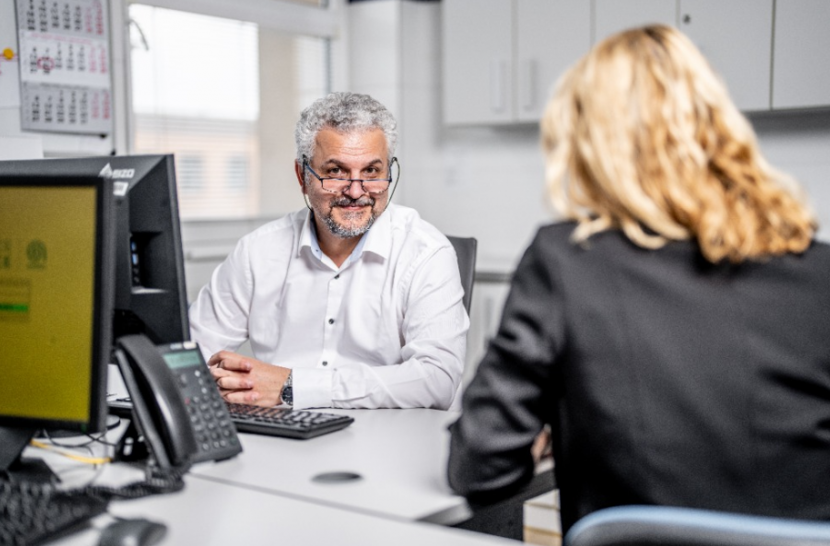
Doctor, what does it actually mean that our hospital has been awarded the status of a highly specialised care centre for rectal cancer?
The Highly Specialized Care Centers were created primarily to improve the quality of care for patients diagnosed with colorectal cancer. And to centralise care for these patients in hospitals that have the experience, the erudite team and the appropriate outcomes. Previously, almost all hospitals operated on rectal cancer - 106 facilities. Some of them operated on very few cases a year, which led to poorer quality of care. For example, hospitals that operated on fewer than 20 patients a year had mortality rates up to twice as high as those that managed more. The aim was therefore to make treatment more efficient and better.
How many departments in the Czech Republic have obtained this status?
Out of the original 106 hospitals, 25 centres were selected to meet the strict criteria. In Central Bohemia, only we in Hořovice have it, and then only the teaching hospitals in Prague and Plzeň.
What did your hospital have to do to get this status?
We had to prove our results for the last three years. On average, we had to perform at least 25 operations a year, with a low number of complications and deaths. We prepared the results in cooperation with the quality manager of the hospital in Hořovice, Mgr. Blanka Hošková and we submitted our application. It was assessed by an expert committee consisting of representatives of the Ministry of Health, health insurance companies and experts.
How many operations do you perform per year now?
At the moment we perform about 30 operations a year, but we want to get to at least 50 - that is one operation a week. In addition, we are installing the Da Vinci robotic system in August, which will take our care even further.
How are you doing with minimally invasive procedures?
The vast majority of operations - over 90% - are laparoscopic. Only about 10% of patients end up with a permanent outlet.
What is the average age of patients and what are their prospects after surgery?
The average age of patients diagnosed with colorectal cancer is around 70. But if they come in time, the likelihood of a complete cure is up to 90%. If they are already at a more advanced stage without metastases, the chance of cure is around 60-70%. If distant metastases are present - most often in the liver - then life expectancy is prolonged, but the average is around two years.
Why is it so important not to underestimate prevention?
Thanks to prevention, the proportion of acute operations has fallen from 15% to just 5% in the last two years. Patients are coming to us more often for preventive colonoscopies, which greatly increases the chances of catching the disease early. In addition, our gastroenterology department has the status of a screening colonoscopy centre.
What are the typical symptoms of rectal cancer?
Presence of blood in the stool, change in stool character, alternation of constipation and diarrhea, pain, bloating, weight loss. All this should be a warning sign that it is time to go for an examination.
What are the main risk factors?
Apart from genetic predispositions, these are mainly smoking, alcohol, excess weight, unhealthy lifestyle, diabetes, lack of exercise and low fibre intake.
How often should a person go for preventive check-ups?
From age 50 onwards, once every 10 years if the colonoscopy is negative. If something is found, the doctor will recommend a repeat sooner - perhaps in a year, three or five years. And of course, if there are any symptoms, don't wait and make an appointment right away.
How long are your waiting times?
Patients diagnosed with cancer get an appointment for surgery within a month. For preventive examinations, depending on the difficulty, the dates range from two weeks to three months.
How many doctors do you have on your team?
At the moment we have four to five doctors specialising in colorectal surgery. We plan to expand the team to six doctors as the number of operations grows. We do over 200 major resections a year, plus about 400 proctology procedures.
Do you have enough capacity for the growing number of procedures?
The operating theatres are still full, so we are moving some of the simpler procedures to another facility for day surgery. We are waiting for the completion of the new pavilion of the Hořovice hospital in 2027. Now we are also considering expanding the operation to evening hours and weekends.
For how long does the Ministry grant the status of a centre for highly specialised surgical care in the field of rectal cancer?
For five years. After that, it will be reviewed again. We expect the conditions to be tightened. For example, all doctors will have to be certified in coloproctology or onco-surgery. The number of procedures required to become a centre will certainly increase.
The status of "highly specialised surgical care for rectal cancer" means that a given medical facility (e.g. hospital) has been officially recognised and commissioned to provide surgical treatment for patients with rectal cancer at the highest professional level.
This status is granted by the Ministry of Health of the Czech Republic and is reserved for certain facilities that meet strict criteria, such as:
they have a highly qualified team of surgeons and other specialists,
perform a large number of rectal cancer operations, which ensures experience and routine,
have modern equipment and technology,
are able to provide comprehensive care - i.e. not only surgery, but also pre-operative diagnosis, post-operative care, follow-up cancer treatment, and psychological or nutritional support.
For the patient, this means that they have access to the best possible care in their area.