Česky
Česky


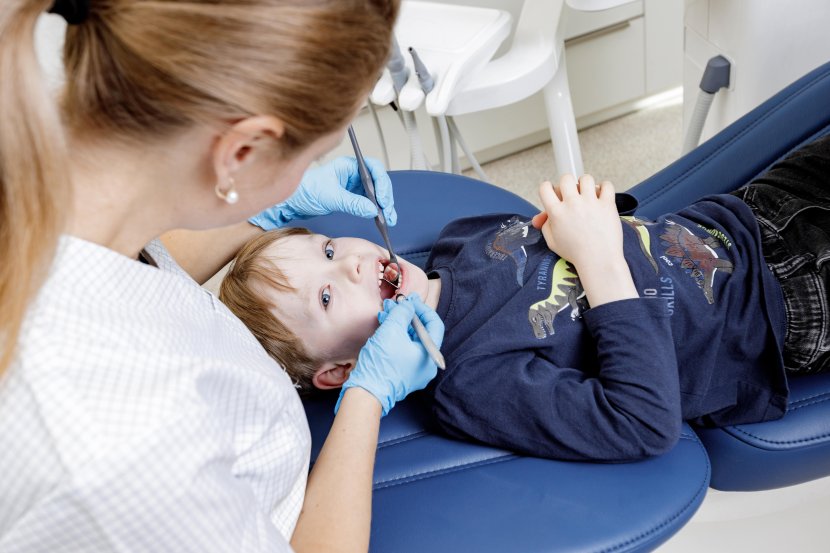
Inadequate brushing leads to plaque build-up. If not removed in time, it can cause tooth decay, tartar build-up and subsequent gingivitis. Hygienists first remove tartar using ultrasonic waves. They will also use hand tools for a perfect cleaning.
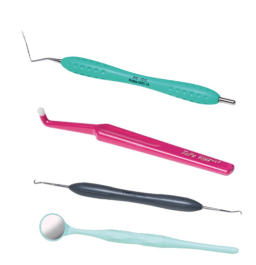
A single-bristle toothbrush is used to clean hard-to-reach areas of the mouth.
A calibrated probe and dental mirror are used to examine the condition of the gums and periodontium.
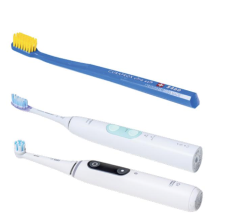
But dental care at home is also important. Our hygienists can help you choose the right toothbrush.
Recently, electric toothbrushes, whether sonic or oscillating, have also become very popular. Their advantage is their speed. They can make many more movements per minute than a manual toothbrush, so cleaning is more efficient.
Cleaning with interdental brushes should be part of your daily oral hygiene routine. Hygienists can recommend the right size for you. It is also important to choose the right toothpaste.

After tartar removal by ultrasound, depuration brushes and toothpaste are the next step. This treatment serves to smooth the surface of the tooth and polish it. Dental hygiene also includes fluoridation of the teeth, which increases the resistance of the teeth to the acids produced by bacteria in plaque.
"Everyone should go for regular dental hygiene at least once a year."
The dental hygienist's office also has what is known as an airflow, or teeth-sanding machine. This removes unwanted discolouration of the teeth from drinking coffee, tea and red wine, for example.
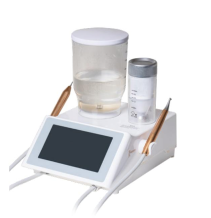
The sandblasting process uses a coarser powder (sodium bicarbonate), which removes the more pronounced pigment, and a finer powder made of erythritol, which is more pleasant to the oral mucosa due to its different composition.